3 Reasons Why the TTB Turned Down Your COLA (and How to Avoid Them)

In the beverage world, a label denial can prove quite problematic for any new beer, wine, or spirit. No matter which or the three products your company makes, the Alcohol and Tobacco Tax and Trade Bureau (TTB) requires you to apply for a Certificate of Label Approval/Exemption (COLA) before that specific product ever hits the market.

Of course, this requirement means you need to play by the TTB’s rules. This process applies to your initial application for a COLA and if you make future changes to your labels – all it takes is a single TTB audit to pull your products from shelves. There is a lot of information required on wine labels and other alcoholic packaging, so the TTB will pay close attention to make sure everything is in the right place.

TTB regulations can seem a bit overwhelming, but a little guidance can help you properly prep your beer, wine, and spirits labels. It also helps to know about a few particular COLA pain points. Here are three common reasons why the TTB may turn down your COLA.

The Government Warning Statement isn’t Right

One of the easiest mistakes to make involves the mandated government warning. Any product that contains at least 0.5 percent alcohol by volume requires a government warning on its label. That warning reads as follows.

  • GOVERNMENT WARNING: (1) According to the Surgeon General, women should not drink alcoholic beverages during pregnancy because of the risk of birth defects. (2) Consumption of alcoholic beverages impairs your ability to drive a car or operate machinery, and may cause health problems.

Seems simple right? The tricky part is that the TTB is very particular about the presentation of this warning. The warning should read exactly as it does above, including how the first two words are bolded and capitalized. Even a missing or misplaced comma can result in a failed COLA.

In addition, the TTB has specific format requirements for the warning. First, the warning itself must be “readily legible under ordinary conditions” and appear in a contrasting background. Second, the TTB sets the following minimum required type sizes depending on the the size of the container:

  • Eight or fewer fluid ounces – Minimum character size of one millimeter
  • More than eight fluid ounces and up to three liters – Minimum character size of two millimeters
  • More than three liters – Minimum character size of three millimeters

Finally, the TTB sets a maximum number of characters per inch depending on the type size of your text.

  • One millimeter – No more than 40 words per inch
  • Two millimeters – No more than 25 words per inch
  • Three millimeters – No more than 12 words per inch
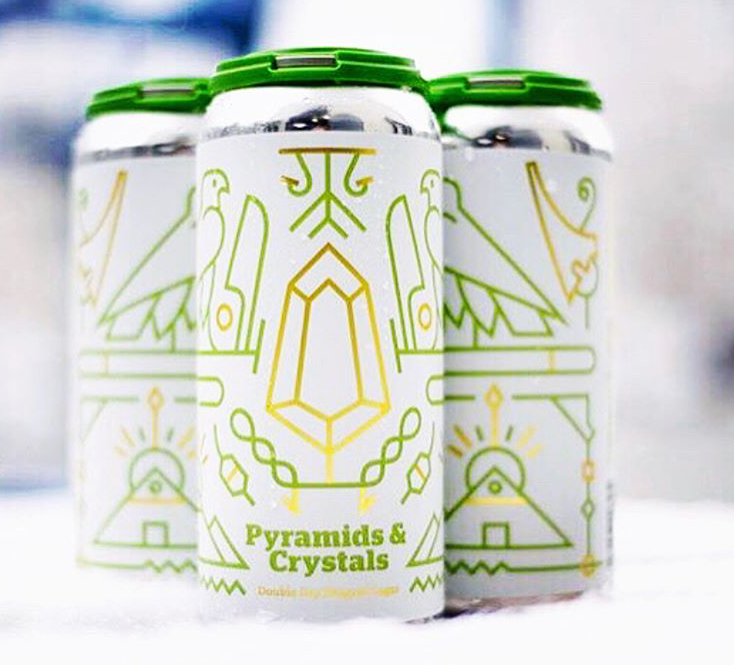
Three cans of beer that got their labels COLA approved.

The Net Contents Are Improperly Displayed

Another potential pain point for COLA applications involves just how much fluid your containers, well, contain. Beer, wine, and spirits all have different standards when it comes to net contents, so it’s important to hone in on the specific rules for your particular product and label them appropriately.

Net contents for beer labels

For beer labels, the TTB has a variety of net contents ranges. As such, the TTB requires you to list net content depending on which range your product falls under:

  • Use fluid ounces or fractions of a pint for containers with less than a pint
  • Use “1 pint, 1 quart, or 1 gallon” for those exact measurements
  • Use either fractions of a quart or pints and fluid ounces for containers with more than one pint, but less than one quart
  • Use either fractions of a gallon or a mix of quarts, pints, and fluid ounces for containers with more than one quart, but less than one gallon
  • Use gallons and fractions thereof for containers with more than one gallon

Net contents for wine labels

While beer regulations for net contents allow for a wide range of sizes, wine follows a set list of options. Wine bottles must abide by the TTB’s authorized standards of fill. This means that wine containers must hold one of the following amounts of fluid.

  • 50 milliliters
  • 100 milliliters
  • 187 milliliters
  • 375 milliliters
  • 500 milliliters
  • 750 milliliters
  • 1 liter
  • 1.5 liters
  • 3 liters

According to the TTB, containers with less than a liter of wine should state net contents in milliliters, while those with more than a liter should use liters and decimal portions rounded to the nearest hundredth of a liter (ex. 1.5 liters). In addition, the text for net contents should use the following sizing rules:

  • At least 1 mm for containers with 187 milliliters or less
  • At least 2 mm for containers with more than 187 milliliters

While the TTB has the set authorized amounts at the moment, that may change in time. The TTB released a notice in July to consider the elimination of all standards of fill except for a 50 milliliter minimum and a 3.785 maximum. The period for public comments on the notice closed Oct. 30, so the TTB should make a ruling at some point in the future after it weighs public feedback.

Net contents for spirits labels

Like wine, spirits containers have certain standards of fill. However, these standards differ slightly depending on your specific container.

  • Bottles and other non-can containers
    • 50 milliliters
    • 100 milliliters
    • 200 milliliters
    • 375 milliliters
    • 750 milliliters
    • 1 liter
    • 1.75 liters
  • Non-resealable metal containers in the general shape and design of a can
    • 50 milliliters
    • 100 milliliters
    • 200 milliliters
    • 355 milliliters

The TTB does make some exceptions to the standards of fill for specialty products like bitters, cordials, and other products. Regardless, any containers of 200 milliliters or more require the net contents to be at least one-quarter inch in height (containers with less than 200 milliliters are unspecified).
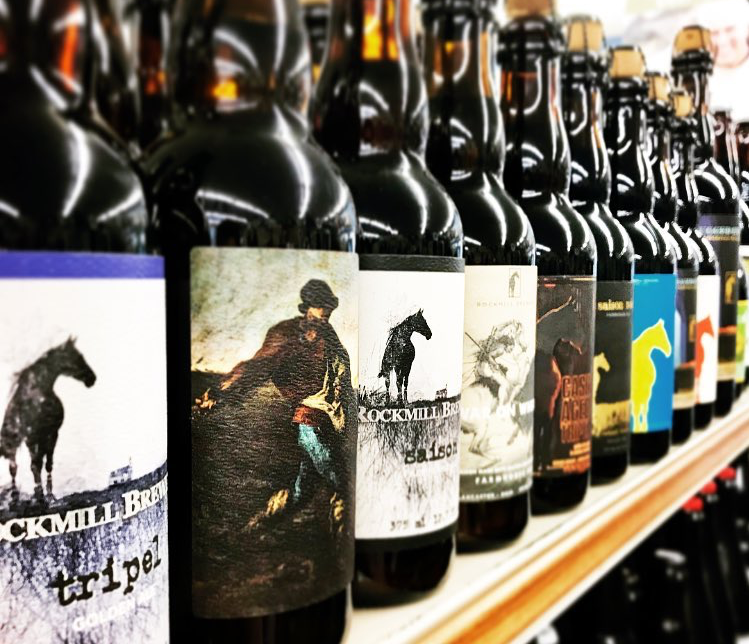
A row of Rockmill Brewery beers on a shelf, each of which received TTB label approval.

You Added New Text without Approval

It’s pretty common to change part of your label at some point. Between updating some of the language or adjusting your design, you may want or need to reprint your label. Some changes are completely fine according to the TTB, such as the following examples.

  • Delete non-mandatory label information, graphics, and other elements
  • Reposition approved label information
  • Change colors, shapes, and proportionate sizes of labels
  • Adjust type size, font, and spellings of words as long as it complies with regulations
  • Change the net contents statement for new container sizes
  • Change the mandatory statement of alcohol content as long as the change is consistent with the class and type designation

While those changes won’t lead to any issues, there are others that are off limits when done without the TTB’s knowledge. If you make a change that’s not on the allowed list and the TTB audits your products, they can pull the offending products due to non-compliance. As such, you’ll want to obtain a new COLA depending on your planned changes.

Make Your Beer, Wine, and Spirits Labels Shine with the Right Printing Company

Once you get your COLA approved for a brand-new label or some changes to an existing design, it’s time to find a good digital label printing company to get your products ready for sale. Blue Label has the state-of-the-art equipment and printing experts to help you determine the right materials and printing capabilities for you to get the most out of your label design.

Ready to dazzle your customers with quality beer, wine, and spirits labels? Contact us today to talk to us about your next label printing project.
3 Ways to Make Your Cold Brew Labels Succeed

Cold brew is going through a hot spell. The cold brew coffee market is expected to see a combined annual growth rate of more than 27 percent by 2022, it makes quality packaging even more important than ever before.

With a growing market, your cold brew products will need to stick out amid the competition. Here are three ways that you can improve your cold brew labels to help your products succeed.

Make Sure Your Cold Brew Labels Stand Out

One of the first things you need to do is figure out a good labeling solution for your container. For bottles, that means you’ll might consider if you want to use a full-wrap label or a partial wrap with separate pieces for the front and back of your container. You may also want to add a bottleneck label to add some extra flair to your packaging. As for cans, you’ll want to decide how much coverage you want. If you want to add a “second skin” that conforms to the shape of your can, shrink sleeves are a good fit.

In addition to dealing with containers, you’ll need to focus on your design. If you’re looking for an edge to make your labels pop compared to your competition, a little science may help. There are multiple psychological elements that can help you create eye-catching labels, including the following four elements:

  • Font types
  • Layout design
  • Color psychology
  • Visual processing

Another way to help showcase your brand is to promote personality and be different from the typical competitors. Don’t be afraid to showcase your brand in certain light. If you want to position your product as a high-class cold brew, a sophisticated metallic foil or decorative varnish. If you qualify for organic status, consider including the organic seal to attract for environmentally and health conscious customers. Your label tells a story, so make sure your design shares the right message.

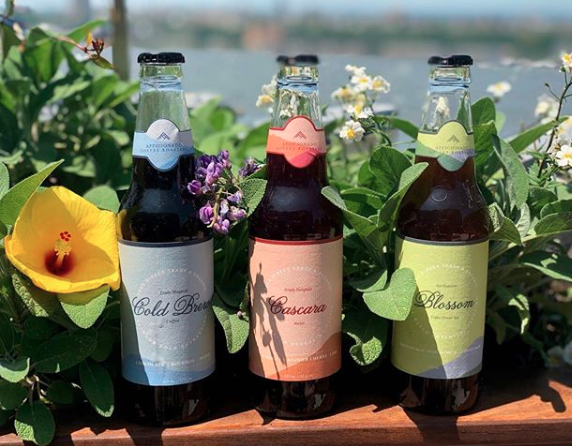
The cold brew bottle labels on display.

Make Sure Your Cold Brew Labels Perform Under Pressure

After investing time in making sure your cold brew label looks great, it’s important that they’re made to last as well. There are multiple factors that impact how long labels will last, so, you’ll want to identify any potential issues for your products. For cold brew labels, typical issues include moisture and scratches.

Like many beverages, it’s not uncommon to see cold brew containers in coolers or refrigerators. Whether they’re in direct contact with ice or water or just dealing with condensation, the presence of moisture can distort labels and even cause them to fall off your container. A water-resistant label like a film and an appropriate label adhesive can help your cold brew labels avoid these problems. If you really like the classic look of a paper label – which is quite understandable – you should invest in a material with a higher wet strength. Even the most water-resistant paper label will become fully saturated over time, so you’ll need to weigh the risks of your product’s environment with the rewards of that come with paper labels.

Scuffs and scratches are another potential issue. Surface damage can occur at many points during a product’s journey, from shipping and storage to an accidental fingernail scrape during consumption. Both paper and film labels are susceptible to the dangers of scuffing, so you should consider adding a protective laminate or varnish to help shield your label’s design from damage.

Make Sure Your Cold Brew Labels are Comply with Legal Regulations

As with any other food or beverage product, there are multiple regulations set by the U.S. Food and Drug Administration (FDA) that you need to follow to keep your cold brew labels compliant. Certain features, such as “best by” and “sell by” dates, are optional, but there many required elements that you must display on your cold brew labels. These include:

  • Name of the product
  • Name and address of the manufacturer or distributor
  • Net quantity of contents
  • Ingredients list (including allergy-causing foods)
  • Nutrition facts
  • Any health claims

Each of the above requirements comes with specific rules that range from type and font size to specific layout instructions. Those details can be found in the FDA’s food labeling guide.

It’s also important to note that alcoholic cold brews have a whole different set of regulations to follow. If a beverage contains at least 0.5 percent alcohol by volume, it’s regulated by the Alcohol and Tobacco Tax and Trade Bureau (TTB) instead of the FDA. This means any alcoholic cold brews must display the following information.

  • The name or trade name of the brewer
  • The net contents of the container
  • The nature of the product (such as “beer”)
  • The place of production
  • An official health warning statement that follows the legibility and type rules in the Electronic Code of Federal Regulations and reads:
    • GOVERNMENT WARNING: (1) According to the Surgeon General, women should not drink alcoholic beverages during pregnancy because of the risk of birth defects. (2) Consumption of alcoholic beverages impairs your ability to drive a car or operate machinery, and may cause health problems.

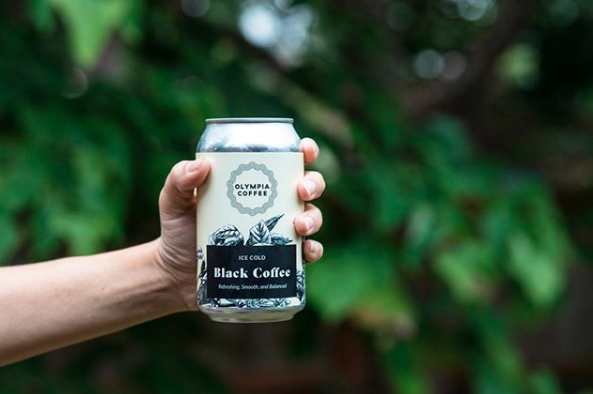
A hand holding a cold brew can with a label.

Nail All Three Areas with the Right Label Printing Company

Once you figure out your design and know what it takes to keep your cold brew labels safe and compliant, you’re almost at the finish line. Now you just need a label printing company to make your labels a reality. Fortunately, we can help with that.

At Blue Label, we have the experts and technology to produce eye-catching beverage labels. We work with you to identify your needs and provide a label solution made specifically for your products. Contact Blue Label today to talk to one of our experts about how we can help your cold brews stand out in a growing market.

Images in this post are provided by Afficionado Coffee Roasters and Olympia Coffee.

Wine Label Requirements for Geographical Information

Location is a big deal for wine labels. Not only can different regions impart certain qualities to wine, they can also allow you to market your bottles as products of those regions. Of course, the use of certain geographic information means your wine labels must abide by the rules.

Like every alcoholic product, labeling wine involves dealing with many regulations set by the Alcohol and Tobacco Tax and Trade Bureau (TTB). Location information is no exception. Here’s what you need to know when using geographic information on your wine labels.

Mandatory Location Information for Wine Labels

Many of the rules pertaining to referencing specific locations are tied to optional wine label information. However, there are two location-based items that the TTB considers mandatory information for wine labels:

  • Country of origin
  • Name and address of the bottler and importer

Listing the country of origin is simple: name the country of origin for your wine on your label. At least 75 percent of the fruit used to make your wine must be from the country listed on the label. If you make a blend of American and foreign wine, you’ll need a “percentage of foreign wine” statement to reference how much of the wine is made from outside fruit (for example, “50 percent grape wine from Australia”).

Aside from the country of origin, you also need to include a name and an address. For American wines, this means the name and address of the bottler or packer preceded by either “bottled by” or “packed by.” For imported wine, you’ll need the name and address of the person or group responsible for importation in addition to the bottler or packer.

Rules for Optional Geographic Details on Wine Labels

While there aren’t many mandatory items regarding where a wine is sourced, made, and bottled, there are still other ways that you can highlight geographic location on your wine label. Details like an appellation of origin or geographically inspired brand names allow you to highlight specific regions on your label. However, the TTB has specific rules that you must follow if you choose to include these details.

Appellation of origin

An appellation of origin is simply a fancy name for the location where the dominant grapes used in a wine were grown. This appellation can be a country, state, county, or an American viticultural area (AVA).

A viticultural area is a defined grape-growing region in the U.S. that features specific geographic qualities, such as a unique soil makeup or weather conditions, that make its grapes different from other regions. At the start of 2019, there were 242 established AVAs, with 139 in California alone. Other countries also have their own versions of viticultural regions, although use of these will require you to follow the appropriate foreign government’s regulations in addition to TTB rules.

In order to use appellation of origins on a label, a wine is required to source a certain percentage of its grapes from that region. The percentage threshold differs depending on the region. Countries, states, and counties require you to use at least 75 percent of your grapes from the listed areas. That number rises to 85 percent for established AVA or their foreign equivalents. Some regions also set their own rules for grape usage. For example, California law requires wineries to source 100 percent of their grapes from the state in order to label their wines as from either the state itself or any of its geographical subdivisions.

While appellations of origin are initially optional, they become mandatory if you include certain pieces of information on your label. Each of these can include additional regulatory needs depending on what you use.

  • A vintage date
  • A varietal designation
  • A type designation of varietal significance
  • A semi-generic designation
  • An “estate bottled” claim
  • A geographic brand name

A wine label with an appellation of origin

Vintage dates

Wine labels with a vintage date must include an appellation smaller than a country. If a state or county is listed, at least 85 percent of the grapes must be from the same year as the date. That threshold rises to 95 percent for labels that list an AVA or a foreign equivalent.

Various varietal designations

There are multiple categories of wine. Varietal designations specify a specific type of dominant grape, such as Cabernet Sauvignon or Merlot. The wine must contain at least 75 percent of the listed dominant grape to comply with TTB regulations.

Type designations of varietal significance are like varietal designations, except that they apply to fruit from a specific grape source and meet certain TTB requirements. For example, a Muscatel must contain at least 75 percent of its volume from Muscat grapes and qualify as a dessert wine per the TTB’s standards for identity.

Semi-generic designations revolve around wines based on well-known European regions. These names are permitted as long as you list the actual place of origin in conjunction with the semi-generic name (“American Burgundy,” “California Chianti,” etc.) and follow any wine restrictions set by the original country of origin for the style in question. For example, a semi-generic Marsala wine should contain between 14 to 24 percent alcohol.

Estate bottled claims

Any wine labeled as “estate” bottled must consist entirely of grapes grown on land owned or controlled by the winery. The grapes used should also be crushed and fermented in that same location. In addition, both the winery and the vineyard must exist in the same viticultural area listed on the label.

Geographic brand name

Like vintage dates, varietal designations, and estate claims, geographically based brand names require you to include an appellation of origin on your wine label. TTB rules also stipulate that brand names cannot mislead consumers in any way. That’s what landed California vintner Joe Wagner in trouble in 2018.

Wagner’s offending wines were named Willametter Journal and Elouan, both of which referenced Oregon viticultural areas on their product labels. The problem was that both labels read “Sourced From: Territory of Oregon” and were “vinted & bottled by The Willametter, Rutherford, CA.” According to The Washington Post, “federal law requires that such wines be labeled simply ‘Oregon,’ without use of more specific and prestigious American Viticultural Areas such as Willamette Valley.” As such, the TTB sided with the state of Oregon and ruled that Wagner could no longer use the appellation names on the offending wines since his names mislead consumers into thinking the wines were made in those regions.

Closeup on a wine label compliant with TTB regional rules.

Use Wine Labels to Showcase Your Wine Labels

Whether you want to call out geographic locations or not, your wine labels should stop consumers in their tracks. A good label printing company can make your labels tell a story that not only inspires people to buy your wine, but also come back for more.

No winery should compromise on label quality. At Blue Label, we work with you to determine the best way to produce eye-catching wine labels that are built to last and fit in your budget. Contact Blue Label today to talk to one of our experts about having us print labels for your wine.

Crowler Packaging: Guidelines and Rules to Know

Crowlers are great for several reasons. They’re extremely portable. They’re able to keep light out and help beer stay fresh for up to a month. They’re more convenient than lugging around a glass growler. In all, crowlers are a wonderful way to sell beverages in convenient 32 oz. containers—if they’re in accordance with the law, that is.

Like their glassy growler cousins, crowler packaging can run into some legal issues if you’re not careful. Consider the following legal guidelines for your custom crowler labels.
(more…)