Growlers VS. Crowlers: What’s the Difference?
- beer packaging
- Beverage Containers
- crowlers
- growlers
⚞ The Highlights:
- A growler is a reusable jug, typically glass or stainless steel, for transporting draft beer. A crowler is a single-use 32-ounce aluminum can filled and sealed at the brewery on demand.
- Printed cans are a third option more breweries are choosing for distribution and seasonal releases. The artwork goes directly on the aluminum, so there’s no separate label to apply or peel in a cooler.
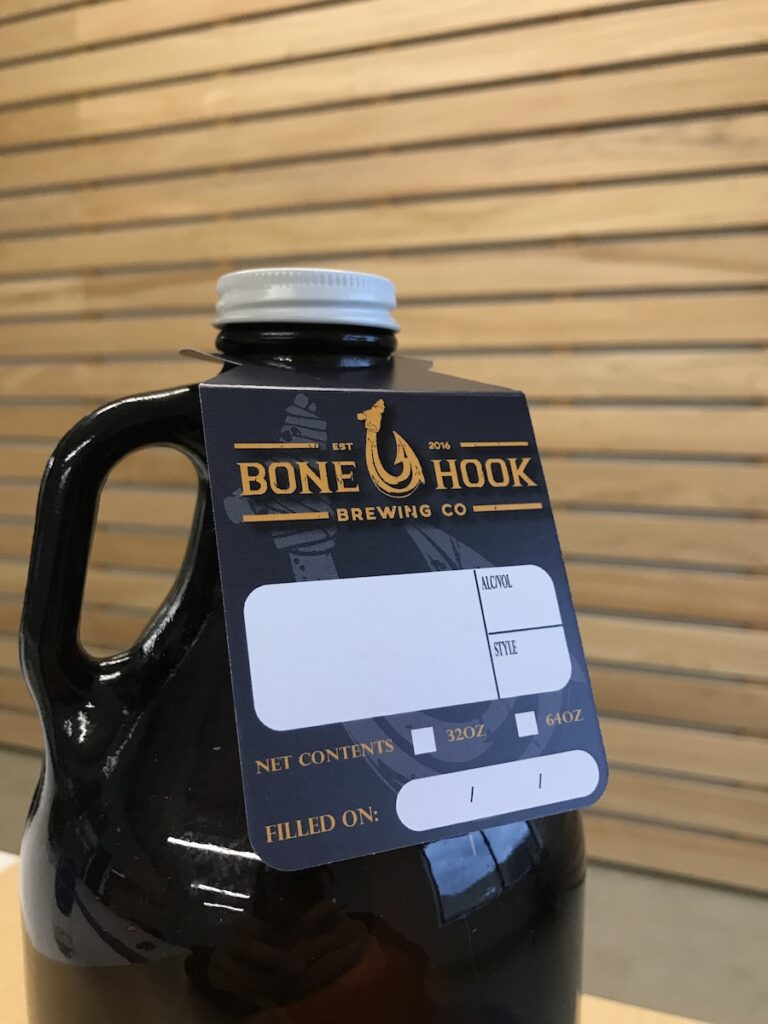
- Growlers commonly come in 64 oz. jugs requiring labels around 4×6 inches, while crowlers are typically 32 oz. cans needing labels closer to 6×9.5 inches.
- In comparison, a standard 12 oz. beer bottle or can holds less than a 32 or 64 oz. container and generally needs a shorter label, often around 3.625×8 inches.
Growlers, crowlers, and printed cans are three different ways breweries get fresh beer out of the taproom and into customers’ hands. A growler is a refillable glass jug, typically 64 ounces. A crowler is a single-use 32-ounce aluminum can filled and sealed at the bar. Printed cans take it a step further: the design is printed directly on the aluminum, so there’s no separate label at all.
Each has its place. We work with breweries on all three, and the right choice usually comes down to where the beer is going next. Here’s how to think about it.
What is a growler?
If you’ve ever left a brewery taproom with a jug of beer to drink at home that night, that was probably a growler. Growlers are airtight glass, steel, or ceramic jugs that hold draft beer for transport from the brewery. A standard growler holds 64 ounces, which is a little more than five 12-ounce beers. A half growler, sometimes called a howler, holds 32 ounces.
Growlers are reusable. Customers bring them back to the brewery for refills, which is why they’ve stayed popular with taproom-focused breweries that build local repeat business.
What is a crowler?
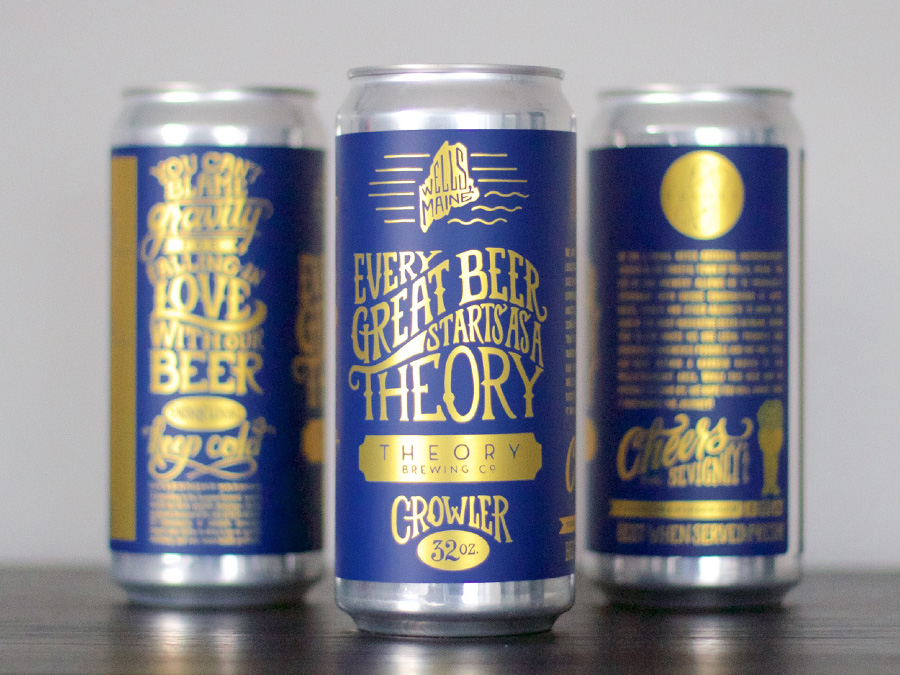
A crowler is a 32-ounce aluminum can filled and sealed on demand at the brewery. The name is a mash-up of “can” and “growler,” and the format borrows the best of both: the freshness of a growler fill with the durability of a can.
Crowlers are filled with a small countertop seamer that purges the can with CO₂, fills it with draft beer, and crimps a lid on top. Once sealed, they’re durable, fully opaque (no UV light getting through), and oxygen-free, which keeps the beer fresher for longer than a growler can.
Crowlers are single-use. After the beer is gone, the can goes in the recycling bin.
What about printed cans?
If your brewery has outgrown growler fills but isn’t ready to commit to massive offset can-printing minimums, printed cans are worth a look. Direct-to-object printing (sometimes called DTO or direct-to-can) puts a full-color design straight onto the aluminum. There’s no separate label to apply, no peeling in the cooler, and no warehouse full of pre-printed cans tying up cash.
For breweries running seasonal releases, one-off collaborations, or just trying out new artwork before committing to a long run, the math has shifted. Digital printing eliminates the plate costs that historically forced can printing into six-figure minimums. We typically work with breweries on minimums around 1,500 to 2,000 cans per design, which is realistic for a single seasonal SKU rather than a year’s worth of inventory upfront.
Worth knowing: Printed cans aren’t replacing growlers or crowlers. They’re a different tier of packaging for beer that’s leaving the taproom for retail, distribution, or events.
Growler vs. crowler vs. printed can: side by side
| Growler | Crowler | Printed Can | |
|---|---|---|---|
| Material | Glass, steel, or ceramic | Aluminum | Aluminum |
| Typical size | 32 or 64 oz | 32 oz | 12 oz standard, 12 oz sleek, or 16 oz |
| Reusable? | Yes | No (single use) | No (single use) |
| Filled when | At the taproom, on demand | At the taproom, on demand | In production, ahead of distribution |
| Where it can go | Limited in glass-free areas (beaches, pools, parks, festivals) | Anywhere cans are allowed | Anywhere cans are allowed |
| Freshness once filled | A few days | Several weeks unopened | Standard can shelf life (months) |
| Per-can cost | Higher upfront for the jug, low per fill | Low per can, plus labor and label at fill | Drops with run size; accessible at smaller batches with digital printing |
| Best for | Local taproom-to-home customers | Outdoor venues, events, sample shipping | Retail, distribution, planned seasonal SKUs |
Glass growlers and aluminum crowlers: how they work
With growler bottles, the brewer fills the glass container with the beer of your choice and seals it under counter-pressure to lock in carbonation. The result is taproom-quality beer that travels home in good shape.
The process for a crowler is a little different. An aluminum can is sanitized and purged with CO₂ to push out the oxygen that degrades flavor. The can is filled with beer, then a small seamer (a machine that looks a bit like a sewing machine) raises the can and crimps a lid on top under pressure. A label goes on the can, and the customer walks out with a 32-ounce can of fresh draft beer.
Growler vs. crowler: size
Crowlers come in one size: 32 ounces, which is two pints. Growlers give you a little more flexibility. They typically come in 32-ounce or 64-ounce sizes, so you can pick up the equivalent of two pints or four pints in one container.
Growler vs. crowler: container upkeep
Like all glass, growlers need regular cleaning. Otherwise, foamy residue builds up and the next fill won’t taste as good as it should. Glass Jug Beer Lab recommends a few simple rules to keep growlers in good shape:
- Store your growler cold until you have time to clean it to help limit bacterial growth.
- Triple rinse with hot water to help ensure your growler is clean.
- Air dry your growler upside down so that moisture can’t sit inside your container and spur bacterial growth.
- Leave the cap off to prevent the air inside your growler from becoming stagnant.
Unlike a growler, a crowler is intended for a single use. Once you’ve finished it, rinse it out and recycle it. There’s nothing to clean and nothing to bring back.
Growler vs. crowler: where can they go?
The biggest practical difference between growlers and crowlers isn’t taste. It’s where you can take them. Beaches, bike paths, campgrounds, parks, pools, and public festivals tend to prohibit glass, which makes a crowler the better fit for any setting where glass is restricted.
Shipping is the other place this matters. Growlers can technically be shipped, but glass breaks and growlers often arrive flat. Crowlers ship better because aluminum is durable, the lid is airtight, and there’s no UV light penetration to mess with the beer. For breweries that send out samples or fulfill small online orders, crowlers and printed cans are the more reliable option.
Growler vs. crowler: how much does each cost?
The last factor for most breweries is cost. The fills are similar in price, but the containers aren’t. Crowlers are usually cheaper per unit because the cans are inexpensive and there’s no reusable component. Some breweries even include the can in the price of the fill since they’re meant for one-time use.
Growlers cost more upfront because the customer is buying the jug along with the fill. The trade-off is that the jug comes back, and after the first purchase, refills are typically less expensive per ounce. If you want more beer in one trip, the 64-ounce growler is usually the better value.
Which is right for your brewery?
If your beer is mostly leaving the brewery in the hands of local customers, growlers are the classic option. They’re refillable, sustainable, and the customer comes back.
If you need a single-use, durable option for one-off fills, outdoor events, or shipping samples, crowlers are usually the answer. They’re cheap per can, glass-restriction-friendly, and they hold beer well unopened.
If you’re producing beer for distribution, retail, or planned seasonal releases, printed cans are worth a serious look. The per-can cost drops as the run grows, there are no labels to peel or apply, and the artwork becomes part of the shelf experience.
Frequently asked questions
How long does a crowler last compared to a growler?
A sealed crowler can stay fresh for several weeks unopened thanks to zero oxygen intake and no UV exposure through the aluminum. A growler, once filled, is best consumed within a few days. The seal on a growler isn’t as airtight as a crowler’s lid.
Can you ship a growler?
You can, but it’s risky. Glass can break in transit, and many growlers arrive flat. Crowlers and printed cans handle shipping much better because they’re durable and oxygen-sealed.
Do crowlers need labels?
Most do. Crowlers are typically blank aluminum cans labeled at the time of fill, so the brewery applies a pressure-sensitive label that identifies the beer, ABV, and any required information. Some breweries skip labels entirely on higher-volume SKUs by using printed cans instead.
Are printed cans cheaper than crowlers?
It depends on volume. Crowlers are inexpensive per can but require labor, a label, and a seamer at fill time. Printed cans require an upfront print run, but the cost per can drops as the order grows, and there’s no per-fill labor on the brewery’s end. Most breweries use crowlers for one-offs and printed cans for SKUs that justify a planned run.
What’s the minimum order for printed cans?
Traditional offset can printing required runs in the hundreds of thousands, which priced most craft breweries out. Digital direct-to-object printing has changed that. We typically work with breweries on minimums around 1,500 to 2,000 cans per design, which fits a single seasonal SKU rather than a year’s worth of inventory.
Can I refill a crowler?
No. Crowlers are designed for single use. Once you’ve finished it, the can goes in the recycling bin. Growlers are the reusable option.
Labels, crowlers, or printed cans: we can help you sort it out
The growler-versus-crowler decision used to be the only one. Now there’s a third option, and for breweries growing past taproom-only sales, printed cans are often the better fit. We work with breweries on all three formats: pressure-sensitive labels for growlers and crowlers, and digitally printed cans when the volume and timeline make sense.
If you’re sorting through which one fits your brewery’s stage, we’re here to help. Take a look at our digitally printed cans for a closer look at how the process works, or request a sample pack to see the print quality on actual aluminum. For label work on growlers, crowlers, or any other beer container, start with our craft beer labels page.