Can Metallic Labels Be Used on Cosmetic Containers?

Metallic labels can look great on cosmetic containers, as long as the label and the packaging actually work together. When they don’t, that’s when things go sideways: peeling, bubbling, or fading.

If you’re deciding whether metallic labels fit your product line, consider how they align with your brand image and product durability needs. Metallics can add a premium look to skincare or luxury products while adding matte or soft-touch finishes might better suit minimalist or eco-focused brands.

Below, we’ll walk through what actually makes a metallic label perform well on a cosmetic container, from material compatibility to design execution, so your labels don’t end up peeling, scratching, or underwhelming on the shelf.

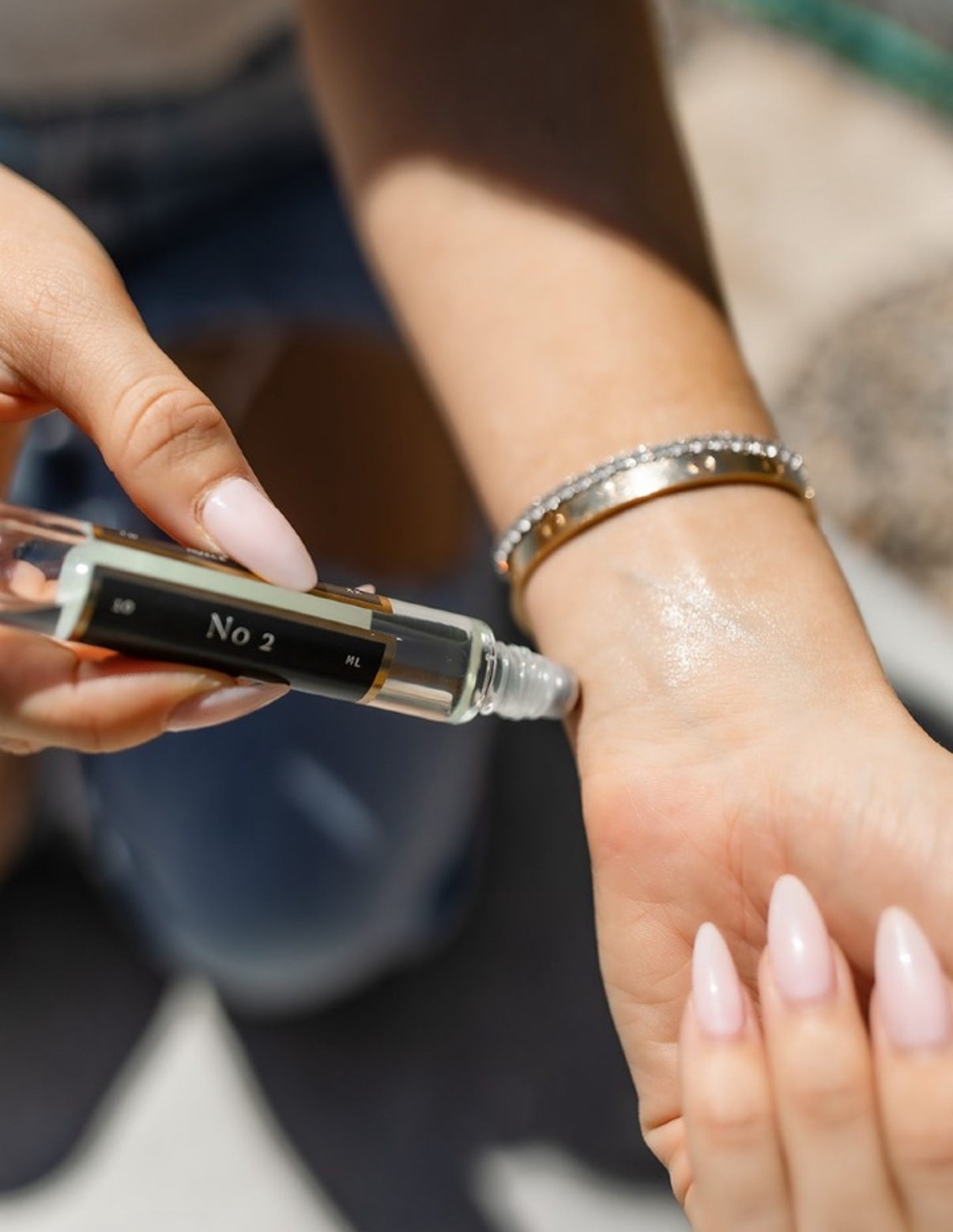
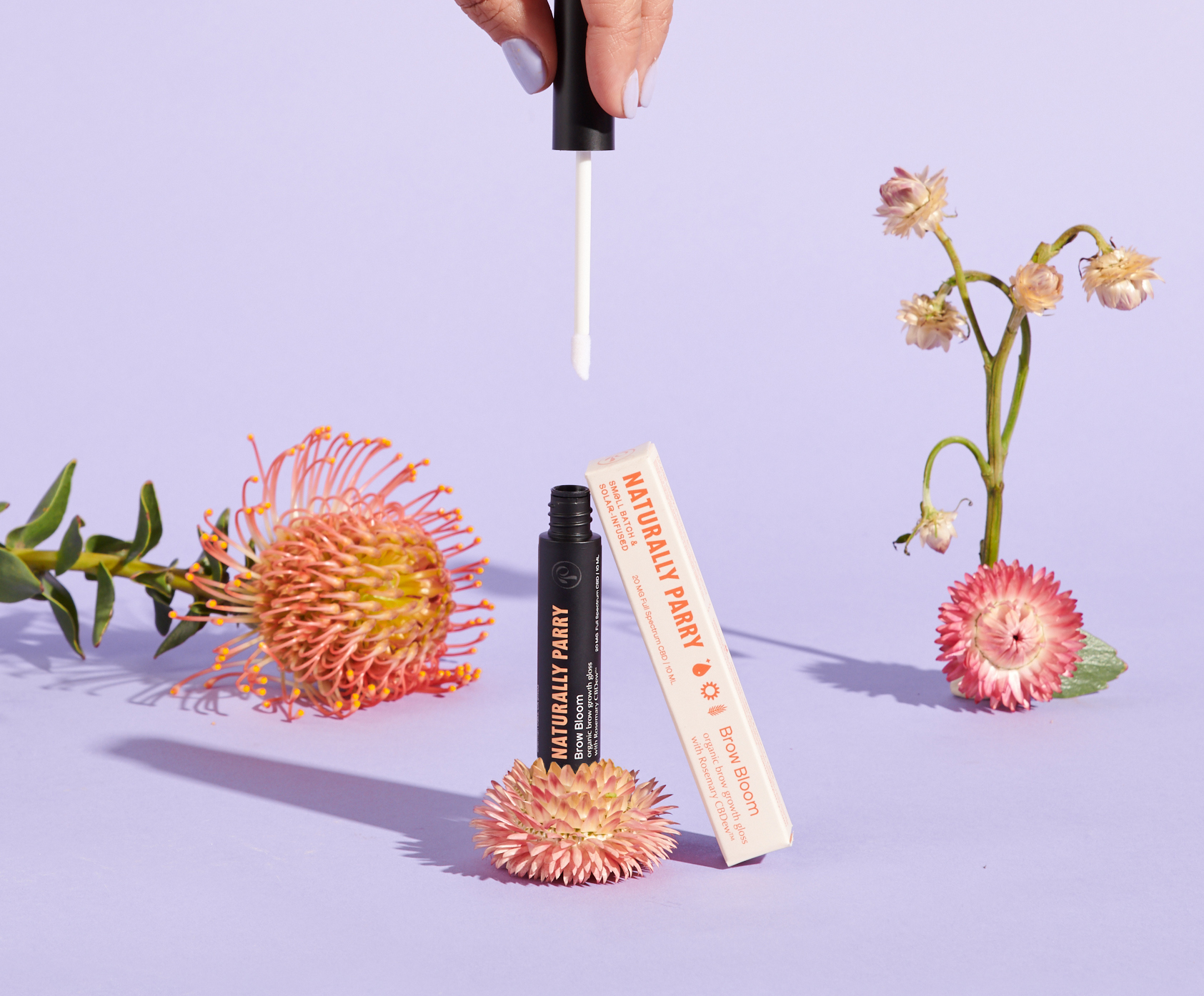
Skincare product with metallic label

What Can Cause Metallic Label Failure on Cosmetic Containers?

Metallic labels are often used to enhance the look of skincare, personal care, and beauty products. But without the right specs, they can:

  • Bubble or lift on curved or textured surfaces
  • Scratch or smudge during shipping or use
  • Dull or discolor due to oils or moisture
  • Fail to meet FDA cosmetic labeling standards

Let’s break down what you need to consider to make sure that doesn’t happen.

Label Adhesion (Depends on the Container Material and Shape)

One of the most common causes of metallic label issues is an unexpected interaction between the label material and the container. Even high-quality labels can fail if the container surface isn’t compatible with the adhesive or material.

Common cosmetic container materials include:

  • Glass: Typically rigid and smooth, glass is ideal for metallic labels because it offers great adhesion and print clarity. However, textured or frosted glass can create uneven surfaces that make it harder for labels to fully bond, so proper adhesive selection and surface testing are important.
  • PET or HDPE plastic: Often used for lightweight or squeezable bottles and jars. These plastics have lower surface energy, meaning they naturally resist adhesives more easily unless you’re using the right adhesive. The label material itself also needs to flex with the container, so options like MDO or other conformable films are often ideal for these applications. 
  • Polypropylene (PP): Soft-touch or matte-finish Polypropylene bottles or jars can cause challenges unless the label film and adhesive are matched properly. For these types of containers, we typically recommend flexible materials like MDO or conformable metallic BOPP combined with a high-tack adhesive. These options maintain strong adhesion while allowing the label to move with the container, preventing edge lifting or wrinkling.
  • Aluminum or metal containers: These offer great adhesion potential, but surface oils or condensation can interfere with label performance if not accounted for. We generally recommend choosing a durable film like metallic BOPP or PET with an aggressive adhesive formulated for metal substrates. 

Container shape also matters:

  • Flat or slightly curved containers work well with metallic films.
  • Tapered, irregular, or squeezable containers require a conformable label material like metallic BOPP with a flexible adhesive setup, or a shrink sleeve for full 360° coverage and complex shapes; metallic effects are possible on shrink sleeves via metallic inks/films, but they require distortion compensation and pre-production testing.

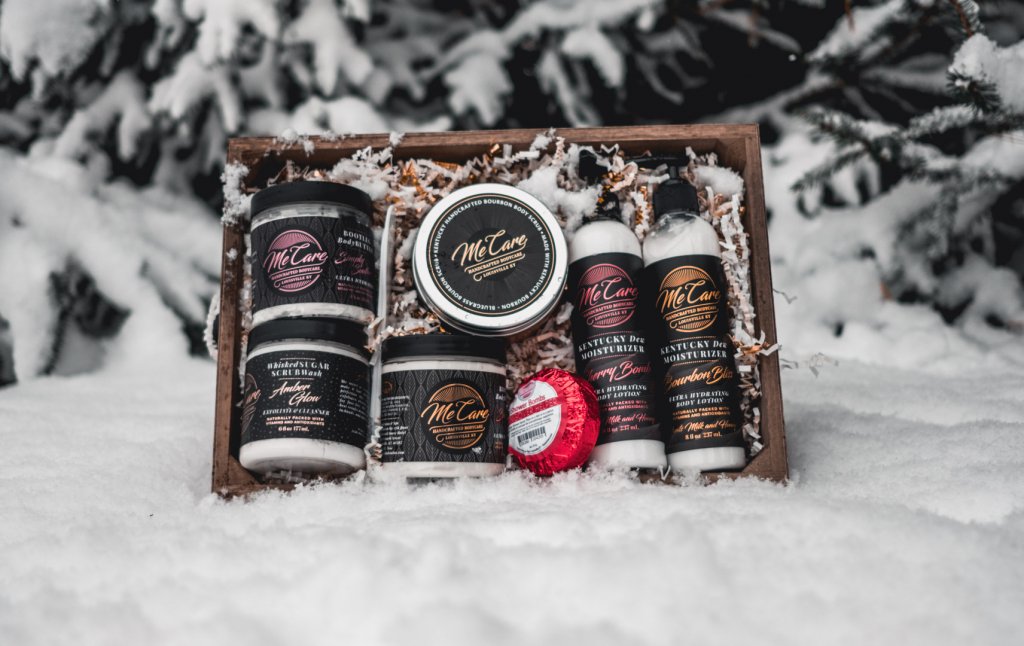
Cosmetic containers with custom labels for Body scrub, lotion. sunscreen

Environmental Exposure

From production lines to bathroom counters, your products might take a beating. Every stage adds something: scratches, moisture, oil, or friction.

Here’s what your metallic labels might need to withstand:

  • Moisture and humidity in bathrooms, shipping containers, and storage
  • Oil exposure from skincare formulas like moisturizers, balms, and serums
  • Abrasion from being tossed in bags or drawers
  • Temperature swings from warehouse storage or transportation (and those fancy skincare fridges)
  • Friction between containers in boxes or on store shelves

To avoid fading or peeling, we often recommend using a laminate (like gloss, matte, or soft-touch) to protect the metallic surface. Learn more about lamination options here.

In production environments, factors like humidity, line speed, and container temperature during labeling can all affect performance. For example, labeling cold or damp containers can cause bubbling or lifting unless the adhesive is matched to those conditions. Make sure your label supplier knows how and where you’re applying labels.

Design and Print Execution

A metallic label only works if it gives you the effect you’re going for, and that comes down to thoughtful design and the right print approach.

Here’s how to get that right:

  • Use white ink underlays beneath your CMYK colors to create contrast and block out the metallic background in certain areas. Without this layer, colors can appear washed out or behave unpredictably. Think of it like priming a wall before you paint; it helps your colors show up the way you expect. White ink isn’t automatically added when printing on metallic materials, it has to be called out in your artwork or discussed during setup.
  • Metallic BOPP vs. foil stamping:
    • Metallic BOPP gives your entire label a subtle, metallic sheen and is ideal for full designs or longer production runs.
    • Foil stamping is an embellishment that adds reflective metallic accents like gold, silver, or copper to specific areas such as logos or borders.
  • Finish: Soft-touch or matte laminates tone down reflectivity for a more elegant feel. Gloss finishes enhance shine.
  • Spot embellishments like cold foil, screen printing, or spot UV can draw attention to logos or product names.

When preparing artwork, make sure your designer specifies white ink layers and metallic effects in vector format (AI or PDF files). Clearly label these layers so they can be processed correctly during print setup.

Compliance and Labeling Requirements

Cosmetic products sold in the U.S. must comply with FDA regulations (21 CFR 701) and, if applicable, ISO 22715. That includes requirements around:

  • Label durability and legibility under normal storage and use
  • Ingredient disclosure and readability (especially on metallic surfaces)
  • Label permanence meaning the printed information must stay attached and readable even after repeated handling, exposure to oils, or sitting on a bathroom counter

If your label flakes, smears, or fades out, that’s not just a bad look, it could be a labeling problem too.

For example, if ingredient text on a metallic label fades due to oil exposure, that could trigger a reprint or even a compliance issue. Simple adjustments like using an opaque white underlayer, increasing font weight, or selecting a protective laminate can prevent costly issues across product lines.

Sustainability and Recyclability

Most metallic labels, especially those made from metallic BOPP or PET, are not curbside recyclable unless the label is removed before recycling. If sustainability is a core priority, there are label options that can help you balance both goals:

  • Wash-off adhesives that allow labels to be removed cleanly during the recycling process, especially helpful if your containers are PET or glass and you want them to be fully recyclable
  • Cold foil embellishment over a recyclable face stock, which uses less material than full metallized films
  • Eco-friendly label materials made from post-consumer waste or engineered to minimize environmental impact

If sustainability matters to your brand, we’ll help you source the right materials and adhesives that meet your packaging and environmental goals. Look for certifications like FSC® or APR where your materials meet recognized recycling or sustainability standards. 

Quick Checklist: Is Your Metallic Label Ready for Cosmetic Containers?

  • Container is smooth or only slightly curved
  • Label material is flexible (e.g., metallic BOPP)
  • Adhesive is matched to the container surface and environment
  • Laminate protects against oils, abrasion, and moisture
  • White ink is used for legibility and color accuracy
  • Text meets FDA readability and durability standards
  • Application conditions (temperature, surface prep) are controlled
  • Sustainability options are considered if needed

Not sure if metallic BOPP will stick to your container? Contact us and we’ll send samples or talk through what you’re working with. We’ve printed metallic labels for skincare bottles, jars, and high-end cosmetics, and we’ll help you make the right decision.

The Best Label Materials for Curved Surfaces

Labeling curved containers comes with real risks: labels can wrinkle, bubble, or lift at the edges, which leads to costly reapplication, compliance issues if critical information becomes unreadable, and weak shelf appeal when branding looks distorted or poorly applied.

This guide focuses on shrink sleeves, vinyl, and BOPP, and we’ll walk through which material performs best based on container shape, durability needs, and production requirements.

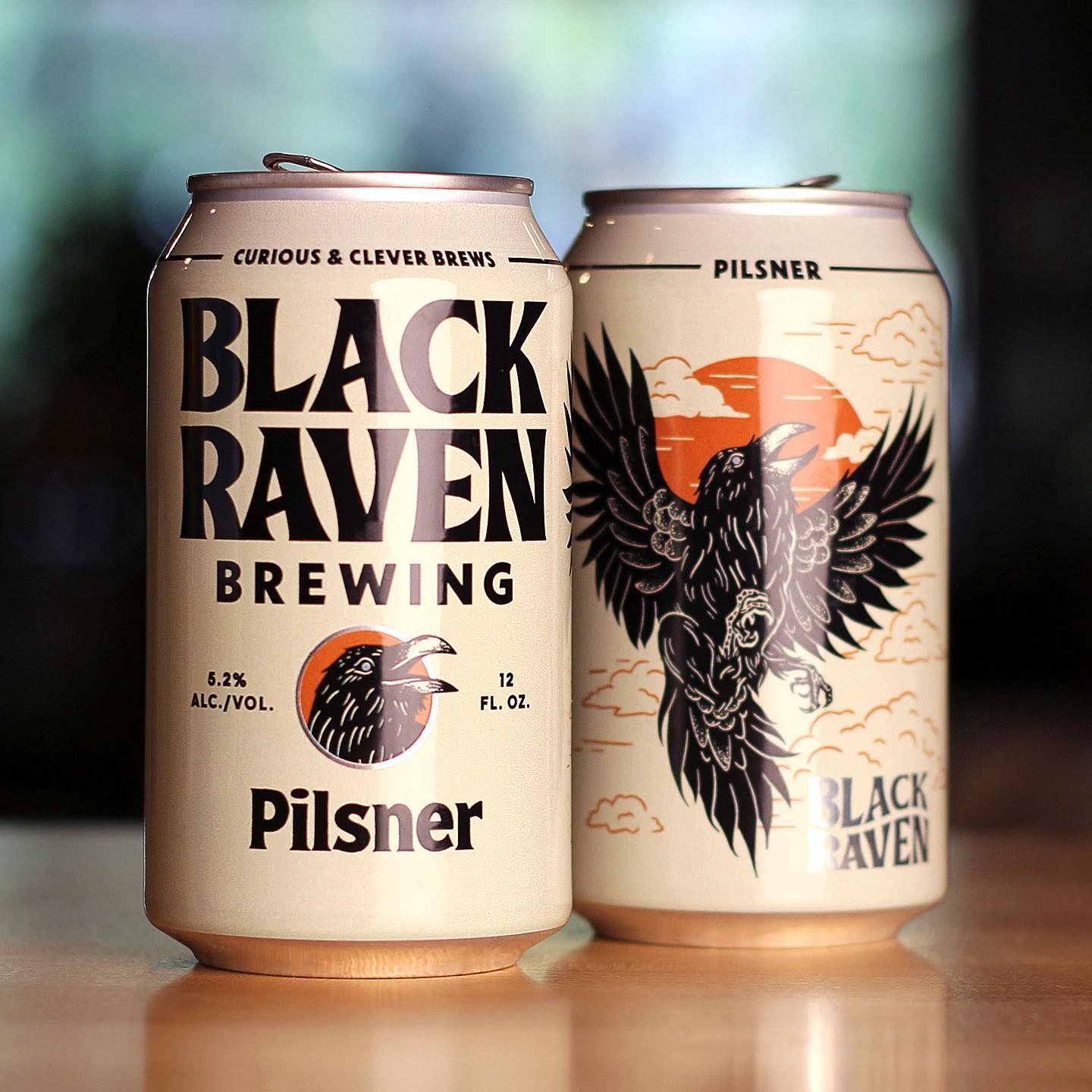
Beer can with shrink sleeve

Shrink Sleeves: Best for Tight, Complex, or Irregular Curves

Shrink sleeves are typically the best option once your container goes beyond light curvature into moderate tapers and smooth contours.

Before we go any further—very aggressive tapers, sharp corners, or deep textures can still be challenging and usually require different approaches to avoid distortion or poor film laydown.

Why Shrink Sleeves Fit Curved Surfaces So Well

Shrink sleeves start as printed film tubes that slide over your container. With heat, the film shrinks and grips every curve for a clean, wrinkle-free fit. Picking the right shrink film helps it conform smoothly to your container’s shape and avoids puckering or distortion.

Use Cases and Examples

  • Beer, soda, energy drink, and ready-to-drink cans that require full 360° coverage and strong shelf appeal
  • Contoured vitamin bottles, kombucha bottles, sport drink bottles, and cleaning spray bottles
  • Uniquely shaped personal care or wellness packaging where full shrink coverage prevents lifting or wrinkling

Benefits

  • Conforms cleanly to tight curves without lifting or wrinkling
  • Full 360° design coverage for strong shelf presence
  • Built-in tamper-evident options through perforation or seal band
  • Holds up well in moisture, abrasion, and refrigerated conditions

Considerations and How to Address Them

  • Requires a heat tunnel for application
  • Artwork needs pre-distortion to account for shrink behavior (don’t worry, we can help with that)
  • Recycling performance varies by film

Finishing Options: Matte, gloss, soft-touch, and spot varnish accents.

Cosmetic packaging and labels

MDO: Best for Moderate Flexibility and Premium Look

MDO labels are more flexible than standard films and perform well on mild to moderately curved surfaces. They stretch slightly to accommodate curvature, making them a good option when shrink sleeves aren’t necessary but BOPP may lift or wrinkle.

Use Cases and Examples

  • Cosmetic tubes, lotion bottles, aluminum spray bottles, shampoo bottles, and squeezable personal care containers
  • Premium skincare jars, CBD products, beauty serums, and soft-touch wellness packaging
  • Products needing matte, metallic, or tactile finishes

Benefits

  • More flexibility than BOPP, better fit on curved or squeezable surfaces
  • Ideal for premium finishes and tactile coatings
  • Works well for short to medium production runs
  • No heat equipment needed

Considerations and How to Address Them

  • Can still wrinkle or lift on sharper curves
  • Slightly more expensive than BOPP
  • Adhesive must be matched to container surface and conditions (cold, moisture, squeezability)

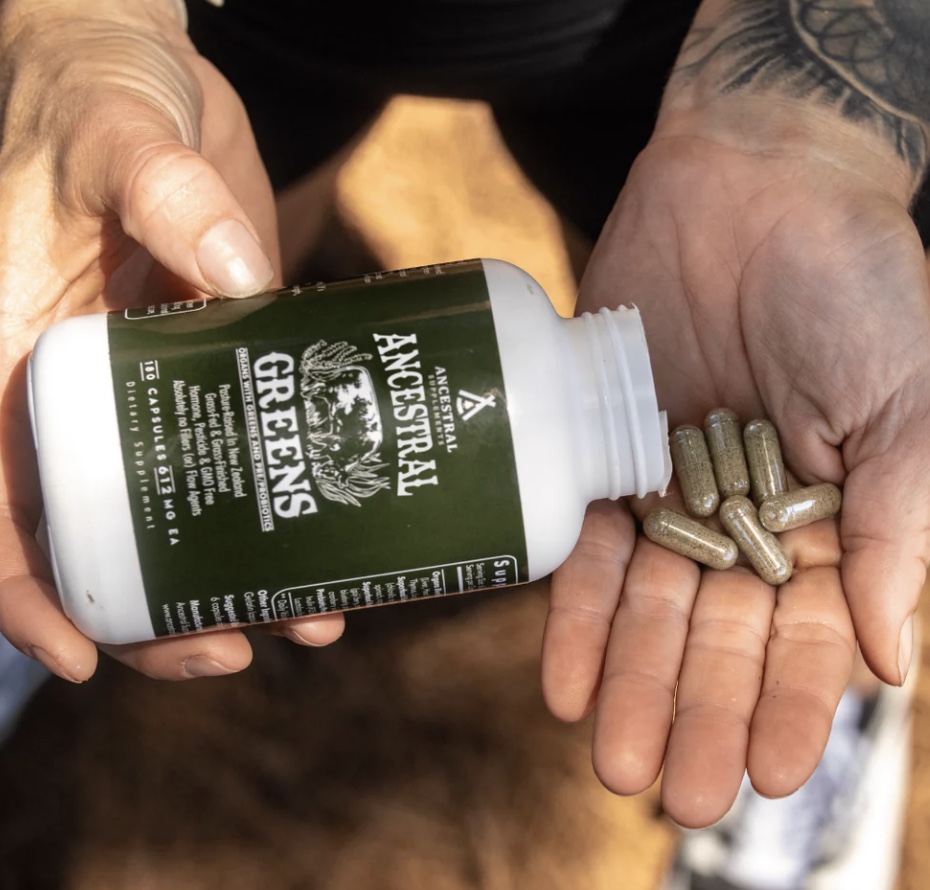
supplement labels

BOPP: Best for Cost-Effective Runs on Mild Curves

BOPP is a durable, moisture-resistant film used widely for product labels. It performs well on flat or lightly curved surfaces but does not flex as well as vinyl when curvature increases.

Use Cases and Examples

  • Flat or lightly curved plastic jars like spices, peanut butter, bath salts, and pantry items
  • Lightly curved beverage bottles, such as juice, cold brew, iced tea, and kombucha
  • Cost-effective packaging for household products, condiments, and cleaning supplies

Benefits

  • Strong, water-resistant, and scuff-resistant
  • Cost-effective
  • Available in white, clear, and metallic
  • Works well with digital 

Considerations and How to Address Them

  • Limited flexibility, may lift on sharper curves
  • Adhesive selection is critical for cold, wet, or textured surfaces
  • Not suitable for deep tapers, ridges, or heavy contouring

Label Material Comparison for Curved Surfaces

Label Type Best For Coverage Curvature Fit Equipment Needed Recyclability Durability
Shrink Sleeves  Extreme curves, full-body branding 360° Excellent Heat tunnel Good  High
MDO Mild to moderate curves, flexible containers Front/side (≤75%) Good None Variable Medium
BOPP Light curves, cost-effective runs Front panel or wrap (≤60%) Limited None Variable Medium

Not sure which label makes the most sense for your container? Contact us and we’ll help you make the right call.

What Label Materials Work Best in Freezer Storage?

Labels used in cold environments need to stick securely, survive moisture and condensation, and hold up to constant temperature swings.

If you’re choosing labels that must perform in these conditions, this guide breaks down what works, what doesn’t, and why.

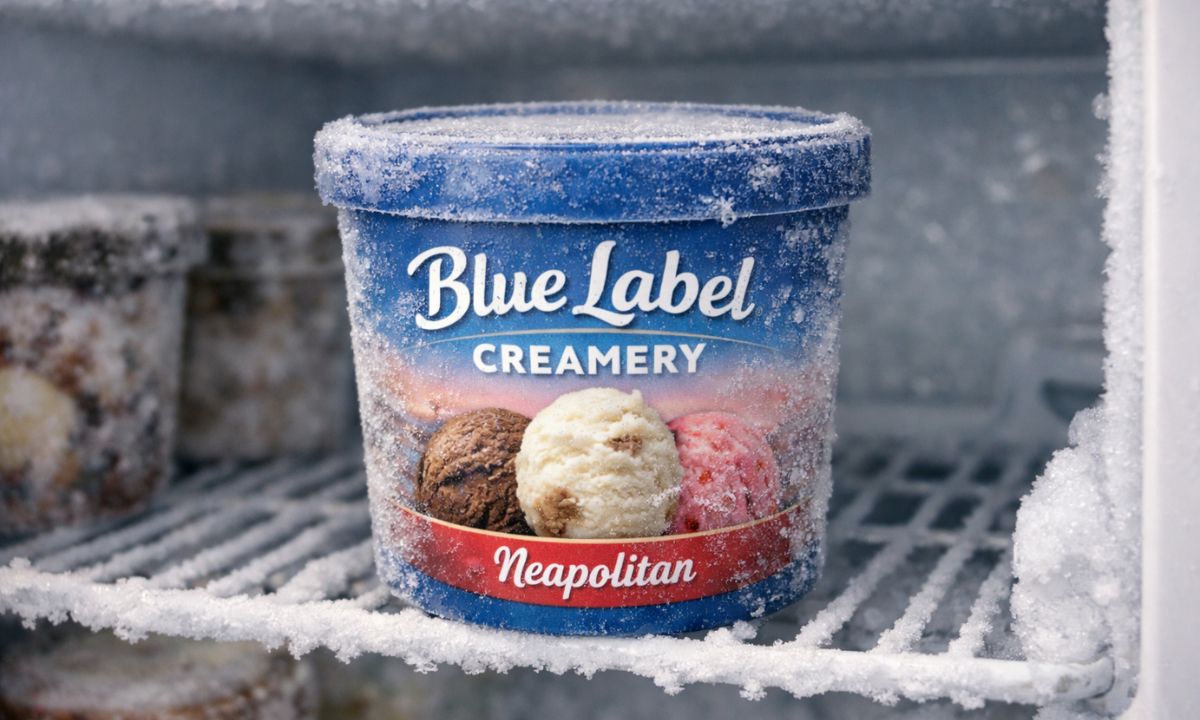
Ice cream with a freezer safe label

Understanding Real-World Freezer Conditions

Before choosing a label material, it’s important to consider how and where labels will be applied and stored:

Scenario What to Consider
Application before freezing Requires materials and adhesives that bond at temperatures above freezing (35°F or higher).
Application onto already frozen products Needs cold-temperature application adhesives (down to -20°F or lower) with fast initial tack.
High-condensation environments Materials must resist moisture absorption, edge lift, and ink smudging. BOPP excels here.
Flexible or contoured packaging (pouches, tubs) Requires flexible facestocks like MDO or BOPP with conformability.
Long-term freezer storage Requires durable facestock (BOPP) and freezer-rated adhesive that won’t fail over time.

BOPP (Biaxially Oriented Polypropylene)

BOPP is the most commonly used freezer label material due to its durability, moisture resistance, and versatility.

Why BOPP Works in Freezer Environments:

  • Moisture resistant: Won’t swell, distort, or absorb water.
  • Stays flat and doesn’t curl or warp: flat, resists curling in freeze-thaw cycles.
  • Flexible: Works on both flat and slightly curved surfaces.
  • Cost-effective: Cheaper than other materials while offering stronger cold performance than coated paper.

Best Practices:

  • Use rounded corners to prevent edge lift.
  • Add laminate for extra moisture and scuff resistance.
  • Often paired with freezer-rated adhesives for long-term performance.

Ideal for:

  • Frozen food packaging (sleeves, pouches, containers).
  • Pharma, medical, and nutraceutical products.
  • Warehouse inventory labels.

Polyester (PET)

PET is a great option when you need labels that can handle rough handling, moisture, or long-term freezer storage.

Why PET Works in Freezer Environments:

  • Built to handle heavy use, resist tearing, and stay intact over time.
  • Resists scratches and holds up to handling, moisture, and product contents.
  • Performs well in cold storage for long periods without breaking down.

Best Practices:

  • Use on flat, rigid containers like metal, glass, or hard plastic.
  • Add laminate if labels are exposed to abrasion or cleaning.
  • Not ideal for curved or flexible surfaces.

Ideal for:

  • Frozen meal trays, glass jars, or clear PET tubs.
  • Health and beauty packaging like skincare bottles or bath product jars.
  • Long-term frozen food packaging that needs to stay legible and durable.

MDO

MDO is best when you need a label that can flex, bend, or wrap around curved packaging.

Why MDO Works in Freezer Environments:

  • Highly flexible, great for contoured or irregular surfaces.
  • Durable and resistant to scuffs and handling.
  • Can handle bending and squeezing without lifting.

Best Practices:

  • Use when labeling tubs, pouches, or flexible packaging.
  • Choose with laminate for added protection in cold environments.
  • Avoid in harsh freezing conditions unless flexibility is required.

Ideal for:

  • Wrap-around labels for tubs, bags, and flexible containers.
  • Specialty or outdoor freezer applications.
  • Irregular surfaces where BOPP or PET may lift.

Material Comparison Snapshot

Material Durability Moisture Resistance Flexibility Cost Best Use Case
BOPP High High Moderate $ General-purpose freezer labels
PET Very High High Low $$ Harsh handling or chemical exposure
MDO High Moderate-High* High $ Flexible surfaces, specialty needs

*Performance depends on adhesive and laminate selection.

Matching Material to Real-World Applications

Packaging Type Storage Condition Label Stress Recommended Material
Frozen ice cream tub (paper or cardboard) Blast freezer, high condensation Moisture, edge lift BOPP + acrylic adhesive
Plastic pouch (LDPE/HDPE) Commercial freezer Flexibility, low-tack surface MDO or BOPP with high-tack adhesive
Glass bottle with condensation Upright freezer Surface moisture, slipping BOPP with high-tack adhesive
Warehouse rack labels Long-term exposure, abrasion, scanning Impact, tearing PET, BOPP

Label Materials for Freezer Storage

Freezer environments don’t forgive label mistakes. To avoid failures like peeling, curling, or smudging, start with the right material, and make sure it’s paired with the correct freezer-grade adhesive.

Need help choosing or testing materials for your packaging? Request a sample pack and we’ll help you find the right match for your exact conditions.

What’s Required on a Supplement Facts Panel?

If you make or sell dietary supplements, your label isn’t complete without a compliant Supplement Facts panel, that black-and-white box that spells out exactly what’s inside your product.

Every line, unit, and rule in that box is dictated by the FDA. Miss something, and you could end up reprinting your labels, delaying shipments, or getting flagged during inspection.

Here’s what needs to go on your Supplement Facts panel:

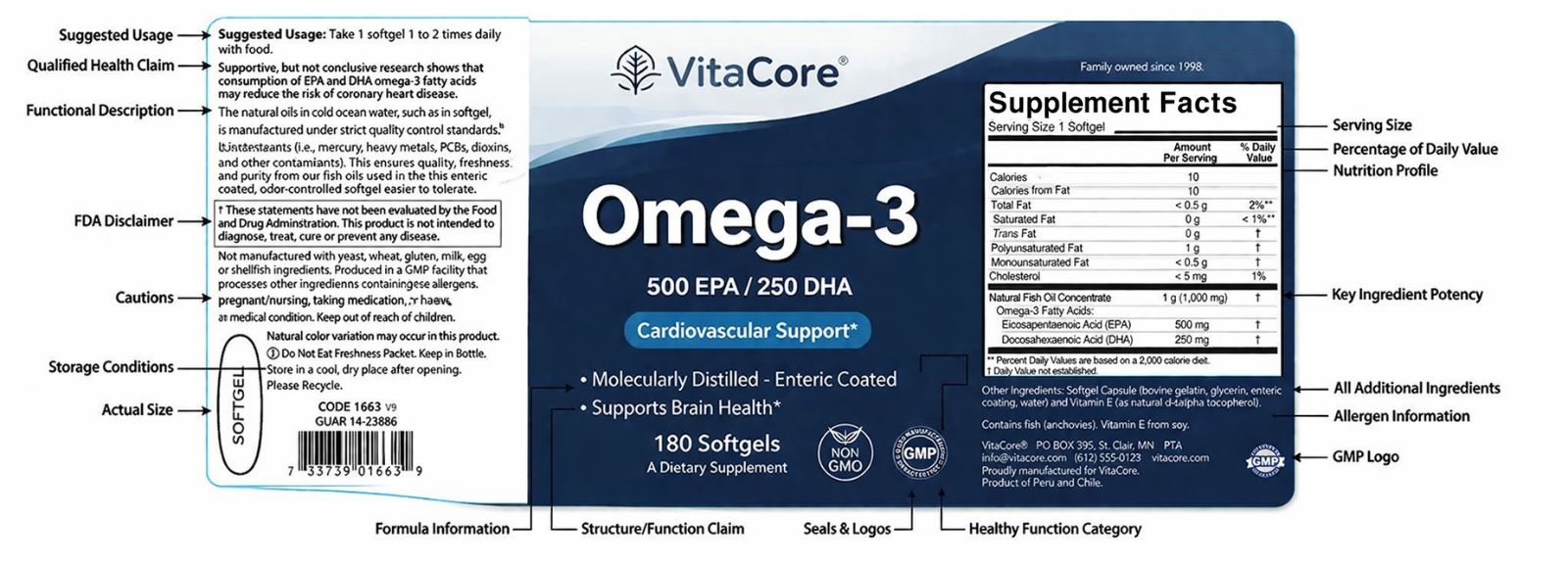
Supplement Facts Nutrition Panel

The Title: “Supplement Facts”

The heading must say “Supplement Facts” in bold type across the top of a boxed section on your label. No creative alternatives or substitutions. It has to be this exact phrase.

The box itself needs to be clearly outlined so anyone, including the FDA, can spot it right away. Think of it as the “nutrition label” of the supplement world, just with a different set of rules.

Serving Size and Servings Per Container

These two lines sit right under the title and set the tone for the rest of the panel:

  • Serving Size: How much a person takes in one serving (like “1 capsule,” “2 gummies,” or “1 scoop”).
  • Servings Per Container: The total number of servings in the bottle or pouch.

They have to line up with what you say in your directions for use. If the serving size doesn’t match the directions, that’s an instant red flag for compliance reviewers.

Ingredient Breakdown

This section lists the dietary ingredients in your product and how much of each is in a serving. This is where FDA inspectors look, so accuracy counts.

  • Ingredients with Daily Values (DVs): Vitamins and minerals with established daily recommendations must show both the exact amount (for example, 500 mg) and the % Daily Value.
  • Ingredients without DVs: For herbs, amino acids, or other ingredients without a set DV, show the amount and use a “†” footnote with “Daily Value not established.”
  • Units of measure: Stick to mg, mcg, or IU. Avoid shorthand.

You’ll also need a heavy black line to separate ingredients that have DVs from those that don’t.

Other Required Details in the Panel

You also need:

  • A footnote if any ingredients don’t have a DV.
  • Proper line weights and indentation so your panel follows the FDA format.
    • Line weights: Use a thicker border (around 2.5 pt) for the outside of the box and thinner lines (around 0.5 pt) to separate sections inside the panel.
    • Indentation and alignment: Keep nutrient names flush left, with amounts and % Daily Values aligned in neat right-hand columns. Sub-ingredients (like “Saturated Fat” under “Total Fat”) should be indented slightly to show hierarchy.
    • You can see the official formatting examples in the FDA’s Supplement Facts Label examples PDF.
  • Readable contrast. Black text on white or light background is the standard.

Ingredient List (Outside the Box)

The Supplement Facts panel only covers active dietary ingredients. Everything else, such as capsule materials, flavors, sweeteners, and colors goes in a separate ingredient list outside the box.

That list must:

  • Go in descending order by weight.
  • Use common names, with Latin names for botanicals (for example, Curcuma longa (root)).
  • List proprietary blends by total weight, then show ingredients inside that blend in order of predominance.
  • Include any major allergens if present (milk, eggs, fish, shellfish, tree nuts, peanuts, wheat, soy, or sesame).

This isn’t just for compliance. It’s for transparency. Consumers want to know exactly what’s in their supplement, and FDA labeling laws make sure they can.

Everything Else the FDA Expects on the Label

Beyond the Supplement Facts panel, every supplement needs a few other essentials:

  • Product name and identity: For example, “Vitamin D3 Dietary Supplement.”
  • Net quantity: For example, “60 softgels” or “Net Wt. 150 g.”
  • Manufacturer or distributor info: Include a full address if it’s not easily found online.
  • Directions for use: Clear, specific, and consistent with your serving size.
  • Lot or batch code: For tracking and quality control.

If your product makes a structure/function claim such as “supports immune health” or “promotes relaxation,” you must also include this exact disclaimer:

“These statements have not been evaluated by the Food and Drug Administration. This product is not intended to diagnose, treat, cure, or prevent any disease.”

Without the disclaimer, the FDA could treat your label as making an unapproved drug claim, which can lead to product seizures, mandatory relabeling, and costly recalls or destroyed inventory.

Your Supplement Compliance Checklist

Before your label heads to print, make sure you’ve covered your bases:

  • “Supplement Facts” title
  • Serving size and servings per container
  • Each ingredient listed with amount and units
  • % Daily Value (if applicable)
  • “† Daily Value not established” (if needed)
  • Proper formatting and font size
  • Full ingredient list outside the box
  • Manufacturer or distributor info
  • Allergen statements (if applicable)
  • DSHEA disclaimer (if you make claims)

Double-checking these before your final proof is an easy way to save thousands in reprints later.

Supplement Labels for Trusted Brands

If you’re not completely sure your label is compliant, don’t risk it, reach out to our team. We’ll help you print a label that’s sharp, compliant, and shelf-ready.

Can Clear Labels Be Used on Plastic Packaging?

Yes, they can, and they’re a popular choice for brands that want a clean look without covering up the product itself. Below, we’ll walk through what you need to consider to avoid label issues and get the “no-label look” just right.

Key Considerations

Know Your Plastic

The surface and shape of your packaging can make a difference for a clear label’s performance.

  • PET (polyethylene terephthalate): A clear, rigid plastic often used in beverage bottles and personal care containers. Great for clear labels.
  • HDPE (high-density polyethylene): A more flexible, textured plastic used for shampoo bottles, cleaning products, and more. Adhesion is harder, so use a strong adhesive and flexible film to ensure full contact.
  • PP (polypropylene): A lightweight plastic that’s harder for adhesives to stick to. It’s used in tubs and jars and requires a specially formulated adhesive.
  • LDPE (low-density polyethylene): Very flexible, often found in squeezable tubes for lotions or gels. You’ll need a label film that can bend and stretch without peeling.

Have a curved or tapered container? That’s another challenge. Labels are more likely to wrinkle or lift unless your label film is flexible enough and applied with the right pressure and angle.

Pro tip: If you’re using HDPE or another flexible plastic (like LDPE or soft-touch PP), look for a conformable clear film (like MDO) and a high-tack adhesive built for textured or squeezable surfaces.

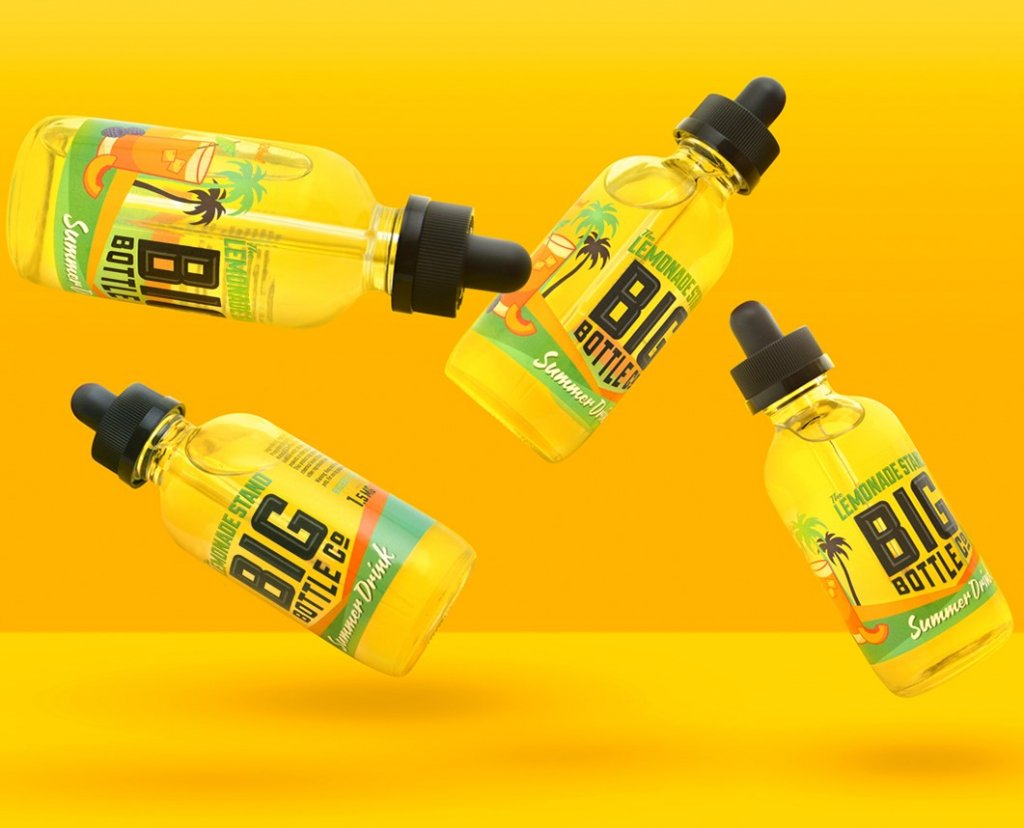
E-Juice bottles with custom clear labels

Consider the Product’s Environment

Plan for the environments that your product will encounter during its full life cycle. Where’s this product going next?

  • Cold storage or refrigeration? You’ll need moisture-resistant materials and cold-temp adhesives that can handle condensation without peeling or slipping.
  • Wet environments like bathrooms, ice buckets, or kitchens? Lamination helps protect your label from moisture, scratches, and smudges.
  • Handled often (like personal care, cosmetic, or cleaning products)? Use a scuff-resistant finish to help your labels stay clean and intact.
  • Exposure to oils or chemicals? Choose chemical-resistant label materials and inks that won’t break down.

These details really matter once your labels hit the production line. Clear labels, especially glossy ones, tend to make surface imperfections more visible. If your label scuffs or smudges, it shows.

Design Considerations

Clear labels let your product show through, but they also reveal every bubble, fingerprint, and printing flaw.

Common design pitfalls:

  • Transparent labels (especially important details) over colorful products without a white underprint can completely disappear.
  • Light-colored text becomes unreadable when placed over dark liquids or product backgrounds.
  • Thin lines or lightly printed details can disappear completely once applied.

How to design for clear labels:

  • Use white ink underlays behind important elements so your branding and product info stay legible. Without this layer, your text and logos might vanish once applied.
  • Test your label on a filled container, not just an empty one. The look changes when there’s product behind the label.
  • Focus on contrast, not just aesthetics. For example, avoid placing pale gray type over a dark product without white backing. It’ll be invisible once applied.

If you’re using things like foil, spot varnish, or custom shapes, just double-check that they’ll still look sharp on a clear label. See what finishing options we offer »

Recyclability and Sustainability Goals

Clear labels and plastic packaging can be recycling-friendly if they’re designed with the right materials.

To support recyclability:

  • Match your label material to your container, for example, pair a polypropylene (PP) label with a polypropylene (PP) bottle. This makes the entire package easier to sort and recycle.
  • Avoid full-wrap labels that block optical scanners during sorting.
  • Use labels that meet APR (Association of Plastic Recyclers) standards, like CleanFlake, which cleanly separate from containers during washing in the recycling process.

Quick Checklist: Will Your Clear Label Work on Your Plastic Package?

  • Do you know what type of plastic your container is made from? It impacts adhesive and label material selection.
  • Have you tested for shape challenges (tapered, squeezable, textured)? This prevents wrinkling and lifting.
  • Are you planning for exposure to moisture, oils, or friction? This affects material and finish durability.
  • Is your design legible when applied to a filled container? This ensures branding and info remain visible.
  • Will your label support your recyclability goals? This helps meet sustainability standards.

Want the No-Label Look Without the Headaches?

Clear labels can look amazing if you get the details right. We’ve helped thousands of brands pull it off, and we’re happy to help you too. Contact us and we’ll show you what works.

Can Paper Labels Be Used in Damp or Wet Environments?

If your product is headed for a cooler, fridge, ice bucket, or even just a humid environment, the wrong label material will curl, peel, or smear before your customer even uses the product. If you’re wondering whether paper labels can hold up in those environments, yes, they can, but not just any paper.

Here’s how to evaluate your options, when paper makes sense, and when you’ll need to consider something tougher.

UV Labels

Standard Paper Labels: Where They Fall Short

Let’s get this out of the way first: standard uncoated paper labels aren’t built for moisture. They’ look great on dry shelves, but in damp or wet conditions, they’re at risk for:

  • Curling and peeling from moisture weakening the adhesive
  • Smudging or bleeding if ink isn’t properly protected
  • Layers separating or peeling apart when moisture soaks in
  • Edge lifting as water creeps in through the sides, causing bubbling or distortion

You’ll typically see these used on products with little to no moisture exposure. Think pantry items, dry goods, or short-term promotional products where longevity isn’t critical.

Not recommended for: refrigerated beverages, bathroom products, outdoor retail displays, or any humid or wet environment.

Wet-Strength Paper Labels: Paper That Can Take a Hit

Wet-strength paper is engineered with additives that help the paper fibers hold together when wet. This isn’t your average paper. It’s designed to maintain its structure during short-term moisture exposure.

Wet-strength means water-resistant, not waterproof. These labels can handle dampness but not extended soaking.

Pros:

  • Retains shape and legibility when damp
  • Offers the look and feel of traditional paper
  • Compatible with a wide range of adhesives, especially those rated for cool or humid conditions

Cons:

  • Still vulnerable to long-term moisture exposure
  • May need laminates or varnishes for added durability

Best for:

  • Products that will be refrigerated but not soaked
  • Wine bottles stored in ice buckets for short durations
  • Personal care items used in humid bathrooms

Finish options:

  • Laminates or varnishes for added moisture resistance and durability
  • Tactile or textured papers for premium looks

When to choose it: Use wet-strength paper if your product only faces occasional condensation and you want a classic paper look 

Welded Materials: A Step Above in Moisture-Resistant Paper

Welded materials are wet-strength label stocks designed to withstand chilled and damp conditions. Developed primarily for wine and spirits, this paper includes wet-strength additives and a multi-layer construction that resists condensation.

It’s often paired with a cold-temp adhesive designed to perform under moisture and condensation. We can help you choose the right adhesive based on your product’s storage temperature and surface.

What makes it different:

  • Handles ice bucket conditions for extended periods (several hours)
  • Retains a premium paper texture
  • Built with moisture resistance throughout, not just as a coating

Ideal for:

If your product lives in a fridge and faces occasional splashes, wet-strength paper will likely do the job. If it’s going to spend serious time in an ice bucket or chilled water, Welded materials are your safer bet.

Note: Even with its durability, welded materials aren’t ideal for wet shipping environments or heavy scuffing. For those, synthetic labels are the next step.

When to choose it: If appearance matters as much as performance, like with premium beverage or food packaging, EverOpaque delivers both visual appeal and moisture defense.

White Vinyl Labels

Synthetic Labels: When You Need Waterproof, Not Just Water-Resistant

If your product is likely to get soaked, handled aggressively, or exposed to chemicals or abrasion, it’s time to step up to synthetic labels like polypropylene (including BOPP, a durable plastic film), polyester, or vinyl.

These plastics can handle water, abrasion, and handling without falling apart.

Pros:

  • Fully waterproof
  • Won’t swell, peel, or separate
  • Excellent long-term durability in rough conditions
  • Compatible with adhesives that perform on cold or damp surfaces
  • Can mimic the look of matte or paper finishes

Cons:

  • Potentially higher cost than paper
  • Less tactile than real paper
  • Recyclability varies by material and facility

Best for:

  • Juice bottles, kombucha, or anything stored in ice or water for multiple hours
  • Bath and body products in consistently wet environments
  • Outdoor or industrial applications

When to choose it: If your label will be fully submerged, constantly exposed to condensation, or shipped through wet environments, synthetics guarantee performance where paper can’t.

Comparison at a Glance

Use this chart as a quick decision guide when comparing moisture exposure, aesthetics, and cost.

Material Moisture Resistance Best For Looks Like Paper? Cost
Standard Paper Low Dry shelves only Yes $$
Wet-Strength Paper Medium Refrigerated or damp settings Yes $$
Welded Materials Medium-High Ice buckets, chillers Yes (premium) $$$
Synthetic Film High Soaked or rough conditions Can mimic paper $

Best Material by Application

  • Glass bottles stored in chillers: Welded materials. Stays readable even after hours in an ice bucket.
  • Cost-effective beer bottle label: Wet-strength paper with varnish. Handles condensation and splashes.
  • Cosmetics or personal care in bathrooms: Polypropylene. Resistant to humidity and water.
  • Premium wine label that won’t curl: Felt stock with a film welded to create a moisture barrier. Combines aesthetics and durability.
  • Water bottles or items in ice tubs: Synthetic film. Zero risk of peeling or distortion.

So, Can Paper Labels Be Used in Damp or Wet Environments?

Paper labels can survive damp and wet environments, but only if you’re using the right kind of paper. Wet-strength and Welded materials are reliable for moderate moisture, while synthetic labels like BOPP remain the gold standard for full waterproof performance.

Need help deciding? Request a sample pack and test materials in your own environment to see how they perform. Or contact us and we’ll help you pick the perfect materials for your product.

What is a High-Temperature Adhesive and When Do Product Labels Need It?

Are your company’s products consistently exposed to high temperatures? In that case, you’ll need more than regular adhesive to apply labels. To make sure your labels stick, you need a high-temperature adhesive. 

High-temperature adhesives for labels are used everywhere from the food and beverage industry and cooking appliances to automotive products, electronics, and much more. Here’s what you should know about their application for product labels and common considerations when using high-temperature adhesive. 

What is a High-Temperature Adhesive and When Do Product Labels Need It?

Understanding High-Temperature Adhesives 

These are pressure sensitive adhesives that are developed for exposure to high temperatures. You can apply them at high application temperatures and they can withstand high environmental temperatures. They’re highly durable and can work in environments that are above 100 °C

High-temperature adhesives are commonly used in the following industries: 

  • Food and Beverage Industry: Applying labels to products that are subjected to heat during packaging or storage. 
  • Consumer Appliances: Adding warning and instructional labels to appliances like stoves, ovens, and heaters.  
  • Automotive Industry: Applying labels to engine components, heat-resistant barcodes, and warning labels on radiator caps. 
  • Electrical Components: Applying identification labels for power supplies, heat sinks, and circuit boards.

Reasons to Consider High-Temperature Adhesive For Your Labels

You’ll need to consider high-temperature adhesives if your labels are exposed to:

  • High temperatures during use, like with automotive parts, electronics, appliances, or candles.
  • Thermal storage or packaging processes, such as canned goods, bottled beverages, or hot-packed foods like jams and condiments.
  • Environmental heat or sunlight, including outdoor equipment, grills, power tools, and solar components.
  • High-temperature sterilization, common with jars, bottles, and pouches in food and beverage industries.
  • Heat-conducting surfaces, like metal or ceramic components in appliances or devices.

Considerations When Using High-Temperature Adhesive

Before you start using high-temperature adhesives, here are a few things to know: 

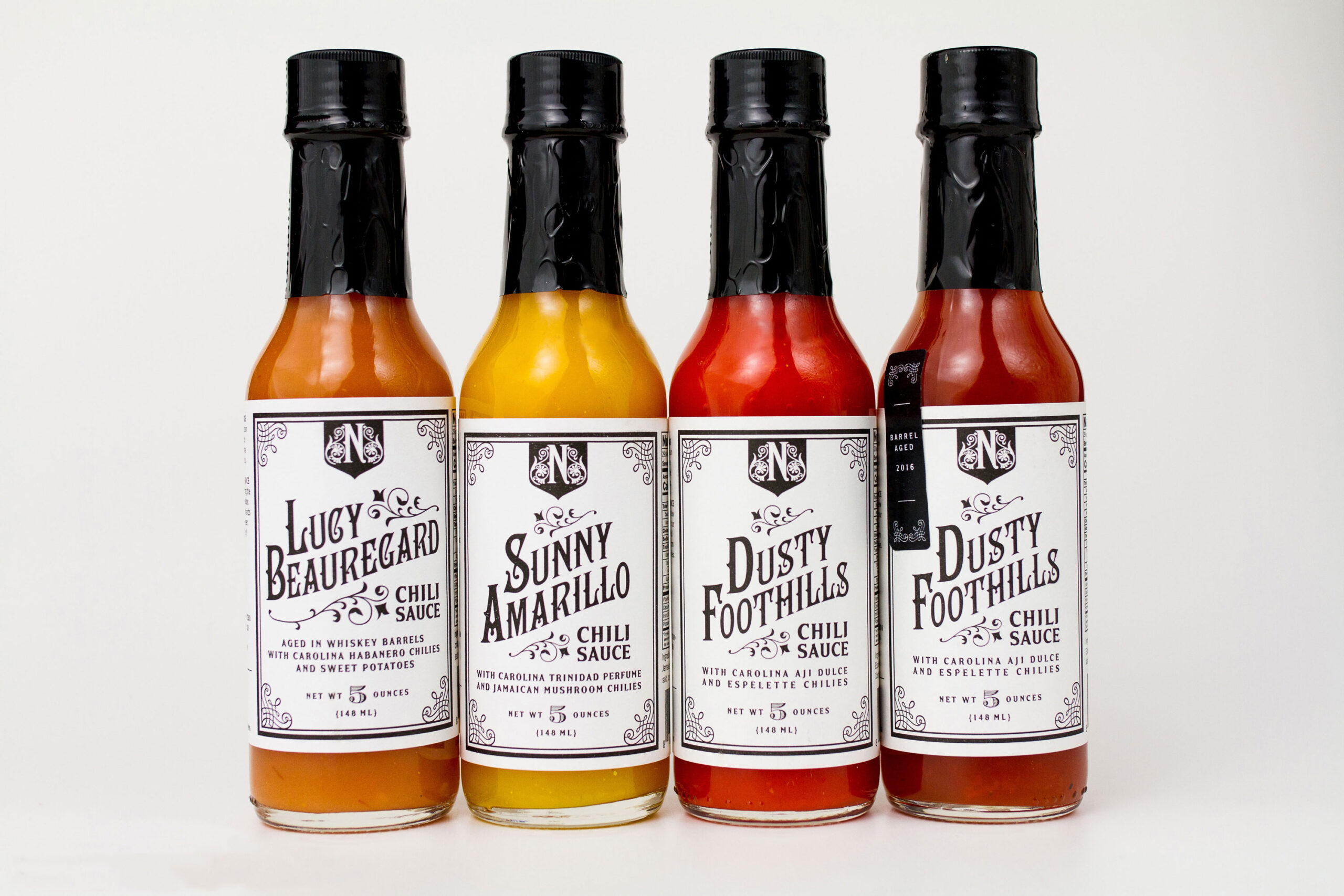
Hot Sauce Bottles with Custom Condiments Labels

Temperature Range 

Most standard adhesives fail above 60°C (140°F). High-temperature adhesives are designed to handle specific ranges. Matching the adhesives range to your application’s maximum sustained temperature will help avoid bond failure.

Cost

High-temperature adhesives often cost more because they use heat-resistant materials. For cost-effectiveness, consider the adhesive lifespan and performance.

Application Process 

The application process for high-temperature adhesives is different because of their specialized formulations. 

  • Activation Temperature: Some adhesives, especially epoxies, require heating to activate or cure properly. Check if the adhesive needs pre-heating equipment like a heat gun or oven.
  • Curing Time: High-temperature adhesives generally have longer cure times than standard ones. For example, some can take hours or even days to fully cure, while others may cure in 24–48 hours depending on humidity and temperature.
  • Layer Thickness: Applying an even, thin layer can improve bonding and reduce curing time. For uneven surfaces, adhesives with gap-filling properties may work best.

Surface Preparation 

For the adhesive adheres to the product packaging, proper surface preparation is needed.

  • Cleaning: Surfaces should be free of dust, oils, and residue for proper adhesion. Use an alcohol-based cleaner if necessary.
  • Surface Texture: Smooth surfaces like glass or metal may need light sanding to improve grip. For porous materials, consider a primer to strengthen the bond.
  • Preheating: Preheating the surface can prevent thermal shock (sudden temperature change causing material stress) and condensation, which weakens adhesion.

Compatibility With Substrates and Containers 

High-temperature adhesives aren’t compatible with all types of materials. Some substrates, like certain plastics, could deform or soften when you apply the adhesive. In this case, they may need special preparation or you’ll need to switch to a different container. 

  • Material Suitability: High-temperature adhesives work best with heat-stable materials like ceramics, metals, and certain plastics.
  • Plastic Caution: Avoid using high-temperature adhesives with low-melting-point plastics like polyethylene unless the adhesive is specifically designed for them.
  • Thermal Expansion: Materials expand differently under heat. Choose adhesives that stay flexible to prevent cracks or peeling when applied to metals or plastics.

Durable Labels That Can Withstand High Temperature

If you’re working with high-temperature adhesives because your product is exposed to high temperatures during manufacturing or usage, you’ll need durable labels, too. At Blue Label Packaging, we use variable data printing to create robust labels that can take the heat. Get in touch with us today to check out our materials

Can BOPP Labels Be Used in Freezer Environments?

Short answer: yes, BOPP labels can absolutely be used in freezer environments, when paired with the right adhesive and applied under the right conditions.

Let’s talk about where BOPP labels make sense in cold storage, and how to make sure they actually stay on.

Custom beverages with clear labels

What is BOPP, and Why Is It So Common in Labeling?

BOPP (a durable type of polypropylene film) is a plastic film made to resist moisture, tearing, and temperature changes. It’s ideal for tough environments like freezers.

Here’s why it works so well:

  • Moisture and chemical resistance: Won’t soften, smudge, or wrinkle from condensation or surface exposure.
  • Stability: Stays flat and firm in both cold and hot conditions.
  • Tear resistance: Great for containers that flex or see a lot of handling.
  • Print compatibility: Works with a range of inks, coatings, and finishes.

How BOPP Labels Hold Up in Freezer Environments

Here’s the cold, hard truth (pun intended).

Pros of BOPP Labels

  • Strong base material: BOPP doesn’t crack or absorb moisture like paper.
  • Pairs well with freezer adhesives: Many commercial adhesives are formulated to work with BOPP.
  • Ideal for high-volume application: Works on most automated label applicators, even on cold or damp lines.
  • Good label memory: When your product moves from a freezer to a fridge, BOPP holds its shape and stays put.

Potential Challenges (and What to Do About Them)

  • BOPP alone isn’t freezer-safe. Always choose an adhesive rated for your coldest environment. Don’t worry, we’ll help you pair the right adhesive with your label material.
  • Application conditions matter. Labels won’t bond well if applied when the surface is cold, wet, or frosty. Apply at or above the adhesive’s minimum temperature and ensure the surface is dry.
  • Container compatibility. Certain plastics resist adhesives, like HDPE (milk jugs, detergent bottles, shampoo containers) or LDPE (squeeze bottles, frozen food bags, and flexible pouches). Use adhesives formulated for these types of plastics, or consult with your label converter. If your containers were injection molded, clean off any mold-release residue (manufacturing residues that act like lubricants) before labeling.
  • Freeze-thaw cycling. If your product moves between frozen and ambient conditions, we can help identify adhesives that will work through freeze-thaw cycles.

Freezer-Grade Adhesives: Where BOPP Gets Its Grip

If you’re interested in the nitty-gritty details of label adhesives, here’s what you should consider:

  • Minimum Application Temperature: What is the temperature when the label is applied? If it’s too cold, the adhesive won’t bond properly.
  • Service Temperature Range: What range of temperature will the label be exposed to after it is applied?
  • Type: Acrylic adhesives specifically designed for freezer use.
  • Coating thickness: Thicker coatings help with rough or curved surfaces. (Think of it as using a thicker layer of paint to cover a rough wall.)

Talk to us to find adhesives rated for your specific situation, whether that’s deep freeze, cold-chain shipping, or damp labeling environments.

Application Best Practices for Freezer Labels

You don’t need to overthink application for freezer labels. The goal is simple: make sure the label can bond cleanly before it goes into a cold or damp environment.

Keep these basics in mind:

  • Apply labels to clean, dry surfaces. Moisture is the biggest reason labels fail.
  • Make sure you’re applying at or above the minimum application temperature for your adhesive.
  • Watch container materials. Some plastics (like HDPE and LDPE mentioned above) need stronger adhesives.
  • Use rounded corners or shapes that reduce peeling in cold conditions.

If you’re labeling on a cold or wet fill line, confirm the product surface isn’t too cold or covered in condensation. That alone can cause edge lift.

Where BOPP Works Best in Cold Conditions

  • Frozen foods: Meals, meats, seafood, and desserts 
  • Cold-chain pharmaceuticals: Biologics and vaccines with strict temperature requirements.
  • Ice cream containers: Lids, sidewall labels, and bottom applications.

Summary: What’s the Right Material for Your Freezer Packaging?

Application Best Material Why It Works
Frozen food pouches MDO or in some cases, BOPP Strong, moisture-resistant, works with automation
Cold-chain glass bottles BOPP or PET + overlaminate Clarity and strength, especially with condensation
Curved plastic containers (e.g., ice cream tubs) BOPP  Flexible, resists edge lift
Budget-friendly small containers White BOPP  Cost-effective and durable

BOPP Labels and Freezer Products

BOPP labels can perform exceptionally well in freezer environments as long as you match the right adhesive, surface prep, and container.

Need to see how a freezer-grade BOPP label performs on your container? Grab a sample pack or contact us and we’ll help you find what sticks.


What Label Material Is Best for Hot Environments?

When your product has to survive heat, the right material and adhesives will keep your packaging intact instead of bubbling, peeling, or sliding off. Here’s what actually works when the heat gets turned up.

Different type of cosmetic, lotion and tube containers with custom Labels such as lotion, sunscreen bottle

BOPP (Biaxillary Oriented Polypropylene) Labels

Why people consider it: BOPP is the budget-friendly option for consumer goods. It’s clear, glossy, and affordable, but not built for sustained heat.

Best applications:

  • Low- to medium-heat packaging 
  • Products that don’t go through pasteurization or retort

Pros:

  • Affordable and widely available
  • Crisp print quality with multiple finish options

Cons:

  • Softens under true hot-fill or pasteurization
  • Not reliable for sustained high heat
  • Can lose adhesion or distort, impacting product legibility and durability in transit or storage

We typically recommend BOPP only for products that don’t exceed mild warmth. If you do hot fill or require pasteurization, a more cost effective option is to label after those are completed. 

MDO Labels

Why people consider it: MDO is flexible and can stretch around odd shapes.

Best applications:

  • Moderate-heat environments
  • Containers with curved or irregular surfaces

Pros:

  • Great flexibility and wraps easily around curved or irregular containers
  • Works on unique packaging shapes

Cons:

  • Softens under true hot-fill or pasteurization
  • Not reliable for sustained high heat
  • Can lose adhesion or distort, impacting product legibility and durability in transit or storage

Depending on the package, we may recommend vinyl for curved or textured surfaces, but if heat resistance is required, we’ll likely shift to PET or polyimide.

Quick Comparison Table

Material Heat Range (Process Examples) Pros Cons Best Use
BOPP Mild warehouse or warm fill Affordable, glossy or matte finish Warps/shrinks in hot-fill/pasteurization Mild-heat consumer goods
MDO Short exposure to heat Flexible, conforms well Softens in sustained heat Odd-shaped containers with moderate heat

Labels and Heat

Heat’s tough on labels. Not sure which combination makes sense for your product? Request a quote and we’ll walk you through the right material and adhesives for your environment.

What Label Material Is Best for Humid Environments?

Labels can fail in humidity not only because of the label material, but because adhesives start to fail or lose sticking power, finishes wear down, or the material doesn’t match the container surface or application method.

To prevent edge lift, sliding, smudging, or peeling, you need to match the right material, adhesive, finish, and container surface based on how and where your product will be stored, shipped, and used.

If your products face condensation, chilled storage, wet hands, ice buckets, or refrigerated shipping, here’s how the main material options compare, and when to use them.

Start with Your Environment and Container Surface

Before choosing a material, think about where the product (and the label) will live.

Environmental Conditions

Consider which of these apply to your product. Even one of these conditions can influence which label material and adhesive performs best:

  • Refrigeration or cold storage (risk of condensation and edge lift)
  • Condensation or temperature cycling (labels may bubble or slide)
  • Direct contact with water, oils, or chemicals (requires water-resistant films or protective finishes)
  • Ice buckets or wet retail displays (laminated films hold up more reliably)

Container & Application Factors

These container surface and application details directly affect which materials and adhesives will adhere properly:

  • Smooth glass, textured plastic, squeezable tubes, or metal (surface texture affects adhesion)
  • Flat or curved surface (curved or squeezable requires flexible films like MDO)
  • Manual or automated label application (rigid materials can jam high-speed applicators)

Now let’s look at how each material performs in real conditions. look at how each material performs in real conditions.

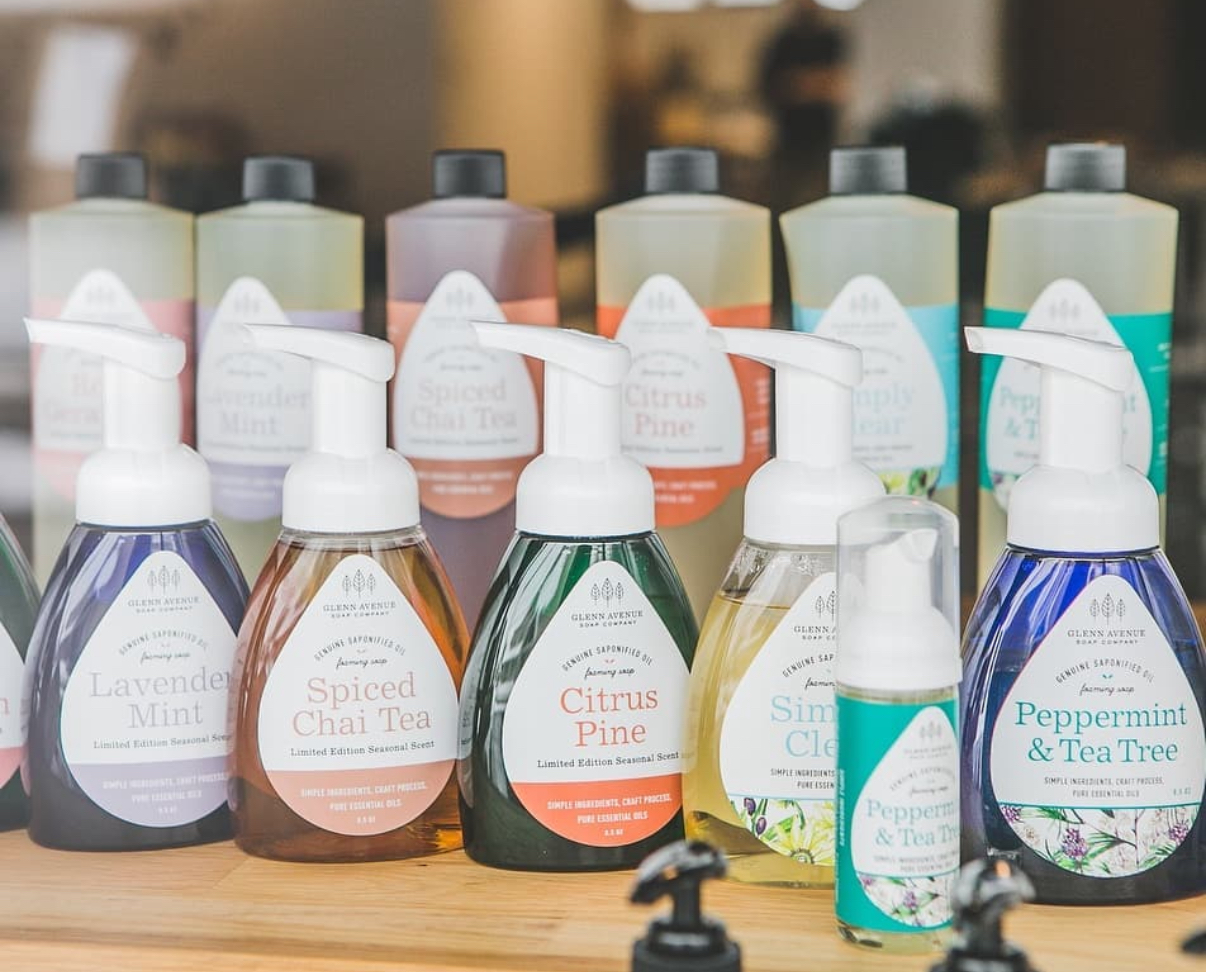
Pump bottle labels

BOPP: The Most Reliable Label Film for Humidity

BOPP (Biaxially Oriented Polypropylene) is the go-to film for moisture-heavy environments because it balances performance, cost, and print quality across most product types.

Why it works:

  • Resists water, oils, and condensation without swelling or curling
  • Holds adhesive bond strength well on smooth, rigid surfaces
  • Works well with most labeling equipment, including high-speed applicators
  • Compatible with laminates and varnishes for added durability
  • Affordable, making it ideal for high-volume production

Best for:

  • Beverage bottles or cans
  • Refrigerated foods
  • Skincare products
  • Household goods
  • Standard commercial packaging

BOPP doesn’t conform well to highly curved or squeezable containers, so be aware of that as you approach a label material decision. It’s also not ideal for waxy or textured surfaces unless paired with a specialty adhesive.

Welded Material: Paper Texture with Enhanced Wet Strength

If you need a premium paper look without sacrificing moisture performance, Welded wet-strength paper is a strong middle ground.

Why it works:

  • Reinforced paper fibers designed to handle moisture better than standard paper prevent sagging, peeling, and “label sliding, when labels slowly shift out of position on cold bottles” on cold or wet bottles
  • Higher opacity helps block dark glass or busy backgrounds
  • Performs well during short-term chilling or condensation
  • Accepts high-end finishes like foil, embossing, and tactile coatings

Best for:

  • Wine bottles
  • Spirits
  • Premium beverage brands
  • High-end packaging that needs a tactile or textured feel

While Welded materials are moisture-resistant, they are not waterproof. For extended ice bucket or outdoor use, film materials like BOPP or PET are more reliable.

PET: High-Durability for Extreme Environments

PET (polyester) is the most rugged option when durability is critical. It’s often used for products that face temperature swings, shipping abrasion, or long-term storage.

Why it works:

  • Moderate moisture barrier performance
  • Highly resistant to tearing, stretching, and chemical exposure
  • Maintains shape and print quality even in harsh conditions
  • Useful for labels that legally must stay readable, like safety warnings or ingredients

Best for:

  • Industrial goods
  • Outdoor products
  • Chemical packaging
  • Long-term storage
  • Freezer applications

PET is durable but less flexible than BOPP or MDO, so it can be too rigid for squeezable containers and may need stronger adhesives to properly adhere to textured surfaces.

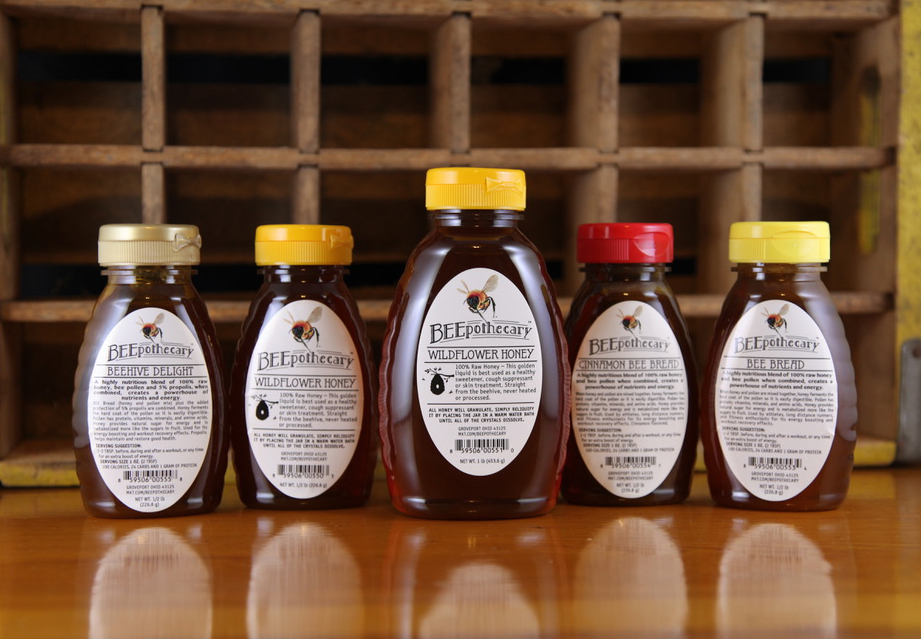
Honey Container with Variable Data Labels

MDO: Best for Curves, Tubes, and Squeezable Containers

MDO  is useful when flexibility matters more than maximum durability. It adheres well to complex shapes but needs protection when exposed to moisture or abrasion.

Why it works:

  • Conforms to curves, squeezable packaging, and unusual shapes
  • Moisture-resistant but benefits significantly from lamination
  • Works well when paired with specialty adhesives for textured surfaces

Best for:

  • Tubes
  • Custom-shaped packaging
  • Flexible containers
  • Squeezable containers

MDO is flexible and great for unique shapes, but it can scratch more easily without a laminate and isn’t the best choice for prolonged water exposure unless protected.

Coated Paper: Fine Indoors, But Not Built for Moisture

Coated paper labels are common in dry, indoor environments, but they struggle once moisture enters the picture.

Why it fails in humid environments:

  • Absorbs water, causing swelling, curling, and peeling
  • Adhesives break down faster due to paper fiber structure
  • Print can smudge or fade unless laminated

Best only for:

  • Dry indoor use
  • Short-term packaging
  • Products that won’t encounter moisture

Quick Comparison: Label Materials in Humid Environments

Material Moisture Resistance Flexibility Cost Best Use Case
BOPP High Moderate Low Most consumer goods
Welded Moderate Moderate High Premium beverages
PET Very High Low Medium Industrial / outdoor use
MDO Moderate Very High Medium Tubes / curved surfaces
Coated Paper Low Moderate High Dry indoor use only

How to Decide Which Label Material to Use in Humid Environments

  • For condensation or refrigerated storage: BOPP or Welded 
  • For ice buckets or wet retail displays: BOPP or PET (
  • For squeezable or curved packaging: MDO 
  • For extended outdoor, chemical, or industrial environments: PET

Labels and Humidity

Humidity impacts more than the label surface. It affects adhesive performance, container compatibility, and long-term durability.

Need help matching material, adhesive, and finish for your specific packaging? Request a sample pack or contact us and we’ll help you find what works best for your environment and container.