Printed Cans: How to Compare with Shrink Sleeves and Labels
- label materials
- Labels
- Shrink Sleeves
Most beverage brands comparing printed cans are trying to answer practical questions about cost, risk, flexibility, performance, and long-term fit.
We put together this guide to help you compare printed cans directly against the most common alternatives: pressure-sensitive labels, shrink sleeves, and traditional offset printed cans.
Why Printed Cans Are Showing Up More Often
Printed cans have been around for a long time, but they’ve become far more accessible in recent years. Historically, printed cans were limited to very large runs with long lead times.
Digital printing has changed that. Modern direct-to-object digital printing can now achieve high production speeds while supporting smaller runs, faster turnaround, and easier SKU variation. That makes printed cans a realistic option for more and more beverage brands.
We also see beverage brands reevaluating printed cans because of broader industry shifts: more SKUs, shorter product lifecycles, sustainability pressure, and the operational burden of managing multiple packaging components.
Questions Teams Ask Before Switching to Printed Cans
Before making a change, beverage brands typically want to know a few things:
- How printed cans would change operations, planning, and scheduling
- What flexibility they gain or give up around design and SKUs
- How inventory considerations shift compared to labels or sleeves
- How printed cans perform in real beverage environments
Printed Cans vs. Pressure-Sensitive Labels
Pressure-sensitive labels are popular because they’re cost-effective, widely accepted by consumers, and flexible across many products. Printed cans become intriguing by comparison when brands want a more integrated feel, fewer materials, and less operational complexity.
Aesthetics
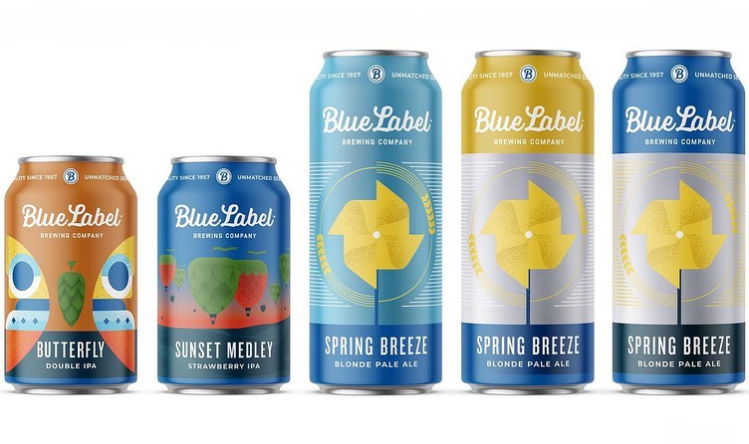
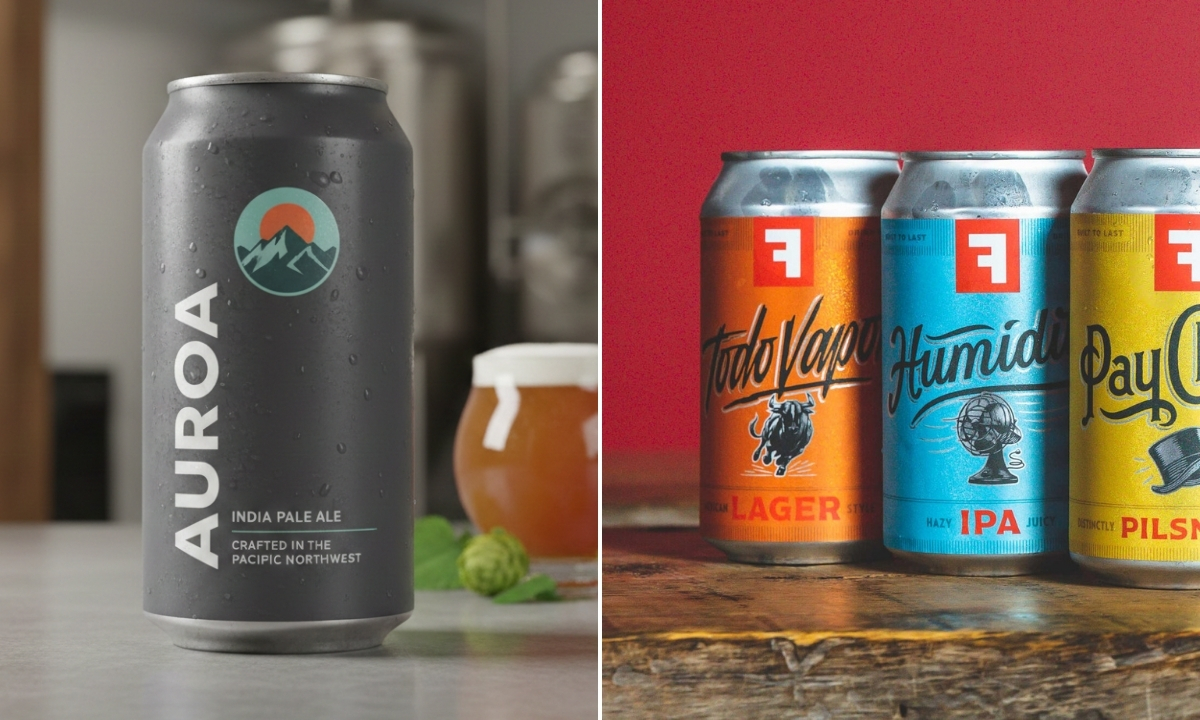
- Printed cans offer a seamless, label-free look with no edges, seams, or application variation. The graphics feel like part of the can.
- Pressure-sensitive labels can achieve very high print quality and specialty finishes, but the label remains a separate element applied to the can.
Printed cans often win on visual consistency (no seams, full coverage) and that label-less look, while pressure-sensitive labels can be a good option when considering certain specialty finishes or ultra-fine details.
Application
- Printed cans arrive decorated and ready to fill, no post-fill labeling step.
- Pressure-sensitive labels require labeling equipment, changeovers, and ongoing calibration.
Printed cans simplify the filling process, while pressure-sensitive labels give brands more flexibility later in production.
Cost
- Printed cans typically have a higher per-can printing cost, but that cost replaces the label itself, adhesives, liners, and application. The print-on-demand capability also reduces storage and inventory costs, as production can be dynamically adjusted to meet exact demand without producing too much.
- Pressure-sensitive labels usually have lower per-unit printing costs and feel safer for short runs, but add recurring material and application costs. For small to mid-size runs. Labels also simply take up less storage space than pallets of printed cans.
Performance
- Printed cans hold up well in wet, cold, and refrigerated environments because there’s no adhesive or label edge exposed to moisture.
- Pressure-sensitive labels can perform well when planned correctly, but keep in mind that results will depend on adhesive choice and application conditions (don’t worry, we can help you make the right picks). Modern pressure-sensitive labels can use wash-off adhesives and recyclable films that maintain performance while supporting sustainability goals.

Printed Cans vs. Shrink Sleeves
Shrink sleeves have been widely used because they offer full-can coverage, high image resolution, and compatibility across many can sizes and processing conditions. Printed cans appeal by comparison because they eliminate a secondary packaging layer and simplify the overall system.
Aesthetics
- Printed cans deliver that clean, integrated look with optional metallic effects and built-up ink directly on the can.
- Shrink sleeves also give you that full 360-degree coverage with very high image resolution and photographic detail.
Shrink sleeves often win on photorealism and high-resolution detail. Printed cans tend to support simpler, bolder, or more minimal looks (don’t worry, we can help you pick which one works if detail and resolution is a factor).
Application
- Printed cans remove the need for sleeve applicators, heat tunnels, and distortion mapping.
- Shrink sleeves require specialized equipment and careful setup to avoid common issues like seam distortion, wrinkling, or other problems that can increase production scrap.
Cost
- Printed cans consolidate printing and decoration into the can itself.
- Shrink sleeve costs lie in the materials (sleeve film and inks), specialized equipment (heat tunnels), changeovers, and potential waste.
Performance
- Printed cans perform reliably in refrigerated and wet environments.
- Shrink sleeves need to be kept in cooler temperature prior to application and in transit or shrink on the roll.
Though many material reclamation facilities (MRFs) accept cans with shrink sleeves, some regions may not recycle shrink sleeved cans or many add a surcharge if sleeves aren’t removed.
Printed Cans vs. Traditional Offset Printed Cans
Traditional offset printed cans have long been the standard for large beverage brands because they deliver high print quality and low per-can costs at scale. That efficiency depends on long print runs, designs that don’t change, and plate-based schedules that can slow production down when plans change.
Digitally printed cans are often considered when brands want to move faster, support more SKUs, or adapt designs without waiting on plate-based timelines.
Aesthetics
- Printed cans make it easier to support seasonal designs, multiple SKUs, variety packs, or frequent artwork updates. Digital cans are printed with four-color inks (CMYK), so they can achieve a full range of colors.
- Offset printed cans deliver excellent consistency, but even small changes require new plates and setup. For the most part, offset printed cans are limited to six spot colors.
Application
- Printed cans typically offer shorter and more predictable lead times, especially for small to mid-sized runs. Printed cans can be produced in as quick as 10 days from artwork approval.
- Offset printed cans require longer lead times due to plate creation, press setup, and scheduling windows. Offset printed cans often take weeks to months to produce from artwork approval, so proper planning is necessary.
Cost
- Printed cans have higher per-unit costs at very large volumes, but reduce risk when demand or artwork changes. The ability to produce on-demand helps avoid the inventory holding costs and waste associated with overproduction.
- Offset printed cans deliver the lowest per-unit cost at scale, but are most efficient when volumes and designs remain stable. Large minimum order quantities (often 150,000 cans or more) make this method less suitable for smaller brands or seasonal products.
Performance
- Printed cans and offset printed cans are generally comparable in durability and performance across common beverage environments.
Are Printed Cans the Right Choice for Your Beverage Brand?
Luckily, your brand doesn’t have to switch to printed cans all at once. You can start with a test run, compare real costs and timelines against your current process, and see how the cans perform with your product and your customers.
If you’re trying to decide whether printed cans fit your operation, we can help you run the numbers on your specific volumes, SKU count, and production setup.