What Is a Co-Packer and How Do You Find the Right One?
⚞ The Highlights:
- A co-packer (short for contract packager) packages your product for retail so you can focus on making it. Some co-packers also manufacture the product for you, which makes them a contract manufacturer.
- The right co-packer depends on your product type, your volume, the certifications your category requires, and how much of the process you want to hand off.
- Vet candidates on capacity, quality certifications (SQF, BRC, GMP), relevant experience, minimum orders, and lead times. Then start with a small trial run before you commit.
- Expect per-unit or per-case pricing plus setup fees and minimum order quantities. Get all of it in writing up front so the quote is the number you actually pay.
- One detail brands miss: your co-packer’s labeling line has specific requirements for how your labels are made and rolled. Getting the label spec right is the difference between a smooth run and a jammed line.
A co-packer, short for contract packager, is a company that packages your product for retail so you don’t have to. You hand off the filling, labeling, assembly, and packing, and you get back finished product that’s ready for the shelf. The term is often used interchangeably with contract packager, and when a co-packer also makes the product for you, people call it a contract manufacturer or co-manufacturer.
For a growing brand, a co-packer is usually the answer to a simple problem: demand has outrun what you can package by hand. We work with dozens of co-packers to print the labels that go on their lines, so we see both sides of this relationship every week. Below is what a co-packer does, how to find one that fits your product, what to expect on cost, and a label detail that trips up more brands than it should.
What is a co-packer?
A co-packer is a third-party company that packages your product to your exact specifications. That can mean filling bottles, applying labels, assembling multipacks, or boxing finished goods for distribution. The core idea is that you own the product and the brand, and the co-packer owns the equipment, the labor, and the packaging know-how to get it retail-ready at volume.
What does a co-packer actually do?
Most co-packers handle some or all of these jobs:
- Filling. Putting your product into its container, whether that’s liquid into bottles and cans, powder into pouches, or dry goods into jars.
- Labeling. Applying labels, shrink sleeves, or other decoration to the container on automated lines.
- Assembly and kitting. Building variety packs, gift sets, subscription boxes, or promotional bundles.
- Case packing. Boxing finished units and palletizing them for shipping to retailers or distributors.
- Sourcing. Some co-packers buy your packaging materials for you, from containers to closures to labels.
The scope varies a lot from one co-packer to the next. Some only handle the packing step after your product is made. Others run the whole process from raw ingredients to a palletized finished product, which is sometimes called a turnkey or full-service operation.
Co-packer vs. contract manufacturer vs. private label
These three terms get mixed up constantly, and the difference comes down to who makes the product and who owns the recipe. Here’s a quick way to keep them straight.
| Co-Packer (Contract Packager) | Contract Manufacturer (Co-Man) | Private Label | |
|---|---|---|---|
| What they do | Package a product you already made | Make and package your product to your formula | Make their own product for you to brand |
| Who owns the recipe | You do | You do | The manufacturer does |
| Best for | Brands that make the product but can’t package at scale | Brands with a recipe but no production capacity | Brands that want a ready-made product fast |
| Typical scope | Filling, labeling, assembly, case packing | Production plus packaging (turnkey) | Their recipe, your label |
In practice, the lines blur. A single company may offer all three, and a full-service co-packer often does light manufacturing too. The label you put on the product is yours in every case, which is where we usually enter the picture.
What kinds of products use co-packers?
Co-packers work across food, beverage, supplements, personal care, household goods, pet products, and more. Any brand that sells a physical product in volume is a candidate. Think of a hot sauce maker filling and labeling bottles, a kombucha brand canning at scale, a supplement company filling capsule bottles, or a coffee roaster bagging and sealing. Once hand-packing stops keeping up, a co-packer takes over.
Why work with a co-packer?
Most brands bring in a co-packer for one reason: it frees you to focus on the product and the brand. Someone with the right equipment handles the packaging at a speed and scale you can’t match by hand. That trade has real benefits, and a few honest trade-offs worth knowing before you sign anything.
What are the benefits of using a co-packer?
- Lower cost at volume. Co-packers buy materials in bulk and run efficient lines, so per-unit packaging cost usually drops compared to doing it yourself.
- Speed and capacity. An automated line packs in an hour what a small team packs in a day, which matters when you’re chasing a retail launch or a seasonal window.
- Room to scale. You can add SKUs or grow volume without buying equipment, leasing space, or hiring a packaging crew.
- Compliance help. Experienced co-packers know the food-safety and labeling rules for your category and build them into the process.
- Fewer headaches. Sourcing, quality checks, and logistics move off your plate and onto a partner who does this all day.
What are the trade-offs to know going in?
A co-packer is a partner, not a magic button. Handing off packaging means handing off some control, so go in with eyes open:
- Minimum order quantities. Many co-packers set minimums that can feel steep for an early brand. Ask early so there are no surprises.
- Less hands-on control. You’re trusting someone else with quality and timing, which makes clear specs and good communication essential.
- Lead times. Your product now sits in someone else’s production schedule. Plan releases around their calendar, not just yours.
- Setup and change costs. New projects and design changes can carry setup fees. Worth knowing before you iterate on packaging.
Worth knowing: The most common co-packer complaint we hear from brands isn’t price. It’s surprises, like a minimum they didn’t expect or a label that jammed the line on day one. Almost all of it is avoidable with clear specs and a trial run before the full production commitment.
Do you need a co-packer, or a contract manufacturer?
Ask one question: do you already make the product? If you make it and just need help packaging at scale, you want a co-packer. If you have a recipe but no way to produce it, you want a contract manufacturer (co-man) that handles both making and packing. Plenty of brands start with a co-man for production, then keep the same partner for packaging, which is why the roles overlap so often.
Working with a co-packer and need labels that run clean on their line?
We print labels for dozens of co-packers and can match your labels to their applicator specs, so your run doesn’t stall on day one.
Request a Quote Get a Sample Pack
How to find the right co-packer
Finding a co-packer takes a mix of directory research, industry networking, and old-fashioned reference-checking. Most co-packers do very little marketing of their own, so the good ones can be surprisingly hard to surface with a plain Google search. Here’s where to look and how to sort the fit from the rest.
Where do you find a co-packer?
- Industry directories and associations. The Contract Packaging Association keeps a member directory and a request-for-quote tool. Thomasnet lists thousands of co-packing and contract-packaging suppliers you can filter by location and certification.
- Matching platforms. Services like PartnerSlate connect brands with co-packers and co-manufacturers by product type and requirements.
- Category-specific resources. Beverage brands often start with BevNET’s co-packing listings; specialty food brands use specialty-food co-packer directories.
- Trade shows. Events like PACK EXPO and ProPak put a lot of co-packers in one room, which is one of the fastest ways to compare capabilities in person.
- Word of mouth. Your peers are the best filter. Ask other founders in your category who they use and, just as usefully, who they’ve left.
What should you look for when vetting a co-packer?
Once you have a shortlist, weigh each candidate against the things that predict a good run:
- Capacity. Can they scale with you without dropping quality? A facility tour tells you a lot about how they handle peak season.
- Quality assurance. Look for documented quality-control processes and real certifications, not just a claim on the website.
- Relevant experience. A co-packer that already runs products like yours will hit fewer surprises. Beverage, food, and supplement lines each have their own quirks.
- Flexibility. Understand their lead times, minimums, and how they handle a rush or a last-minute change.
- Communication. You want a partner who answers the phone and flags problems early. This is the single biggest driver of whether the relationship lasts.
Which certifications matter?
The certifications you need depend on your category, but these are the ones that come up most often:
- SQF, BRC, or FSSC 22000. Globally recognized food-safety standards. Retailers frequently require one before they’ll stock a product.
- GMP and HACCP. Good Manufacturing Practices and hazard-analysis systems that show a co-packer runs a clean, disciplined operation.
- FDA facility registration. Required for food and beverage co-packers in the U.S., and a quick thing to verify in the FDA database.
- Organic, Non-GMO, or kosher. Product-specific certifications you’ll need if those claims appear on your label.
Quick note: If a claim like “organic” or “non-GMO” is going on your label, your co-packer needs the matching certification to back it up. A label claim your packing facility can’t support is a compliance problem waiting to happen.
What questions should you ask before you commit?
Before you sign, get clear answers on the things that turn into disputes later:
- What’s your minimum order quantity, and can it be split across SKUs?
- What’s your typical lead time from approved artwork to finished product?
- Do you source packaging and labels, or do I supply them?
- What are your setup fees, and what triggers a new one?
- Can I visit the facility and see a run in progress?
- Can you share references from brands in my category?
How much does a co-packer cost?
There’s no single price for co-packing. Most co-packers charge per unit or per case, and some charge by production weight or volume, with setup fees for new projects on top. The variables that move your number are run size (bigger runs lower the per-unit cost), product complexity, packaging format, and how much sourcing you hand off. Get a detailed, itemized quote up front so you can compare partners on total landed cost, not just the headline rate.
Why should you start with a trial run?
A trial run is the cheapest insurance you can buy. Before you commit to a long-term agreement or a large volume, run a small batch. It tests their quality control, their communication, and whether your packaging runs cleanly on their equipment. A trial run is also where label problems show up while they’re still cheap to fix, which is where the label handoff comes in.
The label handoff most brands overlook
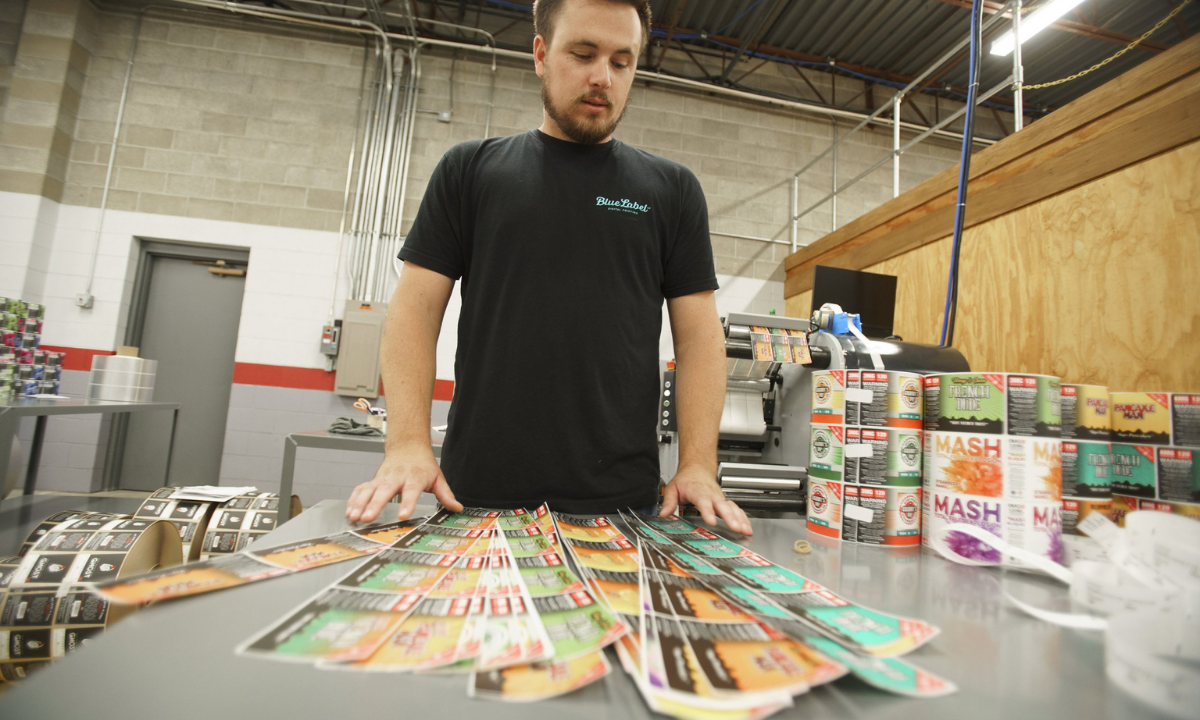
Here’s the detail that causes more day-one delays than almost anything else: your labels have to be built for your co-packer’s specific labeling line, not just for the container. A label that looks perfect as a proof can still jam an automated applicator if the roll is wound the wrong way or the core is the wrong size. Because we print labels for dozens of co-packers, we see this happen, and it’s almost always preventable.
Who supplies the labels, you or the co-packer?
It goes both ways. Some co-packers source and print labels for you as part of the job. Many others ask you to supply your own labels to their spec, which gives you control over quality and finish but puts the responsibility on you to get the roll format right. Confirm which arrangement you’re in before your first run, because “we assumed you were handling it” is a bad thing to discover on packing day.
What label specs does your co-packer need?
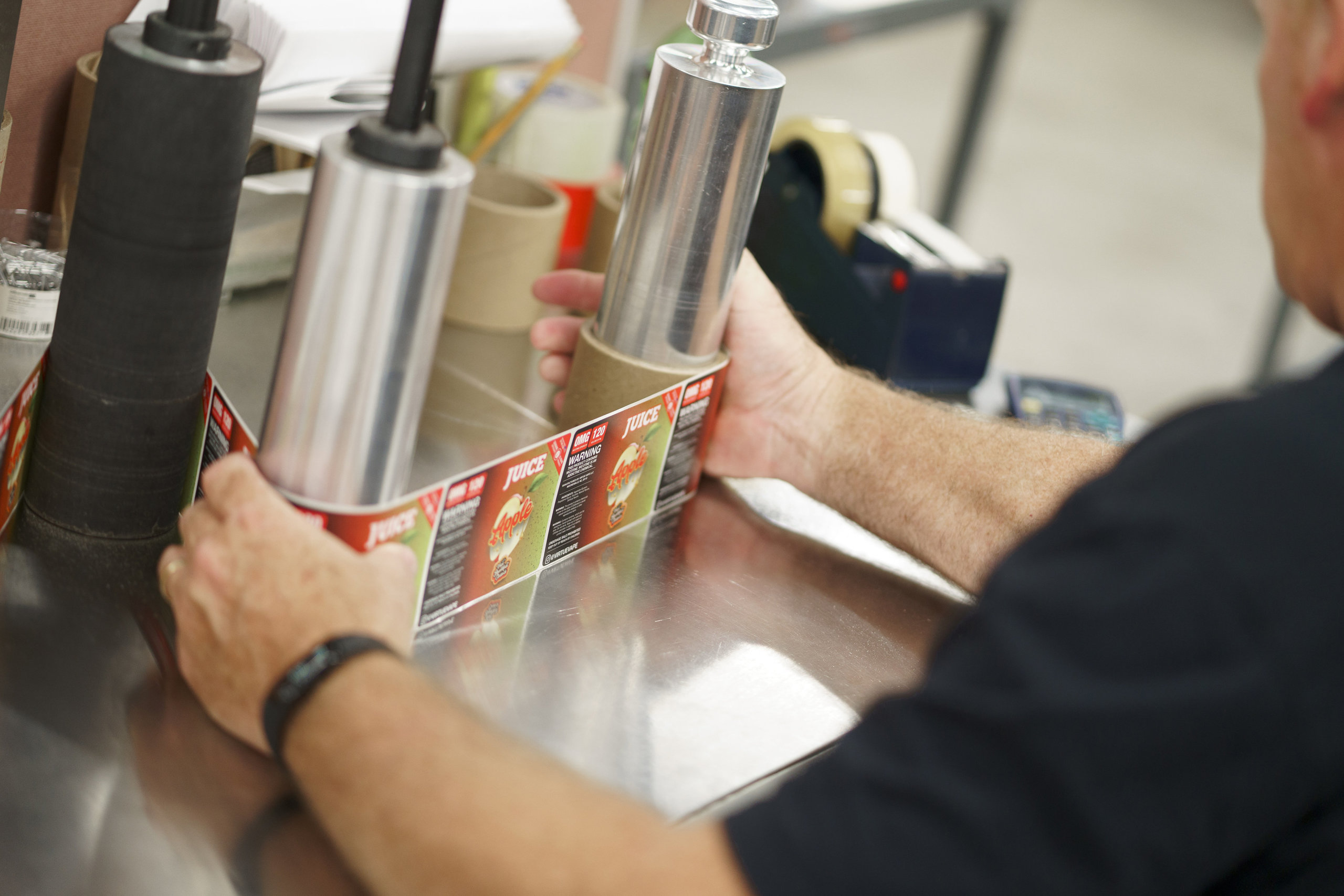
If you’re supplying labels, your co-packer’s line will have requirements for how those labels are manufactured and rolled. The ones that matter most:
- Unwind direction. Automated applicators need labels wound a specific way (which edge leads, and whether the label faces in or out). Get this wrong and the labels feed upside down or backward.
- Core size. The cardboard core the label roll is wound on has to fit their equipment, commonly a 3-inch core, but confirm it.
- Roll diameter. Every applicator has a maximum roll size it can hold. Too big and the roll won’t fit the machine.
- Label material and adhesive. The material has to suit both the container and the application speed. A label that peels or curls on a fast line will cost you the whole run.
- Labels per roll and gap. The spacing between labels and the count per roll affect how the line feeds and how often it has to stop for changeovers.
The fix is easy: ask your co-packer for their labeling-line spec sheet before you order labels, and hand it straight to your label printer. If you’d like a primer on one of these, our guide to determining your label unwind position walks through the most common source of confusion.
How do you avoid line jams and delays?
Coordinate the three parties early: you, your co-packer, and your label printer. Share the co-packer’s applicator specs with your printer before the labels are made, run a small proof through the actual line if you can, and confirm barcode placement and scan-readability on the finished container. A little coordination up front is far cheaper than a stopped line and a missed retail date.
Making the partnership work
Finding a co-packer is the start. The brands that get the most out of the relationship treat it like a long-term partnership, not a transaction.
How do you transition packaging to a co-packer?
- Plan ahead. Talk through timelines, expectations, and likely obstacles before anything moves.
- Manage inventory. Coordinate existing stock so you don’t run out during the switch or get stuck with waste.
- Start with a pilot. Run initial batches to catch process adjustments before you scale.
- Document everything. Materials, artwork files, label specs, and assembly instructions all go in writing, backed by a formal co-packing agreement.
How do you keep the relationship healthy?
- Communicate regularly. Routine check-ins catch small issues before they become reprints or delays.
- Review performance. Look at what’s working and what isn’t on a set cadence.
- Revisit terms as you grow. Volume and SKU counts change. Your agreement should keep up.
- Keep the feedback two-way. The best co-packers will tell you how to make your product run better, and the best brands listen.
Next steps
If you’re getting ready to bring on a co-packer, three things will make your search smoother: get specific about the challenge you’re solving, write down your non-negotiables (certifications, minimums, timelines), and line up your packaging and labels early so nothing stalls on the first run.
And if labels are part of that picture, that’s where we come in. We print labels for brands and for the co-packers who apply them, so we can help you get the material, finish, and roll format right the first time. Take a look at our six questions to ask a digital label printer, or get in touch and we’ll help you sort out the label side of your co-packing setup.
Frequently asked questions
What is a co-packer?
A co-packer, short for contract packager, is a third-party company that packages your product for retail to your exact specifications. That can include filling containers, applying labels, assembling multipacks, and case-packing for distribution. You own the product and the brand; the co-packer provides the equipment, labor, and packaging expertise to get it retail-ready at volume. When a co-packer also makes the product for you, it’s usually called a contract manufacturer or co-manufacturer.
What is the difference between a co-packer and a contract manufacturer?
A co-packer packages a product you have already made. A contract manufacturer (co-man) both makes and packages your product to your formula. In both cases you own the recipe and the brand. Many brands use a contract manufacturer for production and keep the same partner for packaging, which is why the two terms often overlap.
How do you find a co-packer?
Start with industry directories and associations such as the Contract Packaging Association member directory and Thomasnet, use matching platforms like PartnerSlate, check category-specific resources such as BevNET’s co-packing listings for beverages, meet co-packers at trade shows like PACK EXPO, and ask peers in your category who they use. Because most co-packers do little marketing, referrals and directories often surface better options than a plain search.
How much does a co-packer cost?
Co-packers typically charge per unit or per case, sometimes by production weight or volume, with setup fees for new projects. Your cost depends on run size, product complexity, packaging format, and how much sourcing you hand off. Larger runs lower the per-unit cost. Ask for a detailed, itemized quote up front so you can compare partners on total landed cost rather than the headline rate.
What certifications should a co-packer have?
It depends on your category. Food and beverage brands should look for a recognized food-safety certification such as SQF, BRC, or FSSC 22000, plus GMP and HACCP practices and FDA facility registration in the U.S. If your label makes claims like organic, non-GMO, or kosher, your co-packer needs the matching certification to support them.
Do co-packers supply the labels or do I?
It varies. Some co-packers source and print your labels as part of the job, while many ask you to supply your own labels to their specification. If you supply them, your labels must match the co-packer’s labeling-line requirements, including unwind direction, core size, roll diameter, and a material suited to the container and line speed. Confirm the arrangement and get the applicator spec sheet before you order labels.
Why do my labels have to match my co-packer’s line?
Automated labeling equipment has fixed requirements for how a label roll is wound and sized. If the unwind direction, core size, or roll diameter is wrong, labels can feed upside down, jam the applicator, or not fit the machine at all. A label that looks perfect as a proof can still stop a production line, so match the roll format to the co-packer’s spec before the run.
Should I start with a trial run before committing to a co-packer?
Yes. A small trial run tests the co-packer’s quality control, communication, and whether your packaging and labels actually run well on their equipment, all before you commit to a large volume or a long-term agreement. It’s also where label and application issues surface while they’re still inexpensive to fix.
Ready to get your labels co-packer-ready?
If you’re lining up a co-packer, we can make sure the label side goes smoothly. We print for brands and for the co-packers who apply their labels, so we know what a clean run looks like. Request a sample pack to see and feel the materials, or get in touch and we’ll help you match your labels to your co-packer’s line.
Want to get the label details right before your first run? A few of our other guides: