How to Prevent Label Curling and Cracking on Flexible Packaging

When your labels peel, crack, or curl, you risk relabeling costs, compliance headaches, and most importantly, a less-than-ideal-looking product. We’ll walk you through how to avoid those headaches with the right materials, processes, and practical design.

Pick the Right Material

We recommend MDO film for flexible or squeezable applications, especially where flexibility, durability, and container conformity are priorities. MDO film flexes in multiple directions, which makes it great for curved or squeezable containers. That’s why it’s often used for products like yogurt pouches, lotion tubes, and flexible household goods.

If you’re focused on recyclability or need serious barrier protection, a varnish might make more sense. It all depends on your priorities.

BOPP is a solid choice for flat, rigid containers where flexibility isn’t as critical.

Paper stocks don’t hold up well to moisture or repeated squeezing. They’re prone to tearing, curling, or ink smudging when wet.

Match Your Adhesive Carefully

Adhesives aren’t one-size-fits-all. If you’re labeling containers made from plastics with slick, waxy-feeling surfaces, such as LDPE or PP, you’ll need a high-tack adhesive designed to bond with that type of material. 

Where your product goes matters too. If it’s headed for a fridge, freezer, or just a humid warehouse, you’ll need adhesives built to handle cold, wet conditions without letting go. Think freezer meals, refrigerated dairy, or cold beverages stored in ice.

Prep the Surface

You’d be surprised how often oil residue, moisture, or dust causes curling. Always apply labels to clean, dry containers, like those free of lotion residue, condensation, or warehouse dust. And give the adhesive time to bond, ideally 24 hours, before refrigeration, freezing, or shipment. That window helps your label lock in properly and stay put.

Consider the Container Shape

Label shape impacts label and adhesive performance on flexible packaging. Sharp corners are more likely to lift, especially on curved surfaces. Rounded corners tend to hold better.

If your container has a tapered shape, like a squeeze tube or gusseted pouch, your label should be tapered too. Think of it like trying to wrap a square sticker around a tube of toothpaste. The edges will wrinkle or lift if the shape doesn’t match the curve. Designing your label to follow the shape of the container helps avoid peeling and bubbling.

Protect Your Labels Without Losing Flexibility

Laminates and varnishes protect your labels from scuffs, moisture, and abrasion, but not all finishing options behave the same.

We recommend flexible finishes like matte varnish or soft-touch varnish when labeling flexible packaging. These finishes move with the container and help preserve label integrity without making the label too stiff.

Soft-touch has a premium feel, smooth and velvety, often used on premium beauty products. Matte varnish delivers a clean, non-glossy finish that holds up well to scuffing and is common in food and beverage.

Not every finish fits every application, though. For example, soft-touch varnish may not hold up well in high-friction or moisture-heavy environments, such as refrigerated juice pouches where condensation builds up.

Quick Flexible Packaging Labeling Checklist

  1. Choose MDO for flexible or squeezable packaging where flexibility and conformability are key.
  2. Match your adhesive to your plastic type and storage environment, especially for slick containers or cold storage.
  3. Clean and dry surfaces before applying. Let adhesives set for 24+ hours before exposure to moisture or cold.
  4. Design labels to match the container’s shape; use rounded corners and consider tapering for curved or gusseted packaging.
  5. Use flexible finishes like matte varnish or soft-touch, and know where each performs best.

Keep Your Flexible Packaging Labels from Cracking and Curling

You want labels that hold up through production, shipping, handling, and daily use. Choose MDO, pair it with the right adhesive, prep your surface, design smart, and finish it right. Do that, and your labels will stay put.

Not sure what label setup makes the most sense for your packaging? Contact us and we’ll help you figure it out based on real-world results.

 

How to Prevent Labels from Cracking or Curling in Cold Storage

Cold storage is tough on labels. Between condensation, big temperature swings, and freezing temps, it’s easy for labels to curl, crack, or peel off if you don’t plan ahead. With the right choices in materials, adhesives, and finishes, your labels can hold up through the cold chain.

Cracking is usually a material problem. Papers tend to become brittle in the cold. Curling is usually an adhesive or application problem, such as the wrong temperature rating, moisture at application, or not enough bonding pressure.

Most of the time, the recipe for success is simple: pair a cold-rated adhesive with a moisture-resistant film and a protective finish.

Cold storage warehouse

Choosing the Right Label Materials for Cold Storage

The material your label is printed on sets the foundation for durability, and can be the difference between a label that cracks or curls and one that holds up.

For cold storage, some of the best material choices include:

  • BOPP (biaxially oriented polypropylene): A flexible plastic film that resists water and tearing. Think of it as the go-to for frozen dinners, ice cream, and beverages that end up in ice buckets.
  • PET Films: A tougher, slightly stiffer plastic that offers extra durability and holds its shape well. Often used in pharmaceuticals or premium products that require added toughness.

While those materials are good options, be more careful of these materials that could give you problems:

  • Coated paper: Works for dry, refrigerated cartons, but in humid coolers or freezers it’s prone to curling or smearing. Specialty freezer papers exist, but they’re usually best for secondary packaging.
  • Textured/uncoated papers: They may look great on a wine bottle at room temp, but in a cooler or freezer they soak up water and start peeling.

Rule of Thumb: If your product may sweat, freeze, or sit in an ice bath, films (BOPP or PET) are usually the safer choice. Paper is generally limited to dry, refrigerated environments.

Using the Right Adhesives

Adhesives are one of the most critical factors in whether your label will hold. Even the best label material or finish can fail if the adhesive isn’t matched to your application and storage environment.

First, you should know two different measures of temperature:

  • Application Temperature = the temperature when you apply the label.
    Example: applying to a frosty beer can at 35 °F.
  • Service Temperature = the temperature where the product stays.
    Example: a frozen entrée stored at –10 °F.

Knowing that for your specific product(s), you can then identify an adhesive that is compatible with your product’s environment:

  • All-Temperature Acrylics: Apply at ~20–40 °F, service down to –40 °F. Best for refrigerated foods, dairy, and beverages.
  • Freezer-Grade Acrylics / Hot-Melts: Apply as low as –20 °F, service down to –60 °F. These are designed for aggressive tack on frosty or wet cartons.

Note: These ranges are based on supplier specifications (Avery Dennison, UPM Raflatac, etc.), but it’s always important to double-check that the numbers line up with how you actually run your line.

Rules of Thumb: Refrigerated → all-temp. Frozen → freezer-grade. 

Surface preparation for bottles

Prepare the Surface Properly

Even the right material and adhesive can fail if the application surface isn’t ready.

  • Clean & Dry Surfaces: Moisture, frost, or dust prevent adhesives from bonding.
  • Wet Applies: For cold-fill beverages or condensation-prone lines, use a wet-apply freezer adhesive designed for these conditions.

Protecting Your Labels

Finishes shield against water, abrasion, and smudging. Here are some options:

  • Gloss or matte laminate: Provides strong moisture protection to keep labels from whitening or peeling in cold storage. Matte laminates can still offer comparable durability while delivering a more soft or premium look.
  • Gloss or satin varnish: Offers a more subtle finish but generally provides less moisture protection than laminates. Best for applications on paper substrates where moisture exposure is minimal or texture and embellishment effects take priority.

Recommendation: For cold storage, pair a film base material (like BOPP) with a laminate for the most reliable protection. 

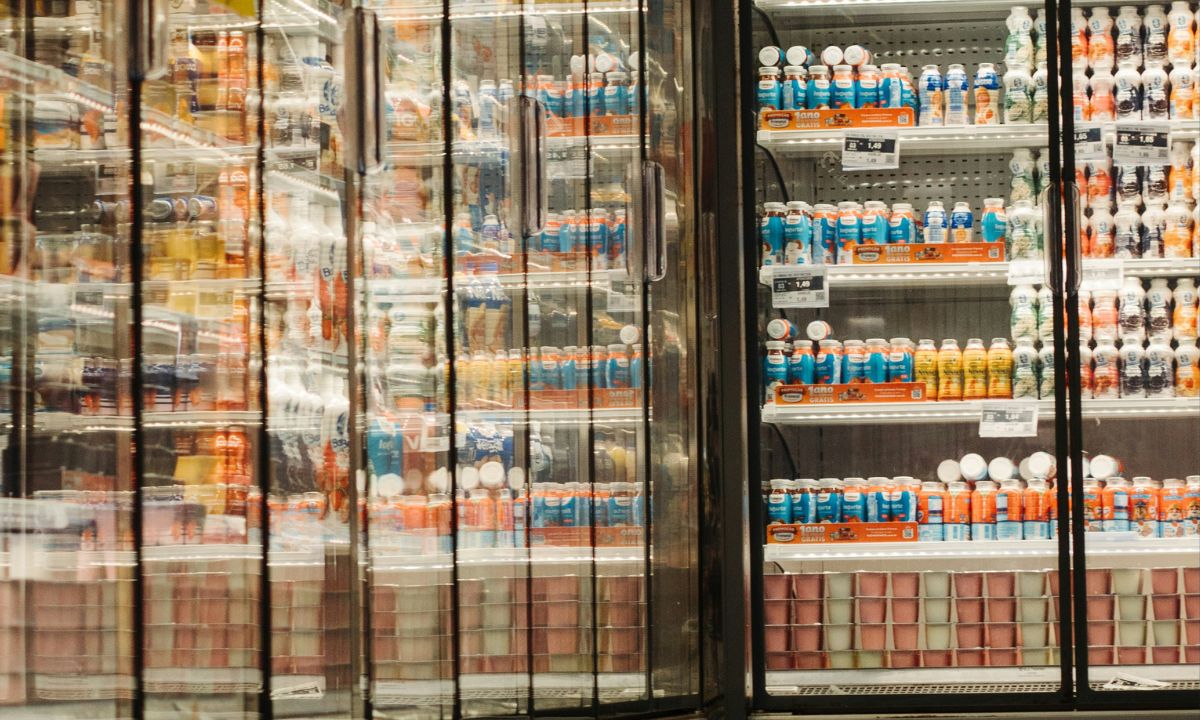
Cold storage in grocery store

What Else to Consider?

A few additional factors will be helpful to share with your label printing partner so that your labels perform well throughout the cold chain:

  • Container Material: Adhesives interact differently with glass, PET, corrugated, or HDPE. For example, glass often benefits from freezer-grade acrylics for stronger bonding.
  • Temperature Cycling: Will your product move freezer → retail shelf → consumer fridge? Each swing stresses both adhesive and base material.
  • Moisture Exposure: Is your product sitting dry in a carton, or submerged in an ice bucket?
  • Regulatory Needs: Food and pharma labels must remain legible, include FDA-required information, and be barcode scannable for retail. Peeling or smudging can create compliance issues.

Quick Checklist for Avoiding Failures

  1. Choose BOPP or PET films for refrigerated or frozen storage.
  2. Match adhesive to your application & service temps.
  3. Use wet-apply adhesives for cold-fill or condensation-prone lines.
  4. Add a laminate for moisture-heavy environments.
  5. Apply to clean, dry containers whenever possible.
  6. Test labels through your actual cold chain, for example by running freezer-to-fridge-to-room temp cycles, and check for peeling, whitening, or smudging before scaling.

Preventing Cracking or Curling in Cold Storage

With the right safeguards in place, your labels will stay sharp and secure in cold storage. Not sure which label material makes sense for your products? Contact us and we’ll walk you through it.