Sustainability and Recyclability of Printed Cans

If you’re considering digitally printed cans, sustainability usually comes up, either because it matters to your brand, your customers, or sometimes even regulators.

Here’s the short version: digitally printed cans don’t magically make packaging sustainable, but they do remove some of the biggest environmental inefficiencies found in labeled or shrink-sleeved cans.
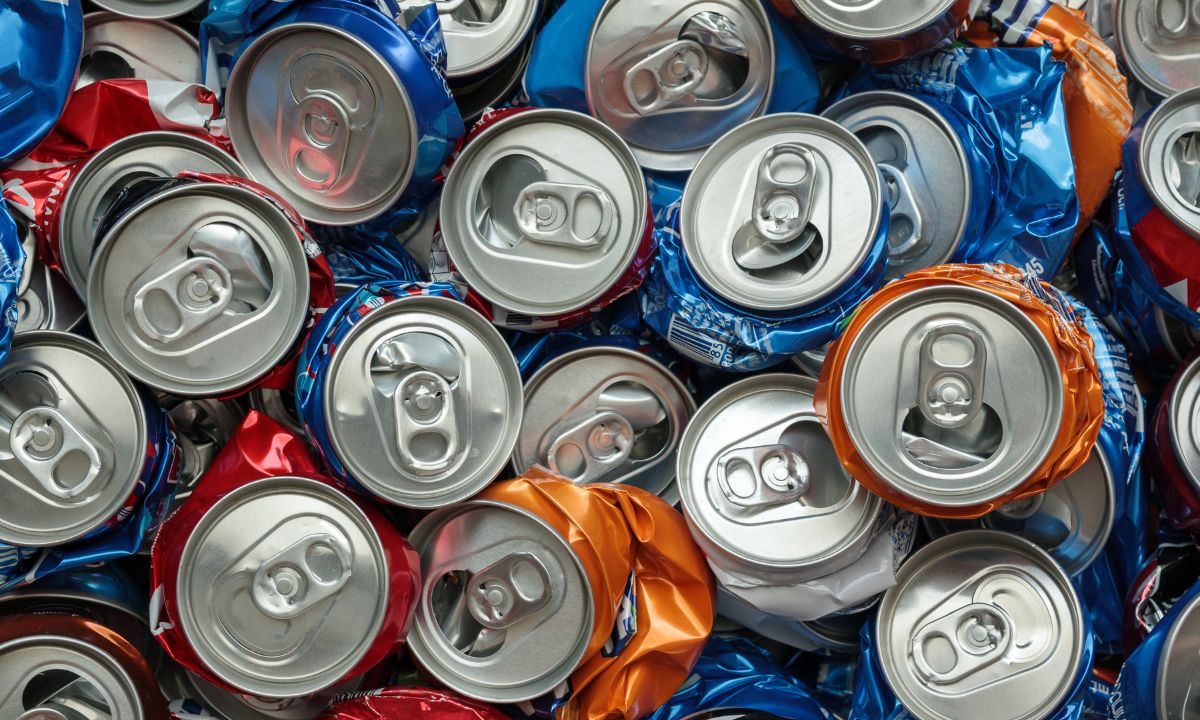
Printed cans being recycled

Recyclability of Printed Cans

Aluminum cans are already one of the most recyclable packaging formats available. They can be recycled repeatedly without losing quality, and recycling aluminum uses up to 95% less energy than producing new aluminum from raw material.

The sustainability difference is not the can itself, but how the can is decorated.

Digitally printed cans preserve aluminum’s recyclability because:

  • decoration is applied directly to the can as a very thin ink layer
  • there are no plastic sleeves or label films
  • there are no adhesives to remove during recycling
  • recyclers can process the aluminum with fewer steps

Cans with shrink sleeves or pressure-sensitive labels are still recyclable, but recyclers typically must:

  • burn off plastic sleeves or label materials
  • remove adhesives and coatings
  • process additional non-aluminum waste

That extra processing does not prevent recycling, but it does add energy use, waste, and complexity to the recycling stream.

In simple terms, digitally printed cans keep aluminum packaging closer to a single-material recycling process by eliminating secondary decoration materials.
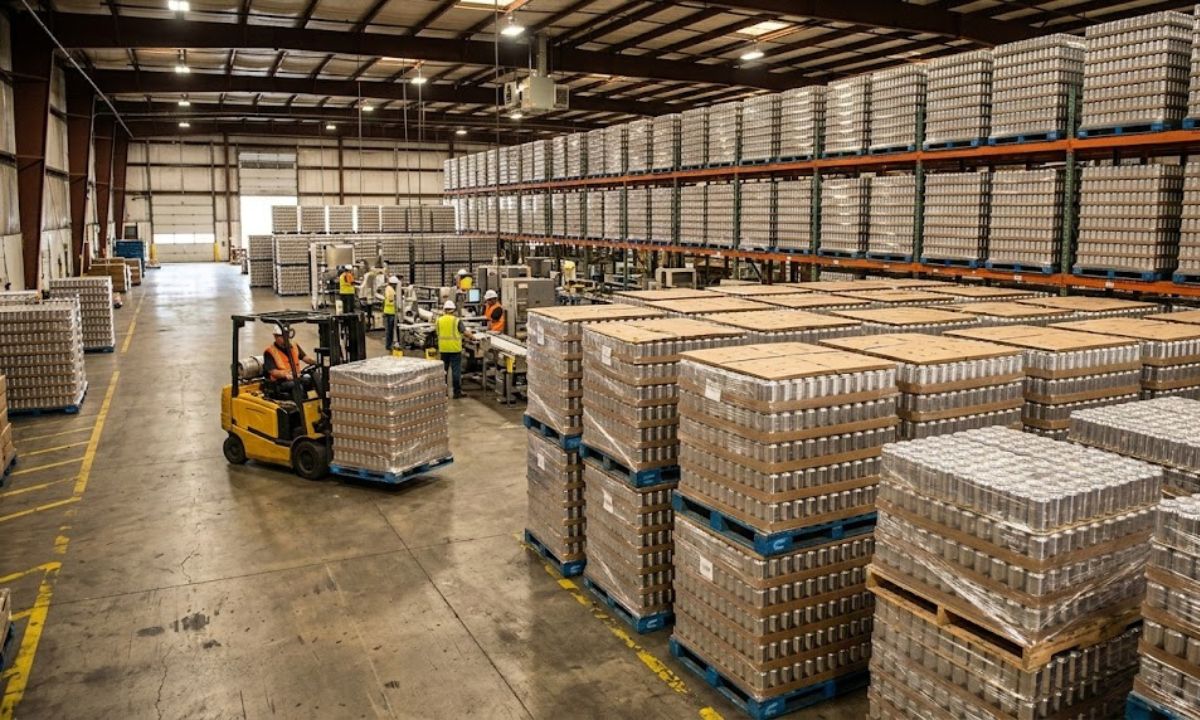
Warehouse of cans on pallets

Inventory Waste and Overproduction

With digitally printed cans, inventory planning becomes an important part of sustainability and cost control. Digital printing gives brands more flexibility than offset printing, but digital (especially printed cans) still requires the right planning.

Digitally printed cans allow brands to:

  • print smaller production runs compared to traditionally high minimum order quantities
  • combine multiple SKUs into a single order to improve efficiency
  • reduce the risk of large quantities of unused decorated cans
  • better align packaging orders with production schedules

But digitally printed cans still require forecasting and coordination. Unlike labels applied to blank cans, decorated cans can’t be repurposed if branding, compliance information, or products change.

Brands using digitally printed cans should plan for:

  • product demand across SKUs
  • product shelf life and production timing
  • storage space for pallets of printed cans
  • potential design updates or seasonal packaging changes
  • coordination with co-packers or filling schedules

If a product isn’t selling or a design changes, unused printed cans may become unusable. That risk exists with any pre-decorated can format, but digital printing can reduce the scale of that risk by lowering minimum order quantities and allowing SKU mixing.

Regulatory Pressure Is Increasing

Several U.S. states are implementing Extended Producer Responsibility (EPR) laws that assign costs to packaging that is harder to recycle.

States that have already passed packaging EPR legislation as of 2026 include California, Colorado, Oregon, and Maine, with other states actively considering similar policies.

Beverage brands can check current state-by-state packaging EPR requirements through the Product Stewardship Institute’s packaging EPR tracker.

In some cases, packaging with:

  • plastic shrink sleeves
  • applied labels
  • mixed materials

…may incur additional recycling or disposal fees depending on how recyclability is evaluated within those programs.

Digitally printed cans avoid those secondary materials entirely. This can make them easier to align with emerging packaging regulations.

Consumer Perception Matters Too

Beverage brands often want to know how to talk about digitally printed cans in a way that is accurate and meaningful to eco-conscious consumers.

When communicating about sustainability, brands using digitally printed cans can focus on clear, specific language tied to recyclability and waste reduction.
Recycling label on a beer can

Examples of sustainability language include:

Recyclability-focused language

  • “Please recycle this can”
  • “Aluminum cans can be recycled again and again”

Waste-reduction language

  • “Designed to reduce packaging materials”
  • “No secondary packaging materials attached to the can”

This type of language helps brands communicate real sustainability improvements without making vague or hard-to-support claims.

For most beverage companies, the goal is not to position printed cans as “perfectly sustainable,” but to show that their packaging decisions reduce unnecessary materials and support recyclable aluminum packaging.

The Practical Sustainability Summary

Printed cans are typically more sustainable than shrink sleeves or pressure-sensitive labels because they eliminate plastic decoration materials and simplify the recycling process. Sustainability is only one factor alongside cost, aesthetics, production setup, and order volumes.

If you’re comparing labeling options for your cans, contact us to talk through your options, request a quote, or see samples of our digitally printed can work.

Printed Cans 101: What to Know Before Ordering

Printed cans are a great option for beverage brands that want shelf impact, consistency, and operational simplicity. But keep in mind the process is not the same as ordering pressure‑sensitive labels or shrink sleeves. The brands that have the smoothest first run are the ones that plan ahead for printed cans beyond just design decisions.

This guide is for beverage brands moving to digitally printed cans who want to make sure their orders go exactly as planned. We’ll walk through what matters before you place an order, including artwork, finishes, logistics, and other details that help prevent surprises.

1. Preparing Artwork for Printed Cans

With printed cans, you can get great consistency and durability, but only if artwork is prepared properly.

What to confirm before submitting files

  • High‑resolution artwork is non‑negotiable. Low‑res images that might pass on a label will show immediately on a printed can.
  • Understand resolution differences. Digitally printed cans don’t reproduce ultra‑fine detail quite the same way pressure‑sensitive labels do. Very small text, thin lines, and subtle textures need extra attention so they stay crisp once printed on aluminum.
  • CMYK only. RGB files introduce color shifts that can be amplified on aluminum.
  • Bleed and seam awareness matter. Your design must account for the can seam and safe zones so critical elements aren’t distorted or hidden.
  • Metallic interaction is real. Even with a white base, aluminum subtly influences color density and contrast.

If you’re used to prepping artwork for labels, expect more scrutiny at this stage.

Prototyping Printed Cans

A physical proof or prototype can be helpful in letting you validate:

  • Color accuracy
  • Text legibility at real size
  • How gradients, fine lines, and solids behave on a curved surface
  • How embellishments or decoration appears (we’ll touch on this later)

This is where most issues are caught, and where the smartest brands pay special attention.

2. Finishing and Embellishment

Digitally printed cans can look incredible, but embellishments work differently than they do on labels.

What’s typically available, and what to confirm

Based on real‑world digital can production capabilities:

  • Gloss or matte overall finishes are the most common and reliable options.
  • Selective effects are limited. Digitally printed cans allow for different areas to be different finishes, allowing spot varnished matte or gloss areas. It is also possible to create an embossing effect by printing a higher concentration of varnish. But, digital printing directly on aluminum doesn’t offer the same variety of finishes and textures possible with pressure sensitive labels or shrink sleeves. 
  • Design contrast does the heavy lifting. Texture and premium feel often come from smart color use, negative space, and finish selection.

If your brand relies heavily on tactile embellishments from labels, this will be a shift. Printed cans trade the wide embellishment options offered by labels for consistency and a label-less look.

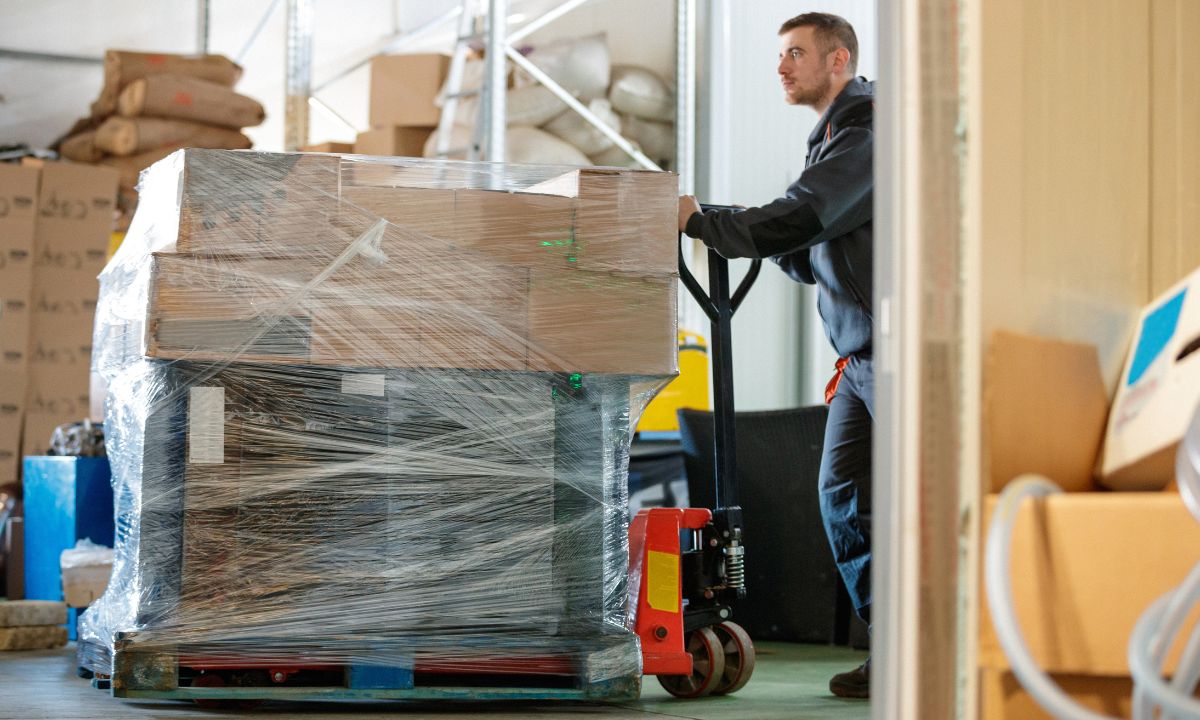
Products being shipped on a pallet

3. Logistics & Planning

Digitally printed cans force you to change how you think about inventory, storage, and shipping.

Minimums and order sizing

While digitally printed cans allow lower minimums than traditional offset printing, they are still a manufactured container, not a roll of labels.

Key considerations:

  • Order quantities should align with realistic fill schedules.
  • Small test runs are possible, but extremely small shipments can increase per‑unit logistics costs.
  • Partial pallets or mixed shipments require extra planning.

Shipping methods matter

Shipping Method Best For Approx. Can Quantities
Full truckload (FTL) Large runs ~200,000+ cans (varies by format)
Less-than-truckload (LTL) Mid-size runs ~5,000–200,000 cans
Parcel / small pack Samples, pilots Dozens to a few hundred cans

Cans are durable, but printed cans still need proper handling. Our recommendation is to match your order size to the right shipping method early (we can help with this), use full pallets whenever possible, and confirm packaging and handling requirements so cans arrive fill-ready and on schedule.

Storage and Delivery Timing

Some brands ship printed cans directly to their filler (which may be onsite or elsewhere). Others choose to store cans and schedule deliveries over time based on their fill plan. The right choice depends on:

  • Fill cadence: If you fill weekly or bi‑weekly, storing inventory and receiving cans in smaller deliveries might make sense. If you fill monthly or in large runs, direct‑to‑filler shipments are usually simpler and more cost‑effective.
  • Warehouse space: Limited space favors just‑in‑time deliveries or scheduled deliveries. If you have room to store full pallets safely, receiving larger shipments can reduce freight complexity.
  • Cash flow: Smaller, scheduled orders spread cost over time but may increase per‑unit logistics costs. Larger orders require more upfront spend but are typically more efficient on a per‑can basis.

Beer Cans

4. Testing Printed Cans

Testing matters with any packaging, but there are a few extra considerations with digitally printed cans, especially if you’re used to working with labels or shrink sleeves.

Beverage compatibility testing

Your beverage still needs to be compatible with aluminum and internal can linings under real conditions. That makes it important to confirm the following areas of performance:

  • Liner testing for ‘hard to hold’ beverages: If the cans contents have a high level of alcohol, low pH level, or cannabinoids (or other active ingredients), the beverage might need to be tested to ensure the liner won’t erode and damage the integrity of the can. 
  • Pasteurization or tunnel exposure, if applicable: Beverages that run through tunnel pasteurization or high‑heat rinsing should be tested to ensure the printed graphics maintain appearance and durability under those conditions.

If you’re coming from labels or sleeves, this may take more consideration because any issues impact the can itself, not just an applied label.

Fill-line considerations

We do durability testing as part of the printed can process, but it’s still important to know what to watch for once those cans hit your fill line. Digitally printed cans behave a little differently than labeled or sleeved cans, and being aware of that up front helps avoid surprises.

When you begin running printed cans, pay close attention to:

  • Abrasion and scuffing: Printed graphics are exposed during conveying, rinsing, and packing. Points of friction that may have been masked by a label or sleeve can show up more clearly on a printed surface.
  • Seam and handling performance: Because the graphics are printed directly on the can, any handling or seam-related issues affect the finished container itself, not a removable component.

The goal isn’t to slow down production, but to know where printed cans may behave differently so adjustments can be made early, before small issues become larger ones in distribution.

5. How Production Differs from Labels and Shrink Sleeves

If you’re coming from pressure‑sensitive labels or shrink sleeves, digitally printed cans introduce a few differences and planning considerations.

  • Artwork is locked in earlier. With labels or sleeves, artwork can sometimes be adjusted later in the process or corrected with a reprint. With printed cans, artwork approval is a point of no return. This makes seam placement, resolution, and color proofing more important up front.
  • Resolution and fine detail require consideration. Ultra‑small text, thin line work, and subtle textures that reproduce well on labels may soften slightly on printed cans. Designs often benefit from slightly heavier type, stronger contrast, and simpler detail.
  • Lead times shift. Printed cans are produced as finished containers, not decorated after the fact. That means lead times should be planned more like packaging procurement than label reorders.
  • Inventory planning becomes more deliberate. Instead of ordering labels as needed, you’re planning can quantities that align with fill schedules, storage capacity, and cash flow. Over‑ or under‑ordering has bigger downstream implications.

Printed Cans Done Right

When artwork, production, logistics, and testing are all working together, printed cans make life easier and give your product a seamless look. But when things are rushed, especially with printed cans, issues tend to show up fast.

At Blue Label, we work with beverage brands every day to make sure their printed cans launch smoothly, not just visually, but operationally. Whether you’re planning your first run or switching from another printed can provider, we’re happy to help. You can always reach out to our team or take a look at our Printed Cans page to learn more and see if it’s a good fit.

Can Metallic Labels Be Used on Cans?

If you’re a beverage manufacturer, whether you’re producing craft beer, craft soda, cold brew, or ready-to-drink cocktails, you may be wondering whether metallic labels can hold up on aluminum cans. The short answer is yes. Metallic labels can look stunning and perform well when you choose the right adhesives and finishes for your fill process, storage conditions, and handling needs.

Metallic labels are especially well-suited for brands looking to highlight premium quality with added durability such as energy drinks, sparkling waters, or ready-to-drink cocktails. 

Here’s what to consider:

Fit and Material Compatibility

Metallic labels, like metallized BOPP, flex well over curved aluminum cans. But there are other considerations to help them stay put. Here’s what to check:

Adhesive Strength

Use a cold-wet adhesive (formulated for condensation or cold-surface application) or a pressure-sensitive adhesive, the standard type most beverage companies use, made for chilled, condensation-prone surfaces. Cold-wet adhesives are designed to bond to cold, sometimes damp cans during application.

Pressure-sensitive adhesives stick on contact, no heat or water needed, and you can get versions that hold strong through cold, wet conditions.

Handling Cold, Moisture, and Abrasion

Chilled cans, ice buckets, and transport can provide some additional challenges when it comes to durability. Consider the following:

  • Film labels (BOPP, PET) handle water and cold well.
  • Durable PET film adds scuff resistance, especially when cans get jostled or stacked.
  • Don’t skip lamination. Gloss, matte, or soft-touch laminate protects your label from scratches, wet conditions, and handling damage.

Design and Visual Impact

Want to know how to get that metallic to pop?

  • Metallic labels give you foil-like shine without extra steps. Smart use of matte areas or spot varnish helps contrast and prevents everything from looking like a full mirror-like finish.
  • If you’re adding text or brand elements, underprinting white (white layer) on metallized surfaces is a must for legibility. Without that base layer, colors and text can appear translucent or washed out. Think of it as a primer; it helps your design show up clearly and consistently. As a rule of thumb, apply white ink beneath all design elements that you do not want to appear metallic. If you’re not sure, we can walk you through your options.

Recyclability and Environmental Considerations

If you’re concerned about sustainability, consider the following:

  • Removable film labels usually don’t cause problems, but it’s smart to check with your local recycler or packaging partner to be sure.
  • Some label material options are designed to separate cleanly from containers during recycling and meet APR and How2Recycle standards.
  • If your brand leans into environmentally-friendly messaging, call out how you’ve chosen materials that meet recycling center specs or that qualify for certain “recycle-ready” label standards.

Compliance and Label Specs

Don’t forget the essentials for compliance depending on your beverage type:

  • Alcoholic beverages need to meet all TTB labeling requirements, including brand name, alcohol % ABV, net contents, address, and a few more. The TTB still expects you to include all the usual info, no matter how shiny your label is.
  • For quick reference, you can review the TTB Beverage Labeling Guide to confirm you’re including all required elements such as government warning text and proper net content placement.
  • Keep fonts legible on shiny backgrounds by using white underlayers, high contrast, and bold text where needed.

Quick-Check: Will These Labels Work for You?

Condition What You Should Do
Cold, moisture, condensation Use film label, cold-wet adhesive, add laminate
Abrasion or shelf wear Go with PET or add gloss, matte, or soft-touch laminate
Recycling goals Choose peelable film, avoid non-removable sleeves
Labeling compliance Stick with TTB rules. Legible information is still required

We’ve handled metallic labels for beverage brands that wanted that shelf magnet look without losing performance. If you’re ready to try it yourself, or just want a second opinion, contact us and we’ll walk through what works best for your cans.