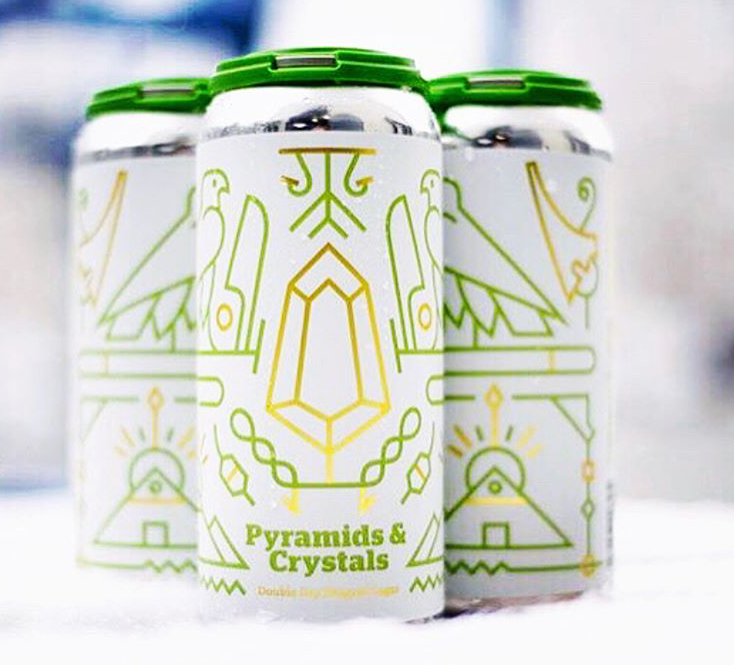
Hard Seltzer Labels: Breaking Down Potential Labeling Regulations

Following alcohol labeling regulations is already a tricky process. It gets even more complicated when you’re unsure which organization oversees the packaging requirements for your product.

Hard seltzers are an increasingly popular beverage for people across North America, but there are some potential problems when it comes to packaging these products. Namely, some hard seltzers fall under different regulatory guidelines than others. Let’s break down exactly why hard seltzers can follow different regulations and what those regulations are.

A collection of cans with hard seltzer labels that follow TTB label requirements.

Does Hard Seltzer Follow TTB or FDA Label Regulations?

The key to identifying which labeling guidelines apply to your hard seltzer depends on how the product is made. While the Alcohol and Tobacco Tax and Trade Bureau (TTB) largely oversees labeling requirements for alcoholic beverages, there are some exceptions that fall within FDA jurisdiction: wines that contain less than seven percent alcohol by volume and beers that aren’t made from malted barley and hops.

What that means for hard seltzer labels is that the base of the beverages will dictate what specific regulations are followed. According to the TTB, hard seltzers made with either malt or sugar bases are considered “beer” products. This means that hard seltzers must follow federal beer laws and should display the following:

  • The name or trade name of the brewer
  • The net contents of the bottle
  • The nature of the product (ex. “beer” or “hard seltzer”)
  • The place of production
  • A health warning statement

However, those are not the only labeling requirements for hard seltzers. Malt-based hard seltzers are defined as “malt beverages.” As such, all hard seltzers must follow federal beer rules and additional TTB labeling laws. Meanwhile, sugar-based hard seltzers must instead follow certain FDA labeling rules.

The Differences Between TTB and FDA Regulations for Hard Seltzer Labels

In addition to the federal beer labeling rules, there are other rules that both malt and sugar-based hard seltzers must follow. Both types of hard seltzers must submit a Brewer’s Notice application with the TTB to qualify for production. Furthermore, the TTB must approve the product formula. However, there are some specific TTB and FDA regulations that apply to the different types of hard seltzers.

TTB label requirements for hard seltzers

There are several key elements that the TTB requires for any malt beverage label. Some of these elements are already required by federal beer laws, but the TTB adds on some additional items such as additional rules for class and type designations and disclosures for specific ingredients. The TTB also has specific rules for how each element should be displayed on malt beverage labels. For a detailed breakdown of these requirements, check out our post on TTB label requirements.

Another major difference for malt beverages is the need for a Certificate of Label Approval/Exemption (COLA). The TTB reviews every COLA whether it’s for a new product or if you make changes to your label. Malt-based hard seltzers will need the TTB to approve this COLA before you can sell your products.

FDA label requirements for hard seltzers

Typically, alcohol labels don’t have to disclose ingredients or nutritional information (although it is optional to do so). However, the FDA generally requires food and beverage products to include a nutrition facts panel and ingredients statement on labels. This mandate holds true for alcoholic products that happen to fall under FDA jurisdiction. As such, sugar-based hard seltzers must follow proper nutrition facts panel and ingredients statement protocol as found the FDA’s Food Labeling Guide.

Another big difference between the FDA and TTB is that the FDA doesn’t have a pre-market approval process. While this may sound like a more attractive scenario than submitting a COLA, no pre-approval can open hard seltzer labels up for potential penalties. The FDA will still review and pursue agency action if they discover any labeling issues, so you’ll need to make sure that your packaging is completely compliant before you go to market.

Don’t Skimp on Style for Your Hard Seltzer Labels

Whether your hard seltzers fall under TTB or FDA alcohol regulations, it’s important to make sure your packaging is compliant with existing standards. It’s also critical that your labels do all they can to impress potential customers.

When you need show-stopping hard seltzer labels, Blue Label Packaging can help. Our experts can help you bring your stunning designs to life, find cost-effective solutions that showcase the quality of your products. Contact us today to invest in the perfect labels for your hard seltzers.

The Cost of Beer Labels: How Does Commercial Pricing Work for Professional Beer Labels?

When it comes time to invest in beer labels, there are a lot of questions you may want to ask your label printing company. Of these, there’s one particular question that every one wants to know: how much will professionally printed beer labels cost?

The immediate answer to that question is, it depends. There simply is no quick answer to how much beer labels cost because every project is so different. Instead, it’s important to have a general understanding of how commercial beer label pricing works and all the factors that can impact the cost of your project.

How Craft Beer Labels are Priced

The main reason why it’s tough to provide a quick custom beer label estimate is that each project is a custom process. Each order is manufactured from scratch, so there are no pre-made products to ‘save’ cost with. Every beer label features an original design and uses different materials per your specifications. At Blue Label, we rarely see a project cost less than $150 total (simply due to the costs associated with setting up equipment) and will scale up depending on your specifications.

Once you do get a beer label estimate, it’s also important to evaluate your investment in understandable numbers. While some people may want to break down cost on a price per unit basis, we find that it’s generally better in print to evaluate your label cost per thousand pieces. This perspective allows you to avoid the fractional cents in per unit costs and helps provide a clearer visual of the sliding scale in total cost. For instance:
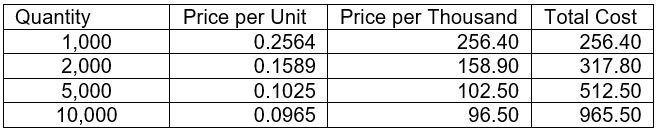
A chart that break down beer label costs on a price per unit basis.

**Note: This chart does not reflect any pricing at Blue Label. For demonstration of pricing breakdown only**

So between 1,000 and 2,000, you can get twice the amount of labels for $61.40 more. The ‘Price per Thousand’ (sometimes notated as ‘Price per M’) category is intended to give a more clear ‘apples to apples’ comparison on items that have a small unit price.

The Factors That Impact Beer Label Costs for Craft Brewers

As a digital label printing company, we gather a lot of information to estimate the overall cost for your beer label project. There are multiple factors that can impact your costs. These factors include:

  • Product type
  • Material
  • Size
  • Quantity
  • Multiple versions
  • Lamination / varnish
  • Tooling
  • Decoration
  • Application
  • Variable content

Product type

The very first step in the pricing process is to determine what you want to accomplish with your beer labels. Depending on your product, design, and environment, you may be in the market for pressure sensitive labels, shrink sleeves, double sided labels, or hang tags.

For example, shrink sleeves have a special production process and may require certain quantities to help maximize your invest in them. Meanwhile, pressure sensitive labels have a multitude of material options and decorating capabilities that can be applied to them. Our experts can offer advice on which label type is ideal for your brewery.

Material

Your label material of choice is going to be a notable contributor to your overall label costs. Each label is made with multiple layers that include a top layer (face stock) , an adhesive, and a liner. Some label materials will cost more per linear foot than others, so a more expensive material will lead to overall higher project costs.

When it comes to beer labels, there are two main types of material options: film and stock paper. Films for pressure sensitive labels are a natural choice as they’re more resistant to fluids.

Paper materials can provide a distinct look for beer containers, but can be two to five times more expensive than standard semigloss or white BOPP films. Given that materials make up a significant percentage of your total beer label costs, that distinctive paper material could lead to a cost increase of up to 40 percent overall.
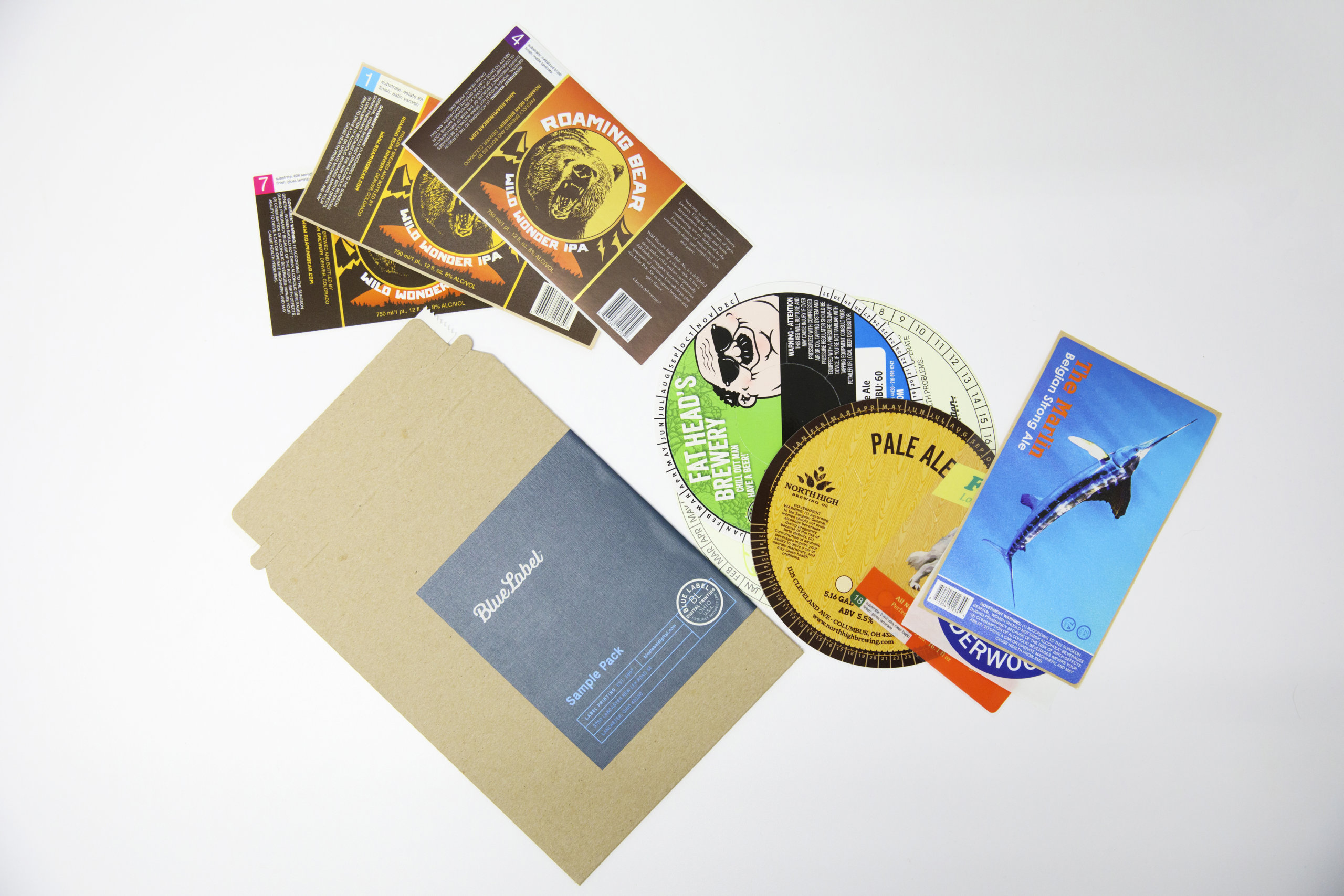
An assortment of materials used for professional beer labels.

Size

The overall size of your label is another major factor for beer label costs. Label size dictates how much material is required. Simply put, the more material we use, the more expensive your label project will be. As such, larger labels can cost more than smaller labels from a raw materials standpoint.

Print layout is also another major factor that can influence label sizing costs. Label materials come in long rolls that are fed through a machine that prints your design onto the face stock of the roll. Depending on the size of your design, you may be able to fit multiple labels across the width of the roll.

By fitting more labels on a roll, you can improve printing efficiency and limit label material waste. This amount of material waste isn’t too noticeable in smaller orders, but a 20 percent difference in material costs is a noticeable change for larger quantities of labels.

Fortunately, there are measures you can take to help maximize space and minimize waste. Work with your designer and printing company to adjust the size of your label, especially if a fraction of an inch is the difference between a 15 to 30 percent bump in material costs. Our Beer Sizing and Dimensions Guide also includes optimal measurements for the most cost-effective sizing for printing your beer labels.

Quantity

The total number of labels printed in a project has a massive impact on your final project price. As expected, projects with higher label quantities will have a higher total cost simply because they consume more material. However, there is a potential for savings that isn’t as straightforward as you may expect.

While digital label printing allows breweries the flexibility to invest in lower quantities of beer labels, higher quantity runs can help you drive down your cost per thousand. Every project includes initial costs to set up the printer, calibrate colors, set up die cutting, and complete other tasks to start the manufacturing process.

Regardless of whether you need 200 or 200,000 labels, we have to go through those same processes. However, that setup time can be amortized much more efficiently over a long print run of labels, which means that higher quantities of labels actually drive down label costs.

While larger quantities can drive costs down, there are some potential cost advantages of buying lower numbers of beer labels. Digital label printing allows you to avoid the hidden costs of labels of obsolescence – regulation changes, brand updates, and other events that can make your beer labels outdated. That flexibility can be very valuable when you’re dealing with future events that could lead to unnecessary label waste.

Multiple versions

One notable cost factor is the ability to group multiple label versions together in a single project. While plate-based printing will require added fees for each label version, digital label printing can group these different labels together as long as there are 500 copies of each.

Maybe you don’t can 50,000 of one flagship… but maybe you do can 10,000 of your top five beers and have some seasonal releases to add in as well. Instead of placing five separate orders of 10,000 labels, digital technology allows you to place one order of 50,000 labels to take advantage of the lower ‘per thousand’ unit cost. Since everything is done digitally, we have the ability to mix and match your various versions into one production run, which helps save on setup and minimize waste.

Lamination / varnish

Every beer label needs some form of print protection. The average beer label is going to face several potential issues. Fluids like water and beer can wreak havoc with paper labels. Shipping and handling can rub off ink without a laminate or varnish layer.

Standard laminates and varnishes aren’t an additional cost, as much as they are something that’s baked into your starting project price. Every film label project is made with some form of laminate, while wine stock papers will require a basic varnish. There are also decorative laminates and varnishes available as well for an additional cost. Finishes such as soft-touch or textured laminates can serve a dual role of protecting your beer labels while adding to the overall look and feel of your packaging.

Tooling costs

Beer label costs may also include tooling fees, but these can vary depending on your label design and how they’re printed. Older printing methods, like offset or flexographic printing, use unique sets of plates to create your beer labels. As such, you’ll need to pay for a new set of plates for every piece of artwork. Digital printing doesn’t require plates, which cuts out those costs and any additional lead time required to manufacture plates.

Custom label shapes can also add tooling costs. Specialized pieces of metal called dies are used to cut specific shapes out of label materials. While digital label printing companies often have a wide range of existing dies, specialty shapes may require a newly manufactured part.

Depending on the size and shape, a new die can cost around $200. Of course, that die will then be freely available for any future label runs. At Blue Label, we have dies for most standard beer sizes in-house and can provide them for no extra cost to our customers. Our Beer Sizing and Dimensions Guide can walk you through the options and provides visual aids.

Decoration

While your choice of material, label size, and total quantity are the three biggest factors for project price, label decoration can add some additional costs depending on your needs. These added features can enhance the look and feel of your beer labels, which can add to your overall price per thousand and lead times based on your desired decoration.

Digital finishing equipment can apply many different decorative elements to beer labels. Foil stamping presses special foils into your material to create a raised image that stands out from other labels. Embossing imprints a special pattern or image into the label material, creating a pattern that consumers can see and feel. Spot varnishes allow you to coat specific parts of your design to make those elements pop. Each of these finishes can help capture consumers’ attention for an added cost.

Application

Your application process can also impact the beer label pricing as well. Your exact application process determines a few different factors:

  • Roll size
  • Unwind
  • Liner

Applicators can require a specific roll size or “Max OD” (Maximum Outer-Diameter). Your application process can determine how big the roll is, which can require more rewinding. Smaller rolls will also require your printing company to break your labels down into more manageable quantities for your machinery. These efforts won’t make for large changes in price for most customers, but they’re another potential reason why you might see an uptick in beer label pricing.

The required unwind can also affect potential cost efficiencies. The unwind determines which edge of the label first comes off the roll. This unwind can change how your printer needs to position your labels during printing. Depending on the dimensions of your label, that new positioning can yield a more or less efficient print layout.

Certain applicating equipment may also require a specific type of label backing. The backing, also called a liner, is the bottom layer of a pressure sensitive label. Applicators have sensors that read the label gaps during application, but certain sensors may only be able to read paper or film liners. As such, you may need to invest in a film liner which could slightly increase your project price if your applicator requires it.

Variable content

Variable data printing is another way that digital label printing allows you to change certain elements in a design without having to create entire new art files. Essentially, variable data printing utilizes a spreadsheet or some other file format to modify a variety of design elements, such as a headline, image, name, or color. Variable data printing can also incorporate variable images and patterns, allowing you to alternate or serialize label designs.

Variable data is a very useful tool for batch numbering, product tracking, or creating individualized items. It does require a good deal of setup and administration, so adding variable data printing to a label can increase costs.
Beer can labels made with a film material, print protection, and other factors that impact beer label costs.

Added Value Opportunities for Beer Labels

While there are several factors that can add to your overall project price, it’s important to also identify potential value opportunities as well. There are a lot of services that won’t show up on your bill, but can make a massive difference for your company. Each of the following factors can not only help your business save time and money, but also spare you from avoidable headaches when it’s time to invest in beer labels.

Artwork prep and readiness

Every beer label starts off as an art file before it’s printed. Unfortunately, there are a litany of artwork issues that can pose problems for your labels. Common concerns like incorrect file formats, low-res images, and improperly built bleeds will lead to problems with printed products without prior attention.

The level of artwork assistance depends on the label printing company. A lot of printers will charge you for that time to make sure your art is ready. Others will provide artwork prep for free and guide you through the printing process from start to finish.

Label printers can also provide press proofs for a small fee so that you have a physical example of your product before investing in the full run. Artwork can translate very differently from a computer screen to printed product. Though they might add a little time and money in the short term, artwork prep and press proofs can help avoid costly errors or artwork issues on a full production run.

Shipping and turnaround times

While shipping isn’t a part of the label production process, it’s important to keep it in mind for your overall label costs. You’ll want to examine the turnaround times and whether or not there will be any additional charges if you need your beer labels sooner than the standard turn-time and standard shipping propose. Blue Label commits to five-business day turnarounds, but others may tack on rush fees that range from $100 to $350 depending on how quickly you need your beer labels.

Customer service and satisfaction guarantees

We don’t live in a perfect world. At some point you will inevitably run into an issue, be it a misspelling in the artwork or color not translating properly. If these issues occur, it’s important to find a label printing partner that won’t leave you stranded with faulty packaging.

A good quality department won’t change your beer label bill, but it’s priceless when you do run into any issues. Evaluate potential printing companies to see if they have any warranties and satisfaction guarantees to make sure you’re not stuck with an improper print job. You’ll want to talk to a live, friendly label expert whenever you call with any questions or concerns. If a potential label printer limits access to real people, they might not be there when you do have any issues.

Internal resources

Customer service representatives aren’t the only resources that can help you out with your beer label project. Some label printing companies offer additional internal resources that can help add value without increasing the costs of your beer label.

For example, Blue Label has several helpful blog posts, resources, and guides available online to help you prepare your labels for success. In addition, our designer directory can help you find a designer who understands the intricacies of the beer market and can create the perfect custom beer label design for your products.
A custom label design made with commercial beer label pricing.

What Breweries Can Do to Help Control Beer Label Costs

Proper packaging is an important investment for any brewery. Unfortunately, there are scenarios where you may end up paying more for your labels than necessary. Situations such as last-minute orders or unforeseen problems can lead to extra charges or delayed shipments.

The best way to avoid these issues and control your beer label costs is to prepare early. The sooner you start talking with a label printing company about your needs, the better. This head start will allow you and the printing company to identify any potential issues, avoid expedited shipping, and have everything ready to go for when you actually need your beer labels. You can also ask for test rolls to ensure that your labels work with your applicating equipment ahead of time instead of troubleshooting problems at the last minute.

Order your labels ahead of time. As long as they are properly stored, label adhesives won’t lose effectiveness for several months. Because of this, you can have your labels shipped to you a week ahead of when your applicator arrives and stil be good to go. This will give you plenty of leeway and a lot less stress when it’s time to label your beer bottles or cans.

Finally, the best way to help you invest in the perfect beer labels for your products is to work with the right label printing company. At Blue Label, we promise to deliver unmatched quality and service to help you create the best, most cost-effective beer labels for your exact needs. Contact us today to talk about your next beer label project.
How to Use Color Effectively in Beer Label Design: 5 Key Factors

When you only have a few seconds to catch a consumer’s eye, it’s imperative that your beer label is on point. Creative, compelling color choices can make your beers stand out among the competition. However, those same colors can pose problems if you’re not careful. Here are five ways that you can use colors to get the most out of your beer labels.

Create the Right Impression

Your color choices play a vital role in beer label design. The colors you use not only allow you to create a recognizable brand for all your different brews, but also influence consumers’ emotions through positive association.

You’ll want to identify what type of feeling you want to convey with each product label. For example, you may utilize soothing blues for a smooth lager that’s perfect for a nice, relaxing time on the porch. Meanwhile a dark grey or black can create an air of elegance and class for a high-end imperial stout. Your label is an opportunity to show your beer’s character, and a good color scheme will do just that.

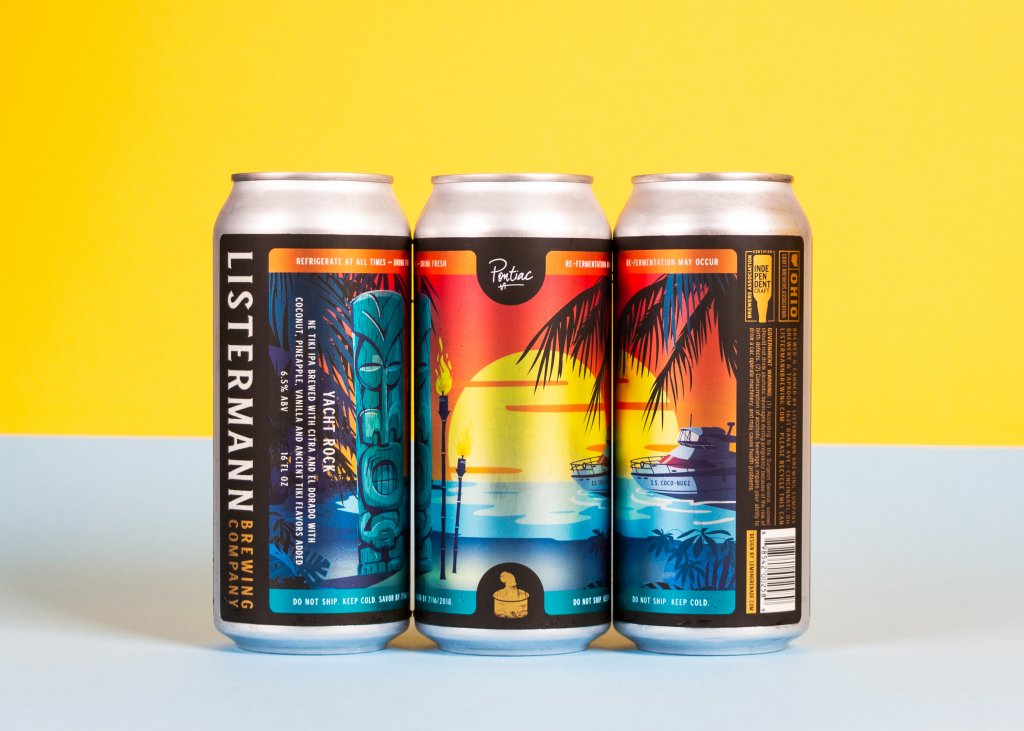
A trio of cans with colorful beer labels.

Don’t Drown Out Your Brand

Whether you want to establish your products as playful, classy, or something else, it’s important to make sure that your color scheme works with your brand. Exciting color combinations are fun, but consumers should be able to identify your brand with each container. Because of this, you’ll want to practice some caution when designing labels for each product.

A big part of beer branding is your logo. You’ll need to decide whether you want your logo to stay the same for every product or modify it to match different color choices. If you choose the former, it’s good practice to make sure your beer can branding and logo won’t clash with your preferred product pigments. If it’s the latter, you’ll just want to ensure that people can still instantly recognize your brand, even if your logo changes colors or versions. Remember, you want your product to stand out, but you don’t want to hide who you are.

Mix and Match Colors Appropriately

Identifying the right colors is a delicate balancing act. Picking and choosing an array of colors that make sense for your various beers without having them clash, create legibility concerns, or cause other brand issues are just a few of the balls you juggle..

There are a couple of different routes you can go with color selection. One method is to focus on contrasts to help emphasize various label elements. This can help make your label visually “pop” to consumers, especially if you use it to highlight a certain aspect of your label. A color wheel can help you identify opposite colors that still work with each other. A second option is to stick with analogous colors that easily flow together. These colors line up next to each other in the color wheel and create a more relaxed feel for your label.

Regardless of which route you choose – or if you opt for a hybrid of the two – it’s important to make sure that people can read your labels. Certain colors may look great together, but dark-on-dark or light-on-light combinations can cause legibility concerns. Try and use some form of contrasting colors for backgrounds and text to make sure the words on your label don’t go to waste.

Beer can label designs using contrasting colors.

Consider the Container

Your beer label plays a critical role in product packaging, but it’s only one piece of the puzzle. Your container can have a major impact in the overall look of your product. For example, one label design may work wonderfully on a clear glass bottle, but could clash with a brown one.

Certain colors schemes may work better for some containers than others, so make sure you consider how your design plays with your cans or bottles. Depending on your container, you may simply opt for a shrink sleeve for complete coverage or a clear label that uses splashes of colors to accentuate your packaging. When done well, your container can even complement your label colors, making your beers look more appealing than before.

Maximize Your Materials

Ink isn’t the only way to create colorful combinations. There are a variety of paper and film label materials that can add a new dimension to your desired color scheme. A black vellum label would be a stunning way to create an elegant background for a high-end beer. Clear labels can help you emphasize your container (or even what’s inside your container). Meanwhile, a holographic film can create a fun contrast to add some glitz and glam to a beer can.

A beer bottle label with a colorful design.

Color Your Customers Impressed with Stunning Beer Labels

In such a competitive market, pristine packaging can put your products on a pedestal. Stunning beer labels start with a stellar design, but it takes the right printing company to turn your vision into a reality.

When you need quality, cost-effective beer labels, Blue Label Packaging can help. Our team has the expertise and state-of-the-art equipment to help you enhance your designs. Contact us today to talk about your beer labels.

Pushing the Limit: What Can’t You Do with A Beer Label Design?

Brewers around the world are in a constant battle for people’s attention, whether their products end up on shelves, in coolers, or anywhere else that potential buyers may see their products. In a constant battle for attention, you may want to give your beer labels an extra edge to create a certain brand identity and attract consumers. However, that extra something in your design may be an issue when it comes to label approval.

Whether you’re trying to push some boundaries or simply be clever, your beer label design is ultimately judged by government. The Alcohol and Tobacco Tax and Trade Bureau (TTB) has certain standards for what’s permissible on beer labels. As you may expect, there are a lot of practices that are prohibited for beer label design. The Code of Federal Regulations provides a very long, detailed list, so we’ll try and break down just what may land your design in hot water as succinctly as possible.

What Can’t You Put on a Beer Label?

When you’re trying to push the boundaries with your beer label, it’s important to make sure your design doesn’t conflict with any of the types of statements listed by the TTB. It’s important to note that “statements” applies to more than just text. Anything written, printed, graphic, or portrayed by some other means on a beer label, carton, or case is considered a statement of some sort. As such, any of the following types of statements can lead to the TTB denying your label design.

Untrue or misleading statements

Simply put, the TTB is going to turn you down if they think you’re lying on your label. The TTB considers a statement as untrue if it’s directly false, false by omission, generally ambiguous, or somehow misleading.

For example, a brewery positioning itself to be a microbrewery without meeting the legal definition of one can have its label denied for misleading consumers. Meanwhile, Kona Brewing Company was sued in California for misleading people to think that its beer was brewed in Hawaii. While Kona does use Hawaiian imagery and names, every label clearly states that the beer is not brewed on the island. Because of these statements, the TTB not find the labels misleading (although Kona did eventually agree to a settlement for the lawsuit).

Disparaging statements

While you may want to make a few snide comments about your competitors or some other person or entity, the TTB won’t let you make any statements they determine to be disparaging or hurtful. With that in mind, you may want to rename your batch of “At Least It’s Better Than [Blank] Schwarzbier.”

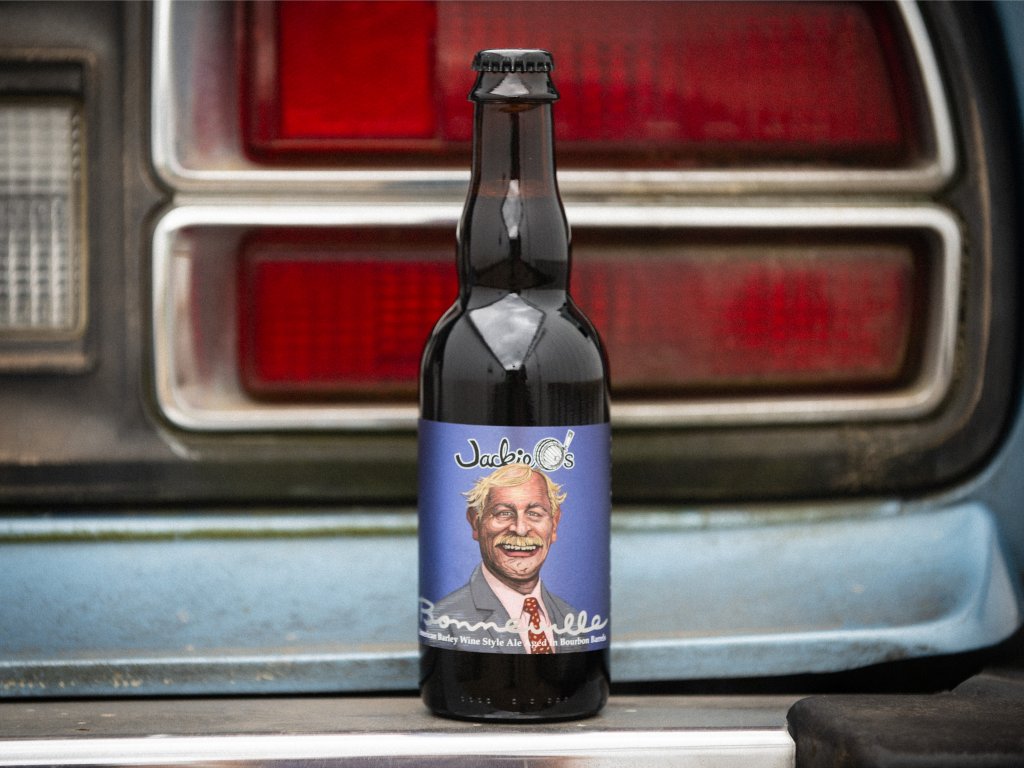
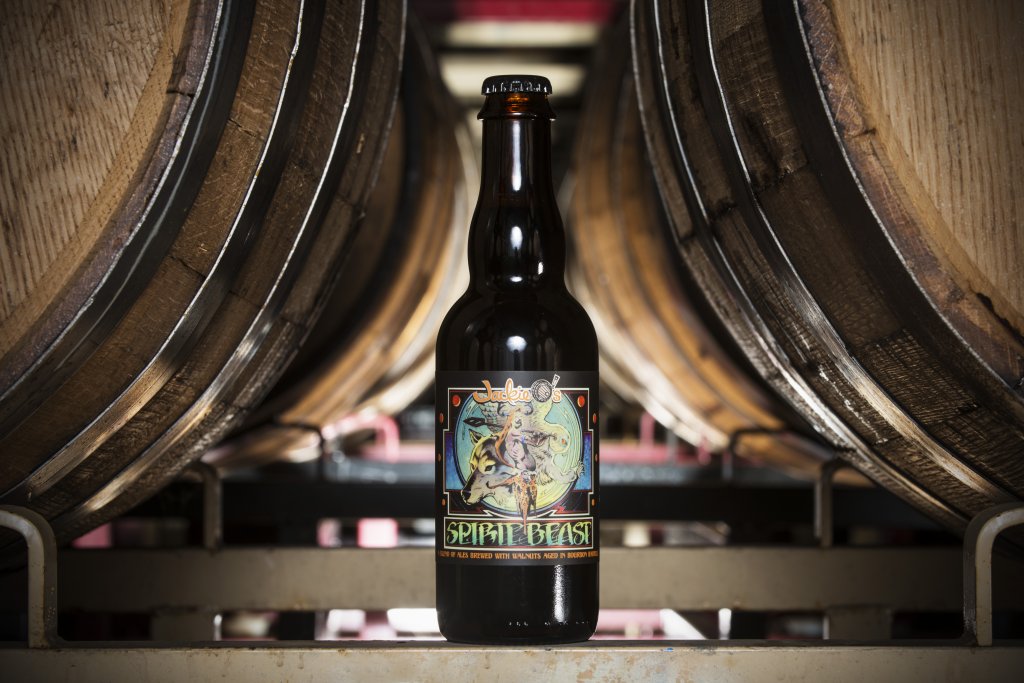
A Jackie O’s beer label featuring a likeness of a fictional person.

Obscenity or indecency

This section will likely be the biggest hurdle for any brewer trying to test some boundaries. According to the TTB, “any statement, design, device, or representation which is obscene or indecent” is prohibited. However, it’s not always clear what the TTB will consider off limits. This type of ruling is one of the hardest to judge because it depends on what a TTB representative finds obscene or indecent, not you or your customers.

Part of the issue with this type of prohibited statement is that various boards around the country have been inconsistent in past ruling. For example, The Alabama Alcoholic Beverage Control Board banned Founders Brewing Company’s Dirty Bastard Scotch Ale despite having already allowed the sale of Stone Brewing’s Arrogant Bastard Ale (the board eventually reversed its stance on Dirty Bastard after public outcry). As such, rulings on obscenity or indecency are up in the air, so be prepared to change your design or fight against the decision if your label might be construed as offensive in some way.

Improper guarantees or tests

Fortunately, guarantees are easier to identify than obscenity. Any element that provides some form of guarantee – aside from a money-back guarantee – is subject to denial if a TTB official finds that the guarantee may deceive consumers. The TTB will also deny any usage of analyses, standards, or tests that may mislead potential buyers. That means you can’t make a guarantee that your beer will provide short-term happiness, even if you did survey a small test group of patrons.

Names and likenesses

While you may have a great pun based on a celebrity’s names, that play on words can lead to a swift label denial (and potentially a cease and desist letter). The TTB bars the use of any names or likenesses of any prominent living individual or organization, which includes using any simulation or abbreviation to hint at the person or group. This practice is in place to prevent breweries from suggesting that certain people or organizations endorse a product.

For example, Hysteria Brewing Company in Maryland recently ran afoul of this section after using Baltimore Ravens quarterback Lamar Jackson’s likeness on a label after Jackson was named NFL MVP.

However, the TTB does provide some exceptions to this rule. Beer labels may use a person or organization’s name or likeness on a label if:

  • The individual or organization is engaged in the production of the beer (such as Rogue Ale’s Beard Beer).
  • A person of a trade or a brand name used the name of any living individual of public prominence, or existing private or public organization, in interest prior to Aug. 29, 1935.

Pretending to be a spirit instead of beer

Depending on your beer, you may want to utilize certain aspects of spirits on your beer label. However, it’s important not to make it seem like your beer is or contains a distilled spirit. Any statement or design element that suggests otherwise can lead to a label denial if the label does not make it clear that the beer is in fact just a beer. For example, a label that truthfully states that the beer was brewed in bourbon barrels is fine, but one that doesn’t contain any references to the product as a beer would is deemed as misleading.

Governmental connections and American insignias

You may want to show off that your beer is proud the be an American, but certain imagery or statements will lead to a quick denial by big brother. These infractions can come in a few forms:

  • The use of the American flag and any flags, seals, coats of arms, crests, and other insignia associated with the armed forces of the U.S.
  • The use of the word “bonded” and other variants that may imply governmental supervision over the production of the beer
  • The simulation or and other design made to resemble stamps for the U.S. or foreign governments

Health-related statements

It may seem funny to make a joke that a beer a day could keep the doctor away, but doing so on a label is a quick way toward having the TTB or some other board turn down your design. Using a health claim on a label is notoriously tricky regardless of product, so it’s best to avoid making any such statements if you’re hoping for label approval, even if that claim is made as a joke.

Shows of strength

Imagine that you brewed a lovely dark beer that clocks in at a relatively hefty ABV. You may want to present to potency of your porter by calling it “strong” on the label. Unfortunately, the TTB isn’t a fan of such language. Any words along the lines of “strong,” “high test,” “high proof,” or other statements that infer alcoholic strength is off limits on beer label unless such language is required by your state’s laws.

Numerals are also a potential pain point. While alcohol by volume statements may use digits, you can’t use numerals elsewhere on your label if it can be considered as a statement of alcoholic content.

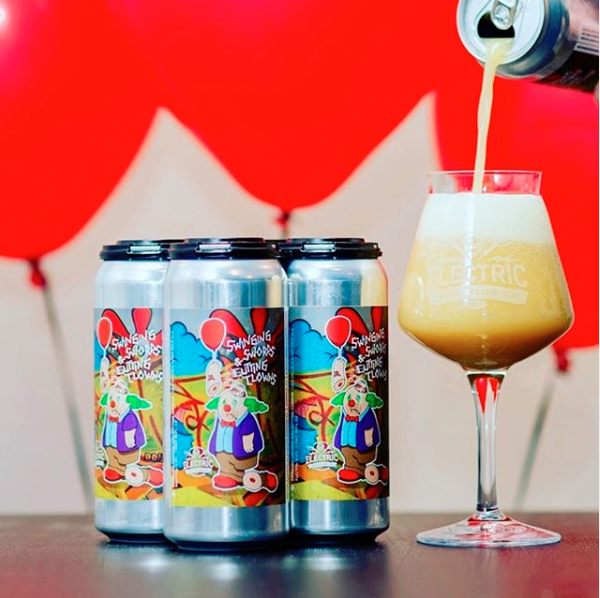
A beer label design for Electric Brewing Co. with TTB approval.

What Happens if the TTB Denies Your Beer Label Design?

Let’s pretend that you came up with a great label design and submitted a Certificate of Label Approval (COLA) to the TTB, but the organization rejected your label. Not only is a rejection frustrating, it can also delay your plans since the TTB can take up to 90 days to process a label application. Some reasons for rejection will be easier to fix, such as removing untruthful statements or disallowed imagery. However, more subjective grounds for rejection like what is considered obscene is tricky.

If the TTB denies your application, you’ll either want to modify your design based on the group’s feedback or fight the ruling. One of the most prominent examples of such a fight was when the Michigan Liquor Control Commission found the name and label of Flying Dog Brewery’s Raging Bitch Belgian-Style IPA to be offensive. Flying Dog fought the ruling in various courts until the brewery came out victorious – in 2015 after a six-year battle.

Fortunately for Flying Dog, they had the means and determination to take that fight to court, but you may not want – or be able – to do the same. In that case, it’s better to regroup and think of an alternate solution. For example, Lagunitas Brewing Company made a beer called “The Kronik” that was initially approved in the state of California, but rejected when Lagunitas resubmitted the design in order to sell the beer in multiple states. Fed up with the agency’s inconsistency involving, Lagunitas renamed the beer “Censored” in protest.

Unfortunately, there isn’t always an exact answer as to what will or won’t be approved by the TTB. If you think there may be an issue, it’s always a good practice to hope for the best but prepare for the worst.

My Label Got Approved – What Now?

First off, congratulations! Now that the TTB has signed off on your new label design, it’s time to make sure the finished product does your design justice. At Blue Label, we have the expertise and technology to provide the perfect labels for your beer cans or bottles. We’ll work with you on everything from identifying the right material for your performance needs to providing special printing capabilities that will highlight your design.

Ready to showcase your new beer label design? Contact us today to have us print quality beer labels for your brewery.

3 Reasons Why the TTB Turned Down Your COLA (and How to Avoid Them)

In the beverage world, a label denial can prove quite problematic for any new beer, wine, or spirit. No matter which or the three products your company makes, the Alcohol and Tobacco Tax and Trade Bureau (TTB) requires you to apply for a Certificate of Label Approval/Exemption (COLA) before that specific product ever hits the market.

Of course, this requirement means you need to play by the TTB’s rules. This process applies to your initial application for a COLA and if you make future changes to your labels – all it takes is a single TTB audit to pull your products from shelves. There is a lot of information required on wine labels and other alcoholic packaging, so the TTB will pay close attention to make sure everything is in the right place.

TTB regulations can seem a bit overwhelming, but a little guidance can help you properly prep your beer, wine, and spirits labels. It also helps to know about a few particular COLA pain points. Here are three common reasons why the TTB may turn down your COLA.

The Government Warning Statement isn’t Right

One of the easiest mistakes to make involves the mandated government warning. Any product that contains at least 0.5 percent alcohol by volume requires a government warning on its label. That warning reads as follows.

  • GOVERNMENT WARNING: (1) According to the Surgeon General, women should not drink alcoholic beverages during pregnancy because of the risk of birth defects. (2) Consumption of alcoholic beverages impairs your ability to drive a car or operate machinery, and may cause health problems.

Seems simple right? The tricky part is that the TTB is very particular about the presentation of this warning. The warning should read exactly as it does above, including how the first two words are bolded and capitalized. Even a missing or misplaced comma can result in a failed COLA.

In addition, the TTB has specific format requirements for the warning. First, the warning itself must be “readily legible under ordinary conditions” and appear in a contrasting background. Second, the TTB sets the following minimum required type sizes depending on the the size of the container:

  • Eight or fewer fluid ounces – Minimum character size of one millimeter
  • More than eight fluid ounces and up to three liters – Minimum character size of two millimeters
  • More than three liters – Minimum character size of three millimeters

Finally, the TTB sets a maximum number of characters per inch depending on the type size of your text.

  • One millimeter – No more than 40 words per inch
  • Two millimeters – No more than 25 words per inch
  • Three millimeters – No more than 12 words per inch

Three cans of beer that got their labels COLA approved.

The Net Contents Are Improperly Displayed

Another potential pain point for COLA applications involves just how much fluid your containers, well, contain. Beer, wine, and spirits all have different standards when it comes to net contents, so it’s important to hone in on the specific rules for your particular product and label them appropriately.

Net contents for beer labels

For beer labels, the TTB has a variety of net contents ranges. As such, the TTB requires you to list net content depending on which range your product falls under:

  • Use fluid ounces or fractions of a pint for containers with less than a pint
  • Use “1 pint, 1 quart, or 1 gallon” for those exact measurements
  • Use either fractions of a quart or pints and fluid ounces for containers with more than one pint, but less than one quart
  • Use either fractions of a gallon or a mix of quarts, pints, and fluid ounces for containers with more than one quart, but less than one gallon
  • Use gallons and fractions thereof for containers with more than one gallon

Net contents for wine labels

While beer regulations for net contents allow for a wide range of sizes, wine follows a set list of options. Wine bottles must abide by the TTB’s authorized standards of fill. This means that wine containers must hold one of the following amounts of fluid.

  • 50 milliliters
  • 100 milliliters
  • 187 milliliters
  • 375 milliliters
  • 500 milliliters
  • 750 milliliters
  • 1 liter
  • 1.5 liters
  • 3 liters

According to the TTB, containers with less than a liter of wine should state net contents in milliliters, while those with more than a liter should use liters and decimal portions rounded to the nearest hundredth of a liter (ex. 1.5 liters). In addition, the text for net contents should use the following sizing rules:

  • At least 1 mm for containers with 187 milliliters or less
  • At least 2 mm for containers with more than 187 milliliters

While the TTB has the set authorized amounts at the moment, that may change in time. The TTB released a notice in July to consider the elimination of all standards of fill except for a 50 milliliter minimum and a 3.785 maximum. The period for public comments on the notice closed Oct. 30, so the TTB should make a ruling at some point in the future after it weighs public feedback.

Net contents for spirits labels

Like wine, spirits containers have certain standards of fill. However, these standards differ slightly depending on your specific container.

  • Bottles and other non-can containers
    • 50 milliliters
    • 100 milliliters
    • 200 milliliters
    • 375 milliliters
    • 750 milliliters
    • 1 liter
    • 1.75 liters
  • Non-resealable metal containers in the general shape and design of a can
    • 50 milliliters
    • 100 milliliters
    • 200 milliliters
    • 355 milliliters

The TTB does make some exceptions to the standards of fill for specialty products like bitters, cordials, and other products. Regardless, any containers of 200 milliliters or more require the net contents to be at least one-quarter inch in height (containers with less than 200 milliliters are unspecified).

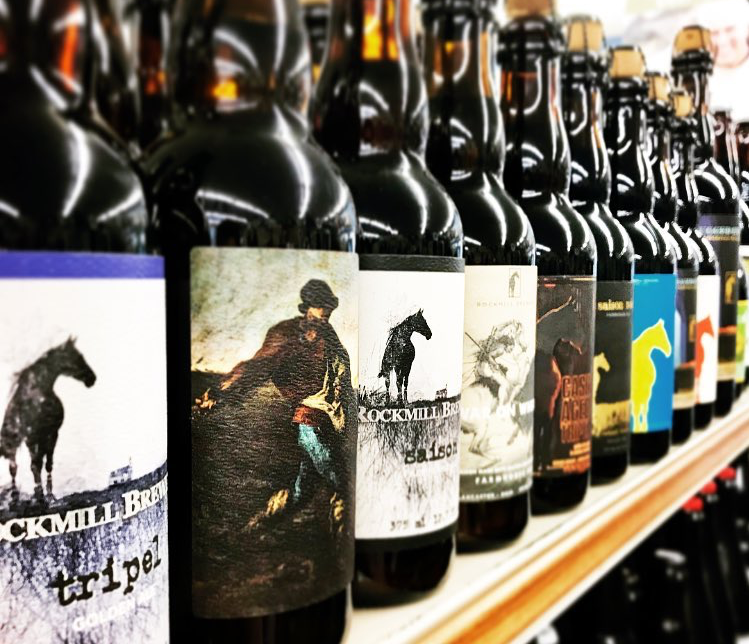
A row of Rockmill Brewery beers on a shelf, each of which received TTB label approval.

You Added New Text without Approval

It’s pretty common to change part of your label at some point. Between updating some of the language or adjusting your design, you may want or need to reprint your label. Some changes are completely fine according to the TTB, such as the following examples.

  • Delete non-mandatory label information, graphics, and other elements
  • Reposition approved label information
  • Change colors, shapes, and proportionate sizes of labels
  • Adjust type size, font, and spellings of words as long as it complies with regulations
  • Change the net contents statement for new container sizes
  • Change the mandatory statement of alcohol content as long as the change is consistent with the class and type designation

While those changes won’t lead to any issues, there are others that are off limits when done without the TTB’s knowledge. If you make a change that’s not on the allowed list and the TTB audits your products, they can pull the offending products due to non-compliance. As such, you’ll want to obtain a new COLA depending on your planned changes.

Make Your Beer, Wine, and Spirits Labels Shine with the Right Printing Company

Once you get your COLA approved for a brand-new label or some changes to an existing design, it’s time to find a good digital label printing company to get your products ready for sale. Blue Label has the state-of-the-art equipment and printing experts to help you determine the right materials and printing capabilities for you to get the most out of your label design.

Ready to dazzle your customers with quality beer, wine, and spirits labels? Contact us today to talk to us about your next label printing project.

Label Considerations for Bottling vs. Canning Craft Beer

Beer can’t make the important journey from your brewing facility to your consumers’ mouths without a container. Whether you decide to bottle or can your brews, you’re going to need a good beer label to showcase your product and stay in compliance with alcohol regulations. Of course, the style of the container you choose can impact a few of your labeling decisions.
(more…)

Crowler Packaging: Guidelines and Rules to Know

Crowlers are great for several reasons. They’re extremely portable. They’re able to keep light out and help beer stay fresh for up to a month. They’re more convenient than lugging around a glass growler. In all, crowlers are a wonderful way to sell beverages in convenient 32 oz. containers—if they’re in accordance with the law, that is.

Like their glassy growler cousins, crowler packaging can run into some legal issues if you’re not careful. Consider the following legal guidelines for your custom crowler labels.
(more…)

What You Need to Consider When Investing in Keg Collars

A good keg collar can play several roles for your brewery. Not only is it a great way to share information, it also serves as a key compliance tool and a way to help sell more of your products. Of course, a poorly-made keg collar isn’t going to do your business any good. It’s important that you check off all the following criteria when you’re ready to order custom keg collars.
(more…)

Designing Beer Labels: Other Design Considerations

Sizing and color selection are two critical parts of label design, but there are several other factors that can impact how you design beer bottle labels and beer can labels. Elements such as custom shapes, mandatory information, and label adhesives are all important to the success of a label. Here’s what you should consider about these features when you design your beer labels.
(more…)

Designing Beer Labels: Colors and Special Printing Capabilities

The right splash of color or an eye-catching feature can be the key to a successful beer label. Of course, the challenge for a designer is to try and figure out which colors or features make the most sense for the product. Whether you’re trying to decide on the right colors or a special printing capability, here’s what you need to consider.
(more…)