Can You Ship Alcohol? Everything You Need to Know About Shipping Beer, Wine, and Liquor

When it comes to shipping alcohol, it’s important to do so safely, in full compliance with regulations, and in a way that protects the packaging and integrity of your products. In this article, we’ll cover the regulations that you should know and provide advice for keeping your packaging intact from shipping origin to destination.

Understanding Legal Requirements for Shipping Alcohol

Navigating the legal requirements for shipping alcohol can feel overwhelming. It’s complex, yes, but understanding these regulations is crucial for any business in the alcoholic beverage industry.

Alcohol Licenses

Before even thinking about boxing up a bottle or can, know this: you need the right licenses. These aren’t one-size-fits-all; they vary from region to region.

In the United States, you’ll need to consider the following:

  • Federal Licensing: First off, you’ll need a basic permit issued by the Alcohol and Tobacco Tax and Trade Bureau (TTB) to manufacture, wholesale, or import alcoholic beverages.
  • State Licensing: Each state has its own regulations for the sale and shipment of alcohol. You must obtain a license from the alcohol regulatory agency in each state to which you intend to ship. Some states will require a direct shipper’s license while others might require some combination of retail, distributor, and shipping licenses. See a full list of state-by-state alcohol agencies in the U.S.

Because of the complexity and variety of licenses that a manufacturer may need to obtain, many companies exist to help alcohol beverage manufacturers remain compliant, including Sovos, Compliance Service of America, and Avalara, among others.

Beer on pallets

Wholesale vs. Direct-to-Consumer

When considering shipping alcohol, it’s important to distinguish between shipping to stores, bars, and restaurants (wholesale) and shipments to consumers. Here are some key differentiations to consider:

  • Licensing: We covered wholesale licensing considerations above, but when selling direct-to-consumer (DTC), many states require a different shipper’s license and/or permit.
  • Age Verification: DTC shipping requires an age verification process to ensure recipients are of legal drinking age.
  • Volume Limits: Some states may impose limits on the quantity of alcohol that can be shipped directly to a consumer.
  • Labeling and Packaging: When shipping alcohol, there are requirements for labeling and packaging depending on the carrier and the state to which the alcohol is being shipped. We’ll cover this in more detail later in this article.

Alcohol Shipping Agreements

An alcohol shipping agreement is a contract between a distributor or manufacturer of alcohol and a shipping carrier. This agreement outlines the terms under which the carrier will transport products. These agreements typically include the following elements:

  • Scope of services: Types of alcohol that will be transported, where will it be picked up and delivered, delivery timelines, etc.
  • Compliance agreement: Both parties agree to comply with all applicable federal, state, and local laws regarding shipments of alcohol
  • Shipping and packaging requirements: Specifications on how the alcohol must be packaged to minimize damage during transit (including types of materials, labels, and handling instructions)
  • Insurance and liability: Details who is responsible for insuring the alcohol during transit, as well as each party’s liability in case of any issues

An alcohol shipping agreement will also commonly include payment terms, provisions for compliance audits and inspections, conditions for termination and renewal, and terms of confidentiality.

Prohibition & Dry Counties

“Prohibition? Wasn’t that repealed a long time ago??” Yes, but believe it or not, certain counties and local jurisdictions may still have strict regulations or may even prohibit the shipment of alcohol. You can view a list of dry counties in the U.S. here.

Beyond county and local laws, certain states impose limits on the amount of alcohol that can be shipped (particularly to consumers) within a given timeframe.

Choosing the Right Packaging & Shipping Materials

Selecting the right packaging materials for shipping alcohol requires a balance between ensuring the safety and integrity of your products, ensuring compliance, and keeping costs in check.

Beer packaging for bottles

Choosing the Right Containers

You’ll want to consider the individual containers that your products come in as well as the shipping container that will be used to transport your products.

  • Glass Bottles and Cans: Ready-to-sell products like glass bottles and aluminum cans are usually packed into cases and then onto pallets. These could be corrugated fiberboard boxes, wooden crates, or cardboard trays wrapped in plastic.
  • Barrels and Kegs: Wooden barrels are traditional for spirits like whiskey and wine. Stainless steel kegs are commonly used for beer and cider. Barrels can be wrapped in plastic or another waterproof material to protect against moisture and other elements.
  • Bulk Containers: For large quantities beer, wine, or spirits that aren’t bottled or canned, shipping in bulk containers like IBCs (Intermediate Bulk Containers) or Flexitanks is common. These containers can hold thousands of liters of liquid and are designed for easy loading and unloading.

Protecting Alcohol During Shipping

The proper packaging can make all the difference in ensuring your alcoholic beverages reach their destination intact. Consider the following:

  1. Use Dividers: Keep bottles from knocking into each other by using dividers. These partitions help provide a snug fit, reducing movement and the chance of breakage. These can be corrugated trays, fiber trays, or even plastic trays.
  2. Proper Sealing Is Key: Don’t skimp on sealing tape. Use a high-quality tape to secure all seams and openings firmly, ensuring that the package remains intact throughout its journey.
  3. Cushioning Matters: Surround your product with ample cushioning material—bubble wrap, foam inserts, or air pillows work wonders in absorbing shocks and vibrations during transit.
  4. Check Weight Distribution: Make sure the weight is evenly distributed in each box and container to avoid boxes from becoming top-heavy and tipping over during the shipping process.

Sustainable Packaging Considerations

Sustainable packaging solutions can help support your brand in the eyes of buyers who value environmental stewardship. Materials that can help reduce the environmental impact of packaging and shipping include:

  • Corrugated Cardboard
  • Biodegradable Packing Peanuts
  • Recycled Plastic and Bioplastics
  • Paper Bubble Wrap
  • Kraft Paper
  • Mushroom Packaging
  • Seaweed Packaging
  • Organic Fabrics

As with any eco-friendly material, you’ll have to weigh the benefit compared to the cost of materials. Consider the entire lifecycle of packaging materials too—from production to usage to disposal.

Labeling Considerations for Shipping Alcohol

When shipping alcohol, two of the major labeling considerations to take into account are the labels on the products inside and the shipping labels themselves.

Protecting Product Labels During Shipping

Whether you’re shipping in cans, bottles, kegs, or larger containers, there’s no doubt about it—alcohol labels must endure the elements during the shipping process. After all, no brewery, winery, or distillery wants to see their products on the shelves with tattered and torn labels.

Here are some tips to ensure your labels endure the shipping process:

  • Choose the right high-quality label materials: Your labels are going to have to endure moisture and temperature fluctuations during the shipping process. Choosing label materials that are resistant to scuffing and moisture (for example, BOPP, a synthetic material) will limit damage from the elements.
  • Choose the right adhesive: A label printing company like Blue Label can help you choose the right adhesive to withstand temperature fluctuations and humidity.
  • Protect your labels: Protective coatings like UV varnishes or lamination can provide an additional barrier against moisture, light exposure, or even damage from friction.

Choosing Alcohol Shipping Labels

You’ll need shipping labels for the boxes, pallets, or containers in which your alcohol is shipped. Obviously these labels will have your business address and the address of the destination, but you’ll also have to follow certain rules and regulations to ensure your shipping labels are compliant:

  • Federal Regulations: Your shipping labels must include your permit number and must clearly identify the type of alcohol inside the package (i.e. beer, wine, liquor, etc.). Labels must also include the origin and the destination of the shipment.
  • State Regulations: While each state will have its own regulations, states may require the following: shipper’s license number, quantity limits detailed on the label, and purchase method (i.e. online/phone)
  • Carrier-Specific Requirements: Each carrier (ex: FedEx, UPS) will have their own requirements, but expect carriers to require an adult signature from the recipient and specific labeling indicating that the package contains alcohol.

While regular shipping labels will get the job done, specialized shipping labels that feature your branding can add a visual appeal to packaging seen by consumers and buyers alike. If you’re thinking about branded shipping labels, remember the following:

  • Be sure to incorporate mandatory regulatory information
  • Ensure that your design doesn’t obscure any legally required information
  • Consider implementing a QR code to link to your company’s website, product details, or promotional videos

Special Considerations for Beer, Wine, and Spirits

While many of the regulations for shipping alcohol are consistent no matter the type of alcohol, there are some things to consider depending on what you’re shipping:

  • Shipping Beer: When bottled or canned, shipments of beer can be sensitive to changes in pressure and temperature—packaging that prevents agitation and extreme temperature changes is important. Since beer bottles are particularly delicate, using strong materials, dividers, and cushioning will help protect your product.
  • Shipping Wine: Wine is also sensitive to temperature changes—using temperature-controlled shipping methods or even insulated packaging can help protect the quality of the wine. Bottles of wine are also typically shipped on their sides to keep the cork moist, which helps maintain the seal and prevent oxidation.
  • Shipping Spirits: Spirits with high alcohol content may actually classify these products as hazardous materials under certain shipping regulations. This may require special handling, labeling, and compliance with material shipping laws. In addition, high-strength seals and tamper-evident packaging can help protect liquor bottles during the shipping process.

Staying Updated and Avoiding Common Mistakes

In the world of alcohol shipping, staying informed can help you avoid common pitfalls. Here’s how to stay up-to-date:

  • Embrace Continuous Learning: Regulations around packaging and shipping alcohol aren’t set in stone; they change with time. Subscribing to industry newsletters, attending webinars, or joining trade associations are excellent ways to stay on top of changes. This proactive approach helps avoid mistakes that could cost you in terms of compliance violations or damaged goods.
  • Leverage Technology for Efficiency: Innovations like smart labels (which track a package’s journey) or eco-friendly materials (that appeal to green-minded consumers) not only streamline operations but can also improve your brand’s reputation for innovation and responsibility.

Conclusion

We’ve covered the essentials of shipping alcohol—from ensuring safety and compliance to ensuring your product remains intact and appealing once it reaches its destination.

  • Safety and Compliance: These are non-negotiable. The right materials, clear labeling, and the proper licenses are essential to shipping alcohol.
  • Branding: Your packaging is the face of your product. Custom labels and printed boxes can set you apart in a crowded marketplace.
  • Legal Awareness: Staying informed about regional regulations helps avoid costly mistakes.
  • Material Choices: Opting for durable options helps safeguard your products.

Shipping alcoholic beverages requires careful packaging to ensure product safety, regulatory compliance, and brand representation. Don’t risk damaged goods, fines, or an underwhelming customer experience. Blue Label’s experts can help you choose the right packaging and label materials when shipping your beer, wine, or spirits products.

What Is Biaxially Oriented Polypropylene (BOPP) and Why Is It Good For Product Labels?

Choosing a label for your packaging is a big deal. You need something that sticks out, but also sticks on. Enter biaxially oriented polypropylene, or BOPP for short.

It’s a to-go choice for several food and beverage, beauty, household, and even medical equipment brands. But is it the right choice for your products? Let’s walk through the benefits of BOPP, its applications, options, pricing, and customizability.

Understanding BOPP 

Considering how commonly it’s used, you’ve probably passed by BOPP labels a million times at the store. BOPP is a type of plastic film commonly used for product labels. In simple terms, it’s a durable, clear material that’s been stretched in two directions during manufacturing. This stretching process enhances its strength and clarity.

Benefits of Choosing BOPP Labels 

Ask a brand using BOPP for their product labels why they prefer it, and they’ll tell you it’s highly versatile. These are some of the benefits that make BOPP the perfect fit for product labels. 

The fastest way to see why BOPP is the go-to for most product labels is to hold it. Request a free sample pack to feel our BOPP labels next to paper and synthetic alternatives.

BOPP is Durable 

Many packaging and labeling professionals consider BOPP to be one of the most durable label options available. It’s not susceptible to common problems affecting different labels like peeling, wrinkling, and lifting. Whether you use them on jars, bottles, or tubes, BOPP can last a long time. 

BOPP is Resistant to Moisture, UV Light, and Oil

Because BOPP labels are durable and made from plastic, they can resist most types of liquids. Something spills or splashes on your label?  It won’t smear the writing on the label if you’re using BOPP. 

Meanwhile, BOPP’s moisture and solvent resistant qualities make it a great choice for household products people keep in their bathrooms and kitchens. BOPP is also acid resistant, which makes it suitable for food and beverage product packaging. You won’t have to worry about products containing tomatoes, coffee, condiments, or citrus, which have a low pH content, degrading or discoloring your BOPP labels.

BOPP Labels are Ideal for Printing

The polymer film used for making BOPP labels accepts both water and solvent-based inks, giving you more options when choosing effects for your labels. Ink adheres well to BOPP because it goes through several treatment steps to improve its printability. The final treatment also improves the ink’s ability to stick to the label material.

Sauces and seasoning products with custom labels and packaging

BOPP is Flexible 

Another interesting aspect of BOPP is its flexibility, which makes it easy to apply on rounded and flat surfaces with ease. And since it’s very thin, BOPP labels can look as though they’re directly printed onto their container. 

BOPP Applies to Glass, Plastic, and Metal 

BOPP is compatible with all types of packaging containers commonly used for consumer goods. From metal cans and glass jars to plastic containers, the right combination of BOPP film and adhesive is sure to stick. 

BOPP is Compatible with FDA Food Packaging Requirements 

Food labels made from BOPP film are FDA compliant as long as they mention the following: 

  • A statement of identity 
  • Net quantity of contents
  • List of ingredients 
  • Name of manufacturer, packer, or distributor.

BOPP labels designed and manufactured by companies like Blue Label Packaging meet FDA compliance standards for food packaging. 

BOPP is an Affordable Label Choice 

When it comes to cost, BOPP is more affordable than options like PET, while giving you the same level of durability and moisture resistance. While paper labels are cheaper to produce, they might not last as long, making BOPP a cost-efficient alternative. 

Different BOPP Label Options 

You don’t have to settle for a simple, generic label when you choose BOPP film. Here are some of your available BOPP label options: 

Pressure Sensitive Labels on honey jars

White BOPP Labels 

Though BOPP film labels come in different options, white is the most common choice. It’s used in the health and beauty, personal care, and cosmetic industries. You’ll also see white BOPP labels on food products by companies looking to make their branding stand out. 

Clear BOPP Labels 

Transparent BOPP labels can give your product a sleek, no-label look, and is often used on beverages, household products, specialty foods, and cosmetic products. It has the same moisture resistant qualities of white BOPP, except that it’s almost invisible. 

Wine bottles with custom pressure sensitive labels

Silver And Gold BOPP Labels 

For a more luxurious appearance, you can also choose silver or holographic BOPP product labels. These have the same capabilities as clear or white labels, but offer a metallic finish. 

Squeezable BOPP Labels

BOPP-squeezable labels are made for product containers that contort with handling, like shampoo, condiment, and lotion bottles. They give you the flexibility, moisture resistance, and durability needed for products that take on frequent handling. 

BOPP Label Applications

BOPP is a popular option for label materials—it offers impressive affordability and durability making it desirable for a wide range of products and industries.

Food And Beverage 

Numerous food and beverage companies use BOPP labels because it’s waterproof, looks great, and is easy to read. It’s durable against acidic foods that might typically leave labels smeared or stained. The flexibility and thinness of BOPP labels make them easy to apply to round surfaces of food and beverage containers. 

Health and Beauty

Packaging for health and beauty items like cosmetics require specific product information on the labels, so protecting against smudging, fading, and tearing is critical. These labels need to hold up in humid and damp environments. BOPP product labels are resistant to water from showers and sinks, oils that come off users’ hands, and the products inside them. 

Choose BOPP Labels for Durable and Attractive Product Labeling Solutions

To sum it up, BOPP film is a versatile solution to labeling your products, whether you operate in the food and beverage, cosmetic, or household goods industry. It’s resistant to moisture, comes in various finishes, and is compatible with glass, metal, and plastic containers. 

If you want to start printing BOPP film labels for your products, contact our team at Blue Label Packaging to request a quote.

Anatomy of a Wine Label

⚞ The Highlights:

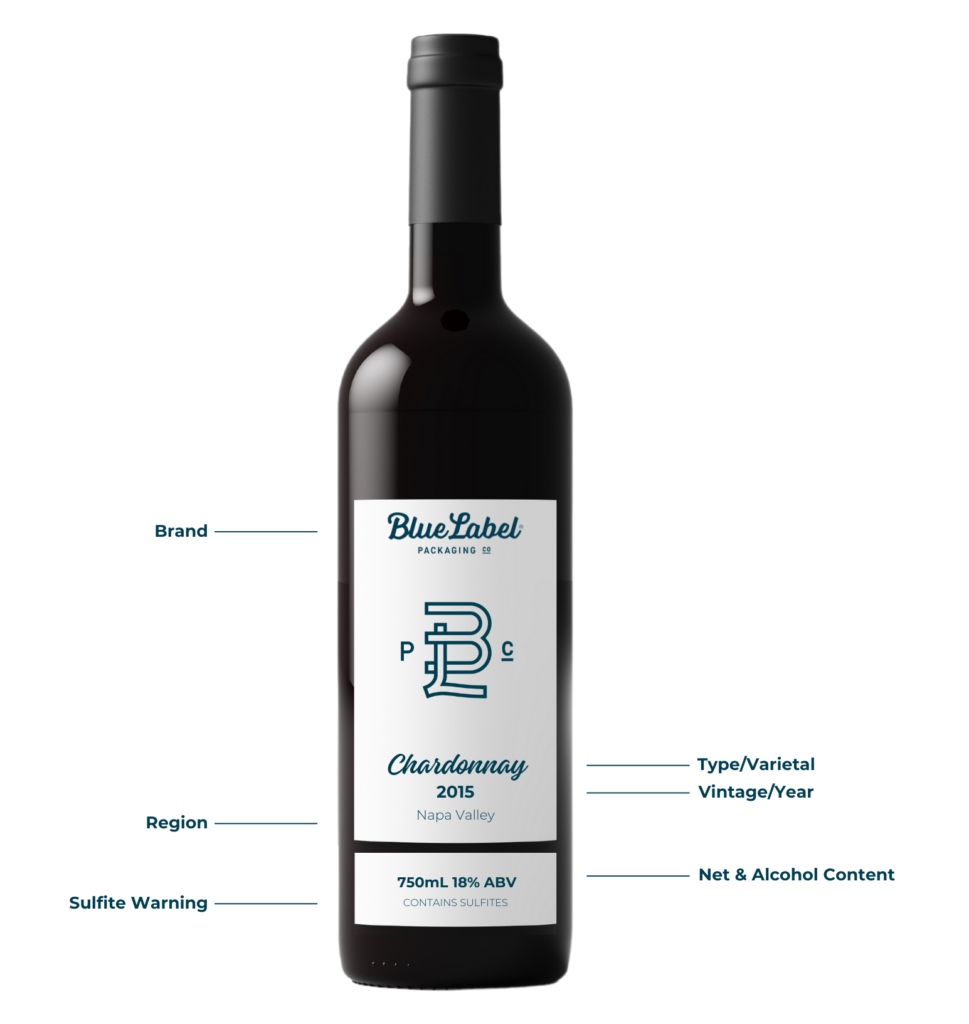
  • U.S. wine labels are regulated by the Alcohol and Tobacco Tax and Trade Bureau (TTB). Required elements include the brand name, class or type designation, alcohol content, net contents, producer and bottler info, the sulfite warning (if applicable), and the federal government warning.
  • Most required information has flexibility on placement: brand label (front) vs. back label vs. either. The brand name and class/type must be on the brand label; everything else can usually live on the back.
  • Vintage year, appellation, and varietal are technically optional but trigger specific rules when included (75% varietal threshold, 75–85% appellation thresholds, etc.).
  • Material choice (paper, BOPP, soft-touch laminate, foil) sets the visual and tactile tone of the bottle as much as the design itself.

Wine labels carry more rules than most product labels because the TTB regulates them under the Alcohol and Tobacco Tax and Trade Bureau’s labeling requirements. The good news: the rules have been stable for years, and once you know what’s mandatory and what’s flexible, designing a compliant label gets straightforward. Below is what every U.S. wine label needs, where it can go, and what to think about for materials and design.

What goes on the front vs. the back of a wine label?

The TTB doesn’t strictly dictate which side of the bottle gets each piece of information. Some elements must appear on the “brand label” (typically the front), but most can go on either label. Here’s how it usually breaks down.

Element Where it can go Required?
Brand name Brand label (front) Yes
Class or type designation (varietal name, “red wine,” “table wine,” etc.) Brand label (front) Yes
Alcohol by volume (ABV) Either label Yes (some classes deduce it from designation)
Net contents Either label, OR blown/etched into the bottle Yes
Producer / bottler name and address Either label Yes
Sulfite warning Either label Required if >10 ppm SO₂
Government health warning Either label (typically back) Yes
Vintage year Either label Optional (with rules if claimed)
Appellation / region Either label Optional (with grape-source thresholds if claimed)
Pairing notes, flavor profile, story Back label (typical) No

What Information is Included on Wine Labels?

Below is each element in detail, with the rules that apply.What needs to be included on a wine bottle label?


Looking for Custom Wine Labels?

Using high-quality label material, investing in the latest printing technology, continuously improving our processes, and staying on top of industry trends, we make sure wineries around the world are getting the best custom-made wine labels.

Request a Quote    Get a Sample Pack


Brand name

Who made the wine? The winery’s branding usually appears at the top or bottom of the brand label, depending on the design tradition you’re working in (French wines often place the winery prominently at the top; New World wines vary).

Fanciful name

What’s this specific wine called? A fanciful name is a secondary name used to differentiate brands within the same winery. Brengman Brothers’ “Runaway Hen” is one example. Fanciful names are optional, but they don’t replace the need for a class and type designation. When you use one, the TTB requires an additional tax class on the label based on alcohol percentage. For example: “red table wine” or “white table wine” for wines under 14 percent alcohol; “red wine” or “white wine” for wines above 14 percent.

Vintage (year)

When were the grapes harvested? Vintage information isn’t mandatory, but it’s common because it speaks to the quality of the bottle’s contents. Especially if you’re paying attention to year-to-year variation. If you list a vintage, federal rules require that 95% of the wine come from grapes harvested that year (85% for wines from a state or county appellation).

Wine or varietal type

What kind of wine is in the bottle? This is where the grape or varietal type is communicated: Sauvignon Blanc, Pinot Noir, Cabernet Sauvignon, etc. Listing a class or type is required. If you call out a specific varietal name, at least 75 percent of the wine must come from that grape variety. Otherwise, the label needs a generic class designation like “red wine,” “white wine,” or “table wine.”

Appellation (region)

Where was the wine made? Region of origin breaks down differently depending on what you’re claiming:

  • State or county appellation: at least 75 percent of grapes must come from that location (federal rule).
  • American Viticultural Area (AVA, e.g., Napa Valley): at least 85 percent of grapes must come from that AVA.
  • State-specific rules: some states have stricter requirements. California, for example, mandates that 100 percent of grapes come from California if the state name is on the bottle.

Producer and bottler

Where was the wine made and bottled? If the bottling location differs from the winery or vineyard, both names and addresses must appear on the label.

Alcohol content

What’s the percentage of alcohol by volume (ABV)? Required on every label unless it can be deduced from the class designation (table wine implies 14 percent or less). Best practice is to print the ABV explicitly anyway, because consumers and retailers expect to see it.

Net contents

How much wine is in the bottle? Net contents (in milliliters) must appear on every bottle, either printed on the label or blown/etched into the glass.

Sulfite warning

If the wine contains 10 parts per million or more of sulfur dioxide, the label must say “CONTAINS SULFITES” in clear, legible type. Most wines have natural sulfites at levels above 10 ppm, so this warning appears on the vast majority of bottles.

Government warning

Under the Alcoholic Beverage Labeling Act of 1988, every alcoholic beverage label must carry a specific government health warning. The TTB-mandated text reads:

GOVERNMENT WARNING: (1) According to the Surgeon General, women should not drink alcoholic beverages during pregnancy because of the risk of birth defects. (2) Consumption of alcoholic beverages impairs your ability to drive a car or operate machinery, and may cause health problems.

This warning typically lives on the back label. It must be set off from other information and printed in legible type that meets TTB minimum size requirements.

Optional back label content

Beyond the regulatory elements, back labels often include pairing suggestions, flavor notes, and a short story about the winery or vineyard. None of this is required, but it’s the part of the label where consumers actually engage with your brand. Use it.

A TTB compliant wine label featuring necessary legal information.

Wine label materials: choosing the right look and feel

Materials and finishes set the tone of the bottle as much as the design does. Wine is a category where consumers pick up the bottle and feel it before deciding to buy, so the tactile choice matters.

Paper stocks

  • Smooth white paper: clean, modern look. Works for contemporary brands and design-forward labels.
  • Textured papers (felt, cotton, linen): vintage and artisanal feel. Common for premium reds, family wineries, and boutique labels.
  • Estate or rag papers: high-end, hand-feel paper that signals serious craft. Often used for reserve and library wines.
  • Kraft or unbleached paper: earthy, organic, sustainable positioning. Good fit for organic, biodynamic, or natural wines.

Film stocks

  • BOPP / polypropylene: waterproof and durable, works well for wines that will live in damp cellars or ice buckets. Doesn’t have the hand-feel of paper but holds up better.
  • Clear film: makes the design appear printed directly on the bottle. Common for premium and minimalist label designs.

Finishes and special treatments

  • Matte vs. gloss varnish: matte reads understated and premium; gloss reads bright and vibrant. Most premium wines lean matte.
  • Soft-touch laminate: velvety hand-feel that’s increasingly common in luxury wines and spirits.
  • Hot foil stamping: gold, silver, copper, or holographic foil for logos, brand names, or borders. The signature look for premium positioning.
  • Embossing or debossing: raised or recessed elements that add tactile dimension. Often paired with foil for a layered effect.
  • Spot UV varnish: selective glossy coating that highlights specific design elements (logo, illustration) against a matte background.
  • Wet-strength laminate: for wines that will sit in ice buckets or damp cellars, an extra moisture-resistant coating prevents the label from bubbling, peeling, or fading.

The right combination depends on the wine and the brand. Sample packs are the fastest way to feel the difference between paper textures and finishes before committing to a run.

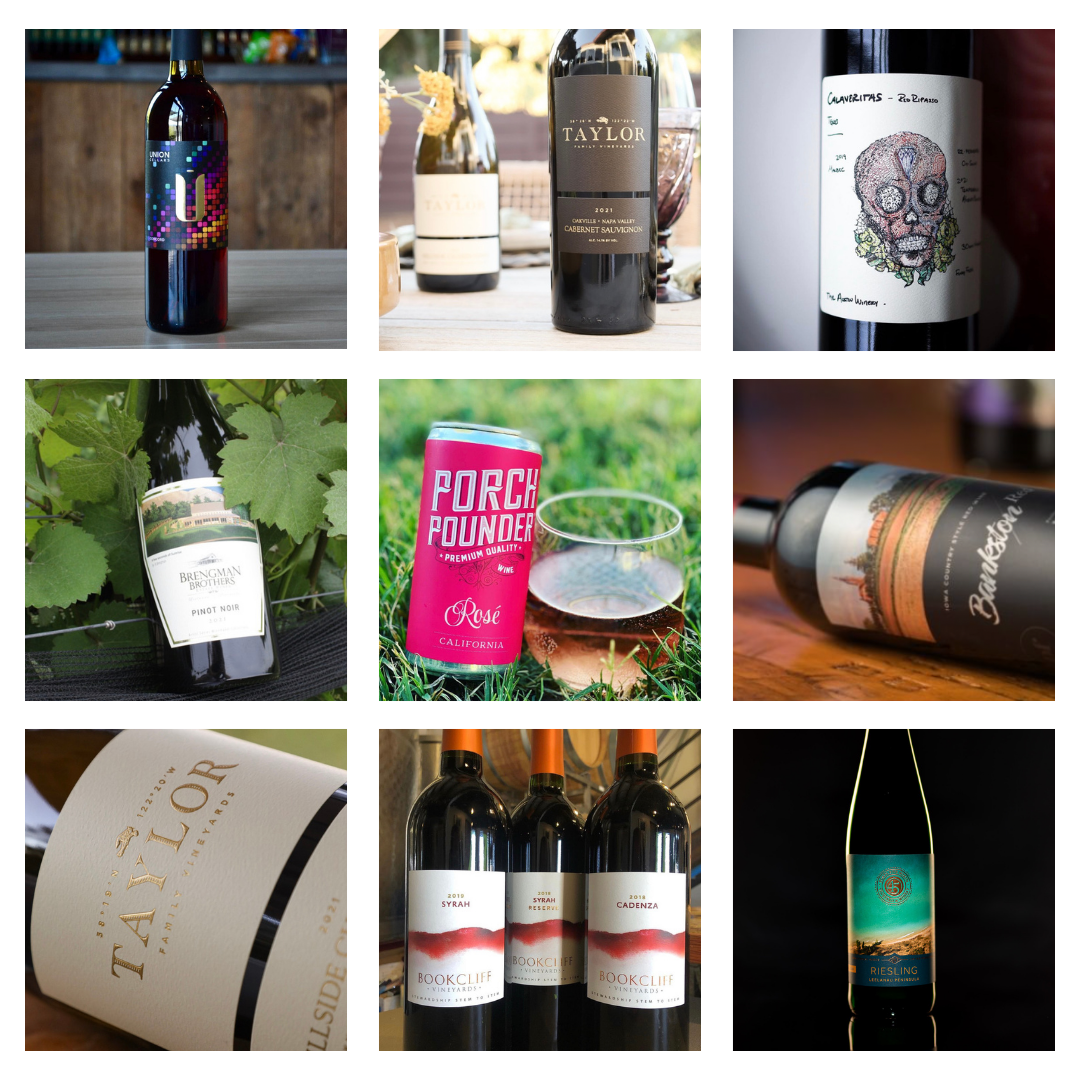
Wine label gallery

Wine bottle design considerations

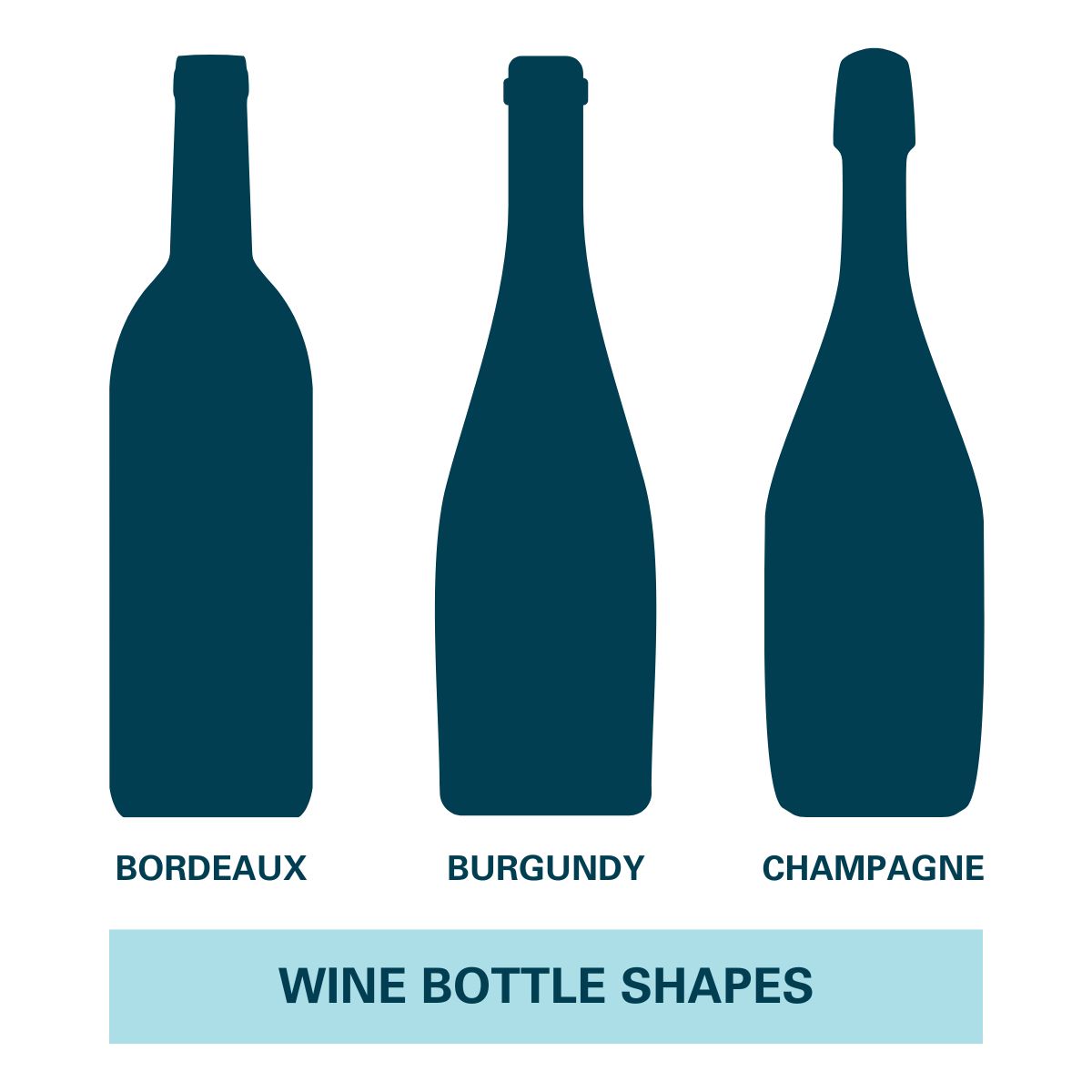
Wine bottles come in standard shapes (Bordeaux, Burgundy, Champagne, Hock) plus custom or asymmetrical bottles. Each shape needs a label that fits its curve and proportions. Practical design rules:

  • Match the label to the bottle’s flat zone. The label should sit on a section of the bottle that’s relatively flat, not on the steepest part of a shoulder or neck.
  • Mirror or contrast the bottle silhouette. Some labels echo the bottle shape (rectangular labels on Bordeaux); others create deliberate visual tension (a circular label on a rectangular bottle).
  • Plan for the front-back relationship. If the front is minimal, the back can carry more story. If the front is detailed, keep the back focused on regulatory copy and a tight description.
  • Consider the cellar. Wines stored on their sides for years are exposed to humidity and condensation. Choose materials that can survive that environment.

For artwork files, send Adobe Illustrator files or high-resolution PDFs whenever possible. They preserve typography, vectors, and layer structure so we can verify dimensions and produce a clean proof before printing.

Wine bottle shapesFrequently asked questions

What information is required on a wine bottle label?

U.S. wine labels are regulated by the TTB and must include: brand name, class or type designation (varietal name or generic like “red wine”), alcohol by volume, net contents, producer and bottler name and address, the sulfite warning (if SO₂ is over 10 ppm, which most wines are), and the federal government health warning. Vintage year, appellation, and fanciful names are optional but trigger specific rules when included.

What does TTB stand for and what does it regulate?

TTB stands for the Alcohol and Tobacco Tax and Trade Bureau. It’s the federal agency that regulates labeling, advertising, and trade practices for wine, spirits, and beer in the United States. Wine labels must receive a Certificate of Label Approval (COLA) from the TTB before the wine can be sold across state lines.

Does my wine label need a vintage year?

No, vintage year is optional. But if you list one, federal rules require that 95% of the wine come from grapes harvested that year (85% for wines from a state or county appellation). Many premium and varietal wines list a vintage anyway because consumers expect it for that category.

What’s the difference between a varietal wine and a table wine?

A varietal wine names a specific grape (Cabernet Sauvignon, Pinot Noir, Sauvignon Blanc) and must contain at least 75% of that grape variety. A table wine uses a generic designation (“red wine,” “white wine,” “red table wine”) when the wine doesn’t meet the 75% varietal threshold or when the producer chooses not to claim a specific grape. Both need to list a class designation; varietal is just more specific.

What’s an AVA and when do I need to list one?

An AVA (American Viticultural Area) is a federally designated grape-growing region. Napa Valley, Willamette Valley, Russian River Valley are examples. Listing an AVA on a wine label is optional, but if you do, at least 85% of the grapes must come from that AVA. Some states (California, for example) have stricter rules that require 100% of grapes to come from the state if the state name is on the label.

Why do wine labels say “Contains Sulfites”?

If a wine contains 10 parts per million or more of sulfur dioxide (SO₂), the TTB requires the label to display “CONTAINS SULFITES” in clear, legible type. Sulfites occur naturally in wine fermentation and are commonly added as preservatives, so the warning appears on the vast majority of commercially produced wines.

Where does the government warning go on a wine label?

The federal government health warning required by the Alcoholic Beverage Labeling Act of 1988 can go on either the front (brand) label or the back label, but most wineries place it on the back label so it doesn’t crowd the brand-side design. The warning must be set off from other information and printed in legible type that meets TTB minimum size requirements.

Do I need both a front and back label on a wine bottle?

Not strictly. The TTB requires certain mandatory information (brand name, class designation, ABV, net contents, producer/bottler, government warning, sulfite warning) but doesn’t dictate that it be split across two labels. Some wineries use a single wrap-around label that covers both sides. Two-label designs (front + back) are more common because they let the front carry brand and the back carry regulatory copy and storytelling.

Make your wine labels stand out

Once the regulatory pieces are in place, the materials, finishes, and design choices are what set the bottle apart on the shelf. We work with wineries on the full range of label types. Paper to film, matte to soft-touch, foil to embossing. And we’ll help you sort through which combination fits the wine.

If you’re ready to talk through a project, take a look at our wine label printing page for an overview of materials and finishes, or request a sample pack to feel the paper, film, and finish options in person. Our facility offers fast processing. Five business days from artwork approval to ship. With no minimums and an expert review on every project before anything goes to press. Get in touch when you’re ready.

Why Don’t Beer, Wine, and Spirits Labels Have to Disclose Ingredients or Serving Facts on Labels?

It didn’t take long for someone to make waves in the beer labeling world in 2019. Just 11 days into the year, Anheuser-Busch InBev announced that Bud Light would feature serving-facts labels on its boxes starting in February.

While the move may not seem noteworthy for people unfamiliar with the rules and regulations of beer labels, the announcement is notable for one big reason: beer doesn’t need to divulge that information on its packaging. In fact, alcohol in general is exempt from disclosing ingredients and nutritional facts that are commonplace on labels for packaged food products.

So why is it that beer, wine, and spirits labels are exempt from listing nutritional information when those products have just as many–if not more–calories and carbohydrates as juice or other typical beverages? It turns out there’s one big reason why alcohol labels don’t require nutrition or ingredients labels: tradition.
(more…)

Adding Value to Your Label with a QR Code

Guest Post by: Gretchen Ardizzone at Shout Out Studio

Having a well designed, well-executed label is the first step in attracting attention to your product, but there’s an opportunity for your label to do more. If you want to communicate the added value of your product, you might consider a QR code. QR (quick response) codes aren’t the newest technology to hit the market. In fact, the two dimensional barcodes have been around for almost twenty years. But we’ve seen them more (both good and bad) in the last few years in attempts to stand out in a highly competitive marketplace. When applied thoughtfully, they can provide their benefits.

Some people think the primary use of a QR code is a good way to direct consumers to your website. Not entirely. The reality is that your web address can just as easily be printed on your label, and if a consumer wants to visit your website before or after purchase, they’ll likely do it anyhow. The first question to ask is how engaging is your website? If you’re driving traffic there, it’s crucial that there’s something there to engage them. If it’s just basic company information and where to find your product (which they just did), you might want to reconsider.

(more…)