TTB Beer Label Requirements: 8 Elements You Need on Craft Beer Labels
A great craft beer label has to do two jobs at once. It has to catch a shopper’s eye on a crowded shelf, and it has to satisfy the Alcohol and Tobacco Tax and Trade Bureau (the TTB) before you can legally sell it. Miss a required element and your label approval can get rejected, which means a delay right when you’re trying to get a beer to market.
Here are the 8 elements the TTB requires on a malt beverage (beer) label, what each one actually means, and where the rules live so you can check them yourself.
The 8 required elements at a glance:
- Brand name
- Class and type designation
- Name and address of the brewer, bottler, or importer
- Net contents
- Alcohol content (when required)
- Ingredient and additive disclosures (when they apply)
- The Government Warning
- Country of origin (imported beer only)
Looking for Custom Beer Labels?
We’ve partnered with over 1,500 breweries over the years, so our experience is as deep and rich as the beers we represent. With no minimum on order quantity, small seasonal batches and year-round signatures, you get the same quality and expertise with every sip.
Request a Quote Get a Sample Pack
First, the ground rules: legibility and placement
Before the individual elements, two general rules apply to all of the mandatory information:
- It has to be readable. Mandatory information must be readily legible under ordinary conditions and set against a contrasting background (27 CFR 7.52).
- It has to be big enough. The minimum type size is 2 mm for containers larger than half a pint, and 1 mm for containers of half a pint or less (27 CFR 7.53). The information also can’t be covered or hidden (27 CFR 7.54).
Keep these in mind early, because they affect how much room your design needs to leave for the required copy.
1. Brand name
Every label needs a brand name, the name the beer is marketed and sold under (27 CFR 7.64). It can’t mislead people about the age, origin, identity, or other characteristics of the beer. If a product isn’t sold under a brand name, the name of the bottler or importer stands in as the brand name.
2. Class and type designation
This is the part of the label that tells people what the product actually is. It can be as general as “malt beverage” or as specific as a recognized style. The rules for class and type live in Subpart I of Part 7 (sections 7.141 through 7.147), and Chapter 4 of the TTB’s Beverage Alcohol Manual is the practical guide to the designations.
Worth knowing: Your style name in the artwork (say, “Hazy IPA”) and your official class designation are two different things. The artwork can read however your brand wants. The class designation just has to be a recognized one, shown clearly on the label.
3. Name and address
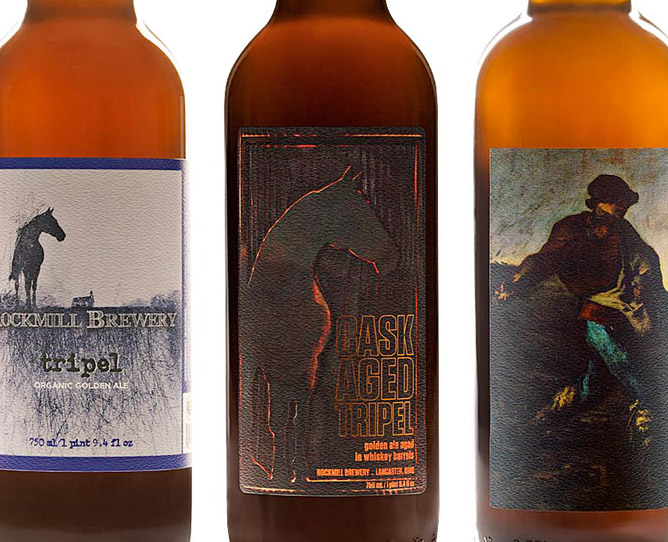
The label has to identify who’s responsible for the beer, with wording that depends on where it was made:
- Brewed in the U.S.: phrases like “Brewed by” or “Brewed and bottled by,” followed by the brewer’s name and address (27 CFR 7.66).
- Imported: “Imported by” (or similar), followed by the importer’s name and address (27 CFR 7.68).
The name has to match your brewer’s notice or basic permit on file with the TTB. Small mismatches here are a common reason a label gets kicked back.
4. Net contents
The label has to state how much beer is in the container, in U.S. customary units like fluid ounces, pints, or quarts (27 CFR 7.70). Metric measures are allowed in addition to the U.S. units, but not in place of them. Net contents can be printed on the label or molded into the container itself.
5. Alcohol content (when required)
Here’s one that surprises a lot of brewers: for beer, federal rules make alcohol content optional, unless your state requires it (or in a few cases prohibits it). Alcohol content “may be stated on any malt beverage label, unless prohibited by State law” (27 CFR 7.65). Most brewers include it anyway because customers expect it.
If you do state it, the TTB allows a tolerance of 0.3 percentage points above or below the listed number for beers at 0.5% ABV or higher, and it has to be expressed as a percentage by volume.
Heads up, this may change: The TTB has a 2025 proposal (Notice 237) that would make an alcohol content statement mandatory for more products, as part of a broader “Alcohol Facts” panel. It’s still a proposal, not law (more on that below), but it’s worth knowing the optional status may not last.
6. Ingredient and additive disclosures (when they apply)
Beer labels don’t carry a full ingredient list, but a few specific additives have to be declared when they’re present (27 CFR 7.63(b)):
- FD&C Yellow No. 5: a statement such as “Contains FD&C Yellow No. 5.”
- Sulfites: “Contains sulfites” (or “Contains a sulfiting agent”) when the beer has 10 or more parts per million of sulfur dioxide.
- Aspartame: the statement “PHENYLKETONURICS: CONTAINS PHENYLALANINE,” in capital letters, set apart from other text.
- Cochineal extract or carmine: a statement naming the additive, such as “Contains cochineal extract” or “Contains carmine.”
Worth knowing: Older label guides (and a lot of pages still floating around online) list a required saccharin warning about cancer in lab animals. That requirement was removed from the TTB regulations back in 2004 and is no longer part of beer labeling. If you’re working from an old checklist, drop it.
7. The Government Warning
Every beer at 0.5% ABV or higher needs the federal Government Warning, set in 27 CFR 16.21. It has to read, word for word:
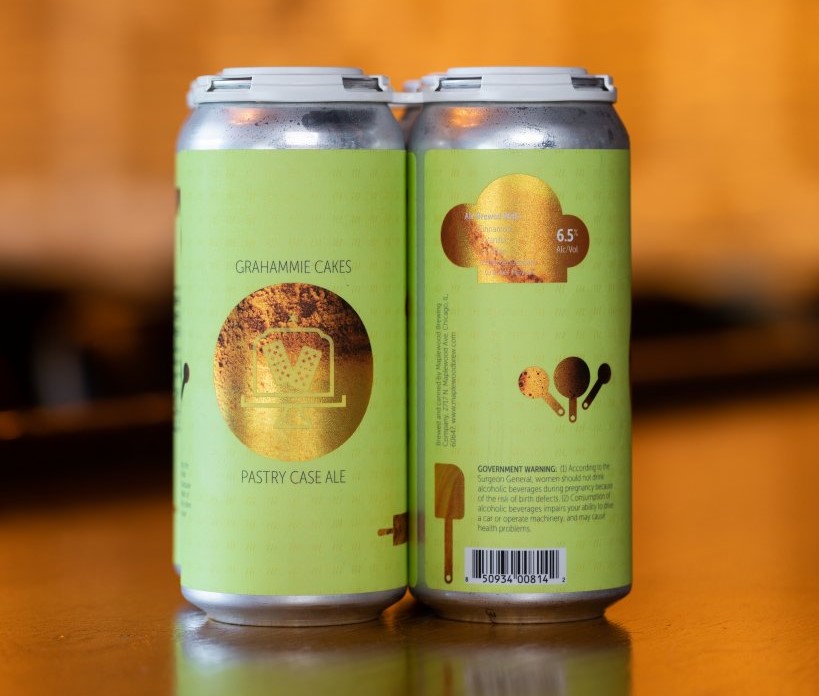
GOVERNMENT WARNING: (1) According to the Surgeon General, women should not drink alcoholic beverages during pregnancy because of the risk of birth defects. (2) Consumption of alcoholic beverages impairs your ability to drive a car or operate machinery, and may cause health problems.
“GOVERNMENT WARNING” appears in bold capital letters, and the rest of the text is fixed. It has to run as a single continuous paragraph and can sit on the front, side, or back of the container. You can’t paraphrase or shorten it.
8. Country of origin (imported beer only)
This one applies only to imported beer (27 CFR 7.69). The label has to show where the beer came from, commonly as “Product of [country].” The TTB rule points to U.S. Customs and Border Protection for the exact marking formats, so importers should check those as well. Domestic beer doesn’t need a country-of-origin statement.
How label approval works: the COLA
Once your label has all of its required elements, most beers need a Certificate of Label Approval (a COLA) before you can sell across state lines. You apply with TTB Form 5100.31 through the TTB’s COLAs Online system, and the process is governed by 27 CFR Part 13. The TTB reviews your artwork against the requirements above and either approves it or sends it back with the issues to fix.
The fastest way to avoid a rejection is to get the required elements right the first time, since a kicked-back label usually means weeks of delay.
What’s changing in 2025 and beyond
The 8 elements above are current. But the TTB has proposed the biggest change to alcohol labeling in years. In January 2025 it published two proposed rules, laid out in its announcement on Alcohol Facts and allergen labeling:
- A mandatory “Alcohol Facts” panel (serving size, servings per container, alcohol by volume, calories, carbohydrates, fat, and protein), which would also make an alcohol content statement mandatory for more products.
- Mandatory major food allergen labeling (milk, eggs, fish, crustacean shellfish, tree nuts, peanuts, wheat, soybeans, and sesame).
Both are still proposals, not law. The comment period closed in August 2025, and if a final rule is published, the TTB has proposed giving the industry five years to comply. Nothing on your label has to change today, but it’s worth designing with a little room to grow.
- ☐ Brand name (not misleading)
- ☐ Class and type designation
- ☐ Name and address (matches your TTB permit)
- ☐ Net contents in U.S. units
- ☐ Alcohol content (if your state requires it, or you choose to include it)
- ☐ Any required additive disclosures (FD&C Yellow No. 5, sulfites, aspartame, cochineal/carmine)
- ☐ Government Warning, word for word
- ☐ Country of origin (imported beer only)
- ☐ Type size and legibility check (2 mm / 1 mm)
- ☐ COLA approved before you sell across state lines
Getting all of this onto a label that still looks great is what we do. If you’re working on a new can or bottle, take a look at our craft beer label options, or send us your artwork and we’ll help you make sure it has everything the TTB expects.
Frequently asked questions
What are the required elements on a craft beer label?
The TTB requires a brand name, a class and type designation, the name and address of the brewer or importer, net contents, alcohol content (when required), certain ingredient and additive disclosures, the Government Warning, and, for imported beer, country of origin. These are set in 27 CFR 7.63 and the related sections of Part 7.
Is alcohol content required on a beer label?
Under federal rules, alcohol content is optional for beer unless your state requires it (or, in limited cases, prohibits it). Most brewers list it anyway. A 2025 TTB proposal would make it mandatory for more products, but that rule is not final.
Do craft beer labels need a Nutrition Facts or ingredient list?
No. Beer regulated by the TTB doesn’t require a Nutrition Facts panel or a full ingredient list today, though specific additives like sulfites or FD&C Yellow No. 5 must be declared. A 2025 TTB proposal would add a mandatory “Alcohol Facts” panel and allergen labeling, but it has not been finalized.
What is a COLA and do I need one?
A COLA is a Certificate of Label Approval. Most beers sold across state lines need one before they can go to market. You apply with TTB Form 5100.31 through COLAs Online, and the TTB reviews your label against the required elements.
Does a beer label still need a saccharin warning?
No. The saccharin warning that used to be required was removed from the TTB regulations in 2004. If you’re using an old checklist that still lists it, you can drop it.
Where does the Government Warning have to go on the label?
It can appear on the front, side, or back of the container, but it has to run as a single continuous paragraph, with “GOVERNMENT WARNING” in bold capital letters, using the exact wording in 27 CFR 16.21.