Cans, bottles, growlers, crowlers, kegs, and barrels are the main containers breweries use to get beer to customers. Each one has different sizing, label requirements, and use cases. We work with breweries on labels for all of them, and the right container often depends as much on where the beer is going as on what’s inside.
Below is a quick comparison of the main beer container types, then a breakdown of each with sizes, label dimensions, and what we typically see breweries use them for.
Beer container quick reference
| Container |
Common volumes |
Label format |
Typical use |
| Can |
8.4, 12, 16, 19.2 oz |
Pressure-sensitive label, shrink sleeve, or direct-printed |
Retail, distribution, taprooms |
| Bottle |
12, 16.9 (500 mL), 22, 25.4 (750 mL) oz |
Front + back labels (or full wrap) |
Retail, premium and specialty releases |
| Growler |
32, 64, 128 oz |
Pressure-sensitive label, hang tag, or wrap-around |
Taproom-to-home (refillable) |
| Crowler |
32 oz |
Pressure-sensitive label |
Taproom-to-go, outdoor events, sample shipping |
| Keg |
5, 5.16, 7.75, 15.5 gal |
Keg collar (around the top) + optional keg wrap |
Bars, restaurants, large events |
| Barrel or cask |
4.5, 9, 53, 59, 66 gal |
Minimal labeling (typically internal use) |
Aging, secondary fermentation, specialty batches |
1. Beer Cans
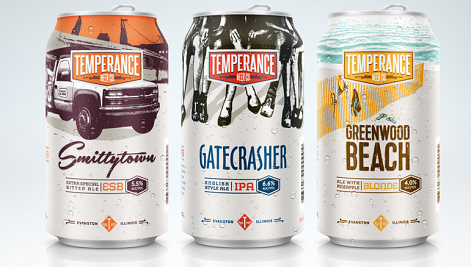
Cans dominate craft beer for a few simple reasons. They’re lightweight, cost-effective, and easy to ship. The metal blocks light, which protects flavor better than clear glass. They’re highly recyclable, which matters for both brewers and consumers paying attention to packaging waste.
And cans give you size flexibility. You don’t have to stop at the standard 12 oz format.
Common can sizes
- 8.4 oz. Often used for specialty releases or high-ABV beers
- 12 oz. The classic standard
- 12 oz slim. Same volume, narrower profile
- 12 oz “Sam Can”. A wider-mouth format produced for Boston Beer Company
- 16 oz. The “tallboy” or “pint” can, popular for IPAs and tap-pour-style craft beers
- 19.2 oz. The “stovepipe,” often sold as single-serve
- 32 oz crowler. An aluminum can used for taproom fills (covered separately below)
Can label dimensions
For 12 oz cans, pressure-sensitive labels are typically around 3.625″–4″ tall by 7.5″–8″ wide.
16 oz cans usually run around 5″ tall by 7.5″–8″ wide.
If you’re using shrink sleeves, the label can cover the entire can from top to bottom: roughly 5″–6″ for a 12 oz can or 6″–7″ for a 16 oz can, depending on how much real estate you want for the design.
Pressure-sensitive labels, shrink sleeves, or direct-printed cans?
The same can can be branded three different ways:
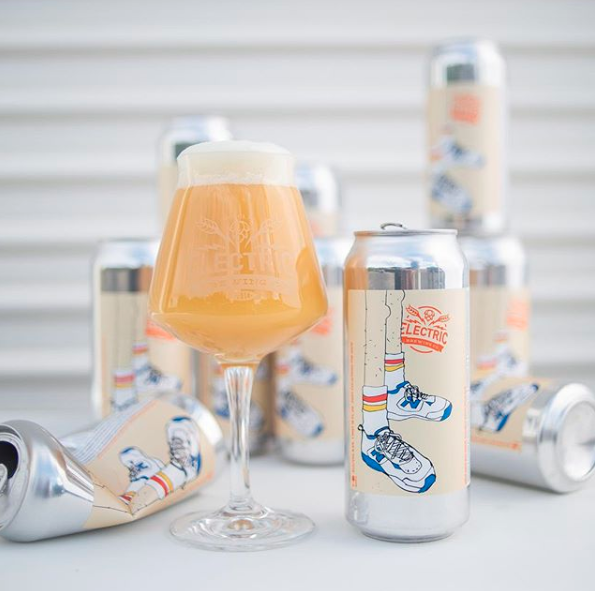
- Pressure-sensitive labels are the standard sticker-style label. They go on flat or cylindrical surfaces with adhesive. Lower setup cost, low minimums, and easy to change between runs. The format most craft breweries start with.
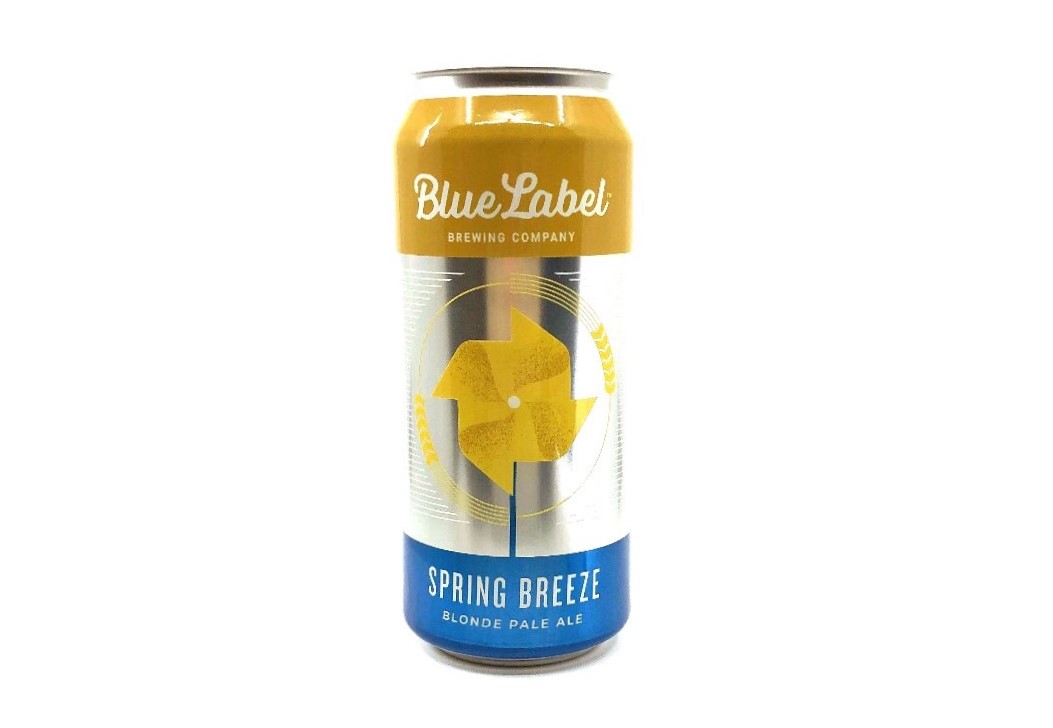
- Shrink sleeves wrap the entire can in a printed film that shrinks under heat. They give you 360° coverage and more design real estate, but cost more and have higher minimums. A fit when the design needs to wrap or the container has unusual shape.
- Printed cans (direct-to-can) put the design directly on the aluminum, with no separate label at all. They used to require minimums in the hundreds of thousands. Digital direct-to-object printing has changed that. We typically work with breweries on minimums around 1,500 to 2,000 cans per design, which is realistic for a single seasonal SKU rather than a year’s worth of inventory.
For a deeper comparison of growlers, crowlers, and printed cans, see our Growlers vs. Crowlers: What’s the Difference? post.
2. Beer Bottles
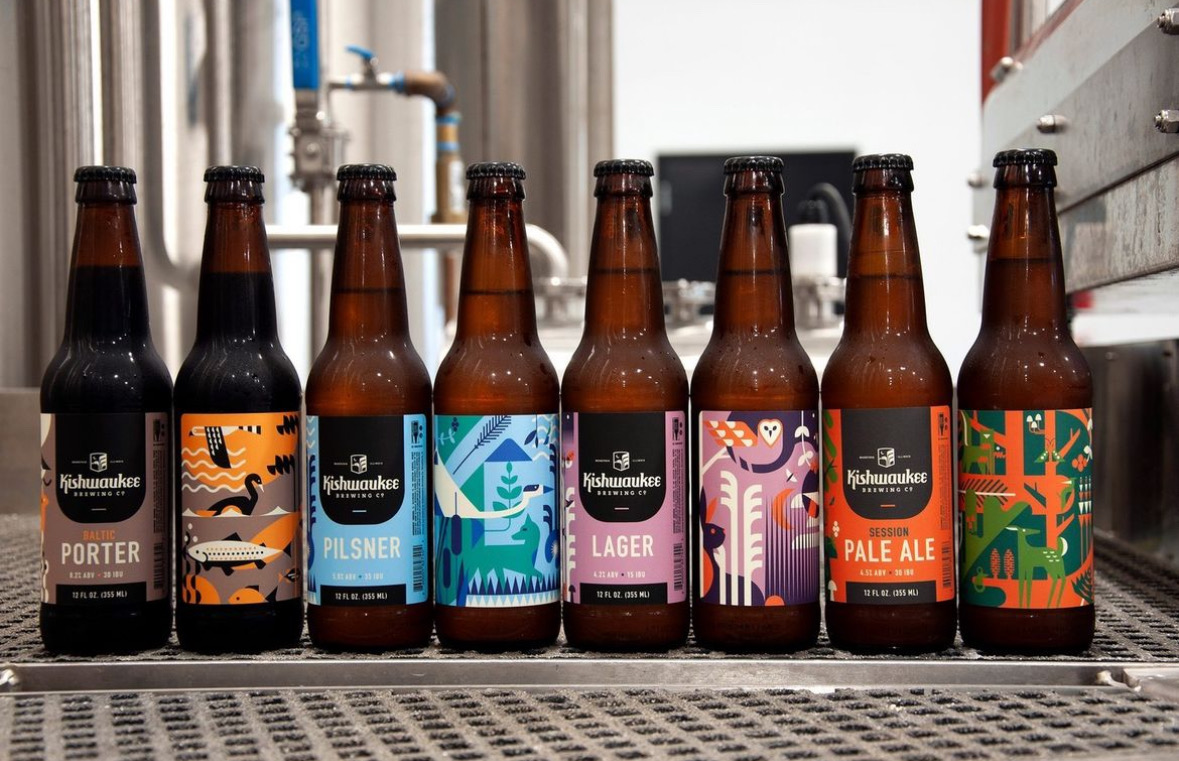
Bottles are still a real part of the craft beer market, even with cans pulling ahead in raw volume. Bottles hold a loyal following for specialty releases, premium positioning, and traditional formats. Some brewers prefer them for high-gravity or barrel-aged beers, where the slower oxygen exchange lets nuanced flavors develop over time.
Why choose bottles?
- Brand image: glass carries a premium or nostalgic feel that some consumers still associate with quality.
- Flavor preservation: dark glass shields beer from harmful light, especially important for hop-forward and barrel-aged styles.
- Tradition: many craft beer drinkers still associate bottled beer with authenticity and craftsmanship.
Common bottle sizes
- 12 oz. The classic standard for craft and mainstream beers
- 16.9 oz (500 mL). Popular for breweries with European roots or styles
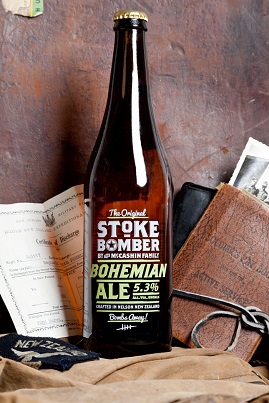
- 22 oz “bomber”. Frequently used for limited-edition or specialty releases
- 750 mL. Typical for high-end Belgian-style or barrel-aged releases
Bottle label dimensions
Beer bottles typically use a front label and a back label, though some breweries use a single wrap-around label that covers the whole bottle.
A common front label is around 3″ x 3″. The back label typically runs between 2.5″ x 2.5″ and 3″ x 4″, depending on the bottle shape and how much regulatory information you need to fit.
3. Beer Growlers and Crowlers
Growlers and crowlers serve the same goal. Getting fresh draft beer out of the taproom and into a customer’s hands. With two different approaches.
Growlers (refillable)
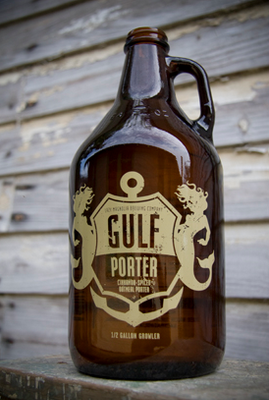
A growler is a refillable jug, typically amber glass with a handle, sized at 32 oz or 64 oz (and occasionally 128 oz / one gallon). The customer brings it back to the brewery for refills, which makes it the natural fit for taproom-focused breweries that build local repeat business.
Growler labels generally sit in the 4″–5″ tall by 4″–6″ wide range, depending on the curve of the bottle and how much branding you want to show. Some breweries use larger wrap-around labels (around 4″ x 14″) for full-coverage branding.
Crowlers (single-use)
A crowler is a 32 oz aluminum can filled and sealed at the brewery on demand. The name is a mash-up of “can” and “growler,” and the format borrows the best of both: the freshness of a growler fill, with the durability of a can. Crowlers are single-use; once you’ve finished it, the can goes in the recycling bin.
Crowler labels typically run around 6″ x 9.5″. Most breweries apply them at the time of fill so the same blank crowler stock can serve multiple SKUs.
Worth knowing: Crowlers ship better than growlers because aluminum is durable, the seal is airtight, and there’s no UV light penetration. For breweries that send out samples or fulfill small online orders, crowlers (or printed cans) are usually the more reliable option than glass growlers.
For a deeper comparison of growlers vs. crowlers vs. printed cans, see our Growlers vs. Crowlers: What’s the Difference? post.
4. Beer Kegs
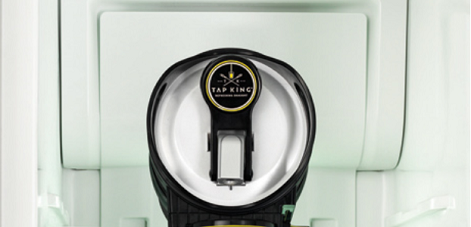
Kegs are the workhorse of draft beer. A lot of craft beer sales happen on-premise. Bars, restaurants, taprooms. And aluminum kegs are how that beer moves. The decision to use kegs usually comes down to cost-efficiency (refillable, reusable), reduced packaging waste, and straightforward shipping logistics.
Why choose kegs?
- Bulk distribution: built for high-volume on-premise service.
- Quality control: minimal oxygen exposure keeps beer fresh longer than bottles or cans on a shelf.
- Sustainability: reusable containers reduce per-pour packaging waste.
- Cost efficiency: fewer materials per ounce of beer than individual cans or bottles.
Common keg sizes
- Half barrel (1/2 bbl): 15.5 gallons, the standard for bars and large events
- Quarter barrel (1/4 bbl): 7.75 gallons, often called a “pony keg”
- Sixth barrel (1/6 bbl): 5.16 gallons, popular for smaller tap rotations and limited releases
- Cornelius keg (“corny keg”): 5 gallons, common for homebrewers and small-scale operations
Keg label sizes
Keg collars sit around the top of the keg and usually measure 6″–7″ in diameter. They carry compliance information (style, ABV, brewery) and basic branding.
Some breweries also use keg wraps, longer narrow labels that wrap around the keg’s body. These typically run 3″–6″ tall and up to 30″ wide, depending on the keg’s circumference. A well-designed wrap helps a keg get noticed in a crowded cellar or cooler line.
5. Beer Barrels and Casks
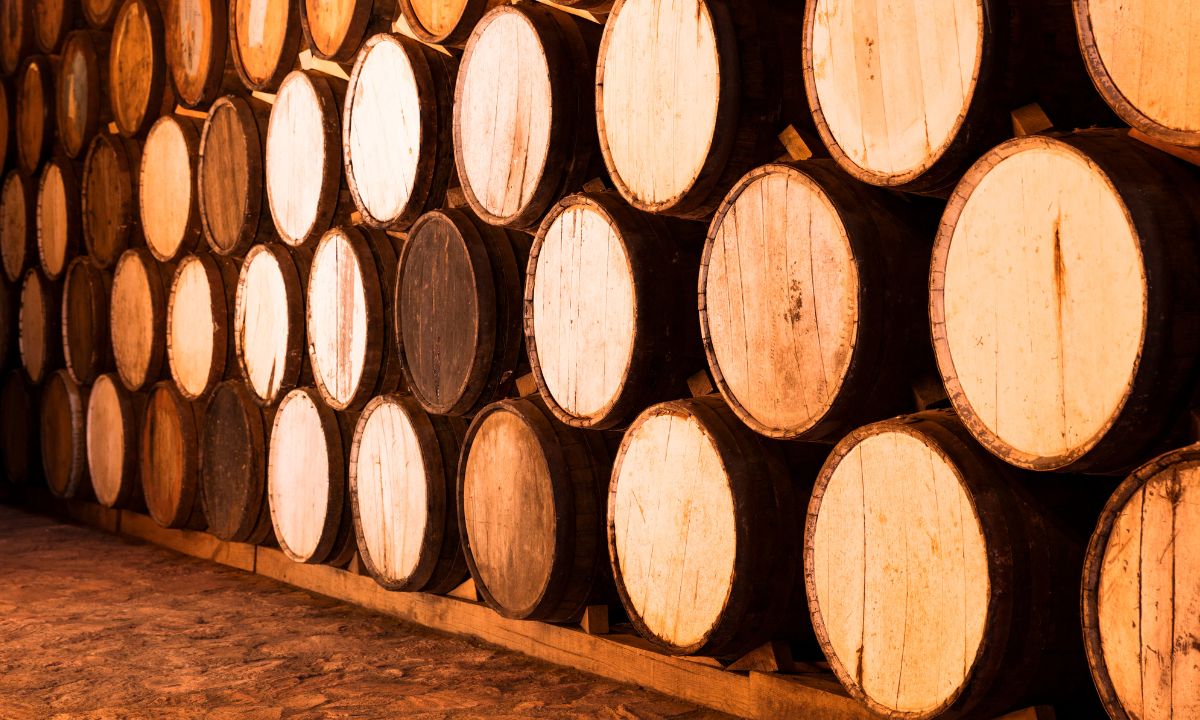
Barrels and casks are used by craft breweries for aging or secondary fermentation, typically after the initial brewing process. Wood barrels can infuse unique flavors into the beer (oak, bourbon, wine notes) that can’t be replicated in stainless steel. The result is more complex, layered profiles.
Brewers usually reach for a barrel when they want to create limited-edition or specialty batches that stand out. Beers that command premium prices and generate buzz among craft enthusiasts.
Why use barrels or casks?
- Flavor enhancement: wood barrels previously used for spirits or wine can add vanilla, caramel, tannins, or residual whiskey or wine character.
- Extended aging: slower oxygen exchange creates subtler, more nuanced flavor development over time.
- Brand differentiation: barrel-aged beers stand out on shelves and menus, and they support premium pricing.
Common barrel and cask sizes
- Standard bourbon barrels (53 gallons): often repurposed from bourbon distilleries; the most common size in the U.S.
- Wine barrels (59 gallons): popular for sour or wild ales, where vinous qualities add complexity
- Hogsheads (66 gallons): larger barrels used for extended aging
- Firkins (9 gallons): smaller traditional British casks used for real ale or specialty releases
- Pins (4.5 gallons): half the size of a firkin, ideal for very small-batch cask ales
Smaller casks are useful when you’re trying out a new recipe without a big commitment. Larger barrels hold more beer and support extended aging when the recipe is dialed in.
How to choose the right container for your beer
The container is half of the packaging decision. The label is the other half. A few factors usually drive the call:
- Where is the beer going? Retail shelves want cans or bottles. Taprooms, refill programs, and event sales lean toward growlers and crowlers. On-premise distribution is keg territory.
- What’s the volume per SKU? Pressure-sensitive labels and shrink sleeves are flexible at smaller volumes. Printed cans get cost-competitive once you commit to a planned run.
- How often will the design change? Seasonal SKUs, one-off collaborations, and frequently rotating releases benefit from formats with low minimums and short turnaround. Flagship beers that hold a design for years can justify a longer-run printed can.
- What’s the brand’s positioning? Bottles still carry premium or traditional connotations for some consumers. Cans signal modern craft. Growlers feel local and refillable. Each format sends a signal before anyone reads the label.
- What’s your operational setup? If you don’t have an applicator, shrink sleeves require a partner. If you don’t have a seamer, crowlers do too. Format choice has logistics implications beyond the design.
Frequently asked questions
What’s the most common can size for craft beer?
The 12 oz can is the long-standing standard. The 16 oz “tallboy” has become equally common for craft IPAs, sours, and seasonal releases over the last decade. Most craft breweries use both, with 12 oz for flagship year-round beers and 16 oz for limited or higher-ABV releases.
What’s the difference between a growler and a crowler?
A growler is a refillable glass jug (typically 64 oz). A crowler is a single-use 32 oz aluminum can filled and sealed at the brewery on demand. Growlers are reusable; crowlers are recycled after use. Crowlers ship better and stay fresh longer once sealed; growlers are the better fit for local taproom-to-home programs. For a deeper comparison, see our Growlers vs. Crowlers post.
Can you put a label on a printed can?
You can, but it usually defeats the point. Printed cans carry the design directly on the aluminum, so a separate label adds cost without adding visual real estate. Most breweries that use printed cans go without an additional label. The exception is a small “neck” label or sticker for limited-edition variants on a base printed can.
What size label fits a 12 oz can?
A standard 12 oz can label is around 3.625″–4″ tall by 7.5″–8″ wide when applied as a pressure-sensitive label. Shrink sleeves for the same can run roughly 5″–6″ tall and cover the full body of the can.
How big are bottle labels?
Most beer bottles use a front label around 3″ x 3″ and a back label between 2.5″ x 2.5″ and 3″ x 4″, depending on the bottle shape and how much regulatory information you need to include. Wrap-around labels for bottles can run up to roughly 3″ tall by 10″–12″ wide.
Do kegs need labels?
Yes, but they’re different from bottle or can labels. Kegs use collars (round labels that sit on top of the keg, around 6″–7″ in diameter) for compliance and identification. Some breweries also add longer keg wraps around the body of the keg for branding visibility in a tap-line cooler. The collar is required; the wrap is optional.
Why do some brewers use bombers (22 oz bottles)?
Bombers carry a “specialty release” feel that 12 oz bottles and cans don’t. Brewers use them for limited editions, barrel-aged releases, anniversary beers, and other one-off projects where the format itself adds perceived value. The bigger format also handles barrel-aged or high-gravity beers that benefit from more headspace and aging time.
Ready to talk through containers and labels?
Your container is half the story. The label that goes on it is the other half. Whether you’re packaging a first run of 12 oz cans, a 22 oz specialty release, or building a refill program with growlers, getting the format right comes down to your audience, your distribution, and your timeline.
If you’re sorting through which container fits your brewery’s stage, take a look at our digitally printed cans page for more on direct-to-can production, or our craft beer label printing page for an overview of label work across all formats. Request a sample pack to see materials and finishes in person, or get in touch if you have specific questions about your beer and your container.